
International Women's Day 2025
This international Women’s Day, we want to tip our caps to the women – no, the icons! – who have inspired and fuelled our lives in PR.
None of us would be here without those that came before. All of our individual experiences, whether through school or Uni or work, make us who we are. And sometimes ‘that one sentence’ that someone said to us, or ‘that one thing’ that they did, can inspire our lives to go completely new directions.
This is female fandom in it's fullest!
FROM SAM BROWN – HEAD OF PR
ICON #1 Lynne Franks
Lynne Franks is often referred to as ‘the one who Ab Fab was written about’, but this does not do justice to the woman, her work and her influence. Franks made fashion PR, and in fact, had a crucial role in making London Fashion Week what it is. She is a consummate networker, an opportunity spotter, a collaborator, a visionary and a maker-of-big-things. In fact, she arguably made PR itself famous. I spent much of my early career thinking ‘I want to be like Lynne Franks’ and now, in my slightly older years, I find myself looking at her continued making-of-things and creating of communities, and I still think ‘I want to be like Lynne Franks’! A true PR icon.

ICON #2 Katharine Hamnett
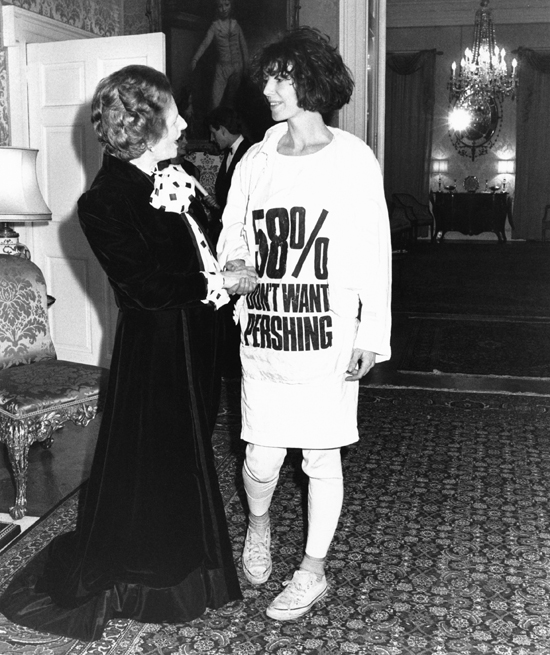
Curiously, Lynne Franks once worked as a PR assistant for Katharine, and it was Katharine that encouraged Lynne to set up her own firm. But it was one specific incident that puts Katharine Hamnett in this list, and it was THIS moment in the ‘80s. In one photo, she showed how to influence through the power of fashion. I was a tiny wee nipper this happened, and my young brain thought ‘well that’s clever isn’t it’. Clever indeed…. Katharine Hamnett – thank you for showing tiny me that you can make a difference in your own way, and you can step into the corridors of power as an individual and make your voice heard. Thank you for your lifelong passion and commitment to a cause. And thank you – THANK YOU – for creating the iconic slogan t-shirt style that I (for one!) still relish today! I salute you.
FROM VICTORIA O’BRIEN, HEAD OF MARKETING
ICON #3 Ruth Yearley
Ruth Yearley is my dear friend and the woman who first taught me the difference between objective, strategy, and tactics – a lesson that's guided me throughout my career. An insanely astute mind who can spot the 'big idea' in minutes and cut straight to the heart of any campaign, I continue to admire her clarity, creativity, and unwavering generosity in helping others see what really matters.

FROM DANIELLE BAIRD, ASSOCIATE DIRECTOR
ICON #4 Jennie Stoddart-Scott
I’ve had the privilege of working with Jennie at two different agencies in my career and have always been in awe of how she operates. One lasting impact she left on me was the importance of transparency with clients. She taught me that if something goes wrong or doesn’t meet expectations, its crucial to own it. By doing so you not only demonstrate integrity but also build trust and respect with your clients in the long run. Jennie has always made time for me and championed my growth and I have huge respect for her dedication and integrity.



Insights From PR360
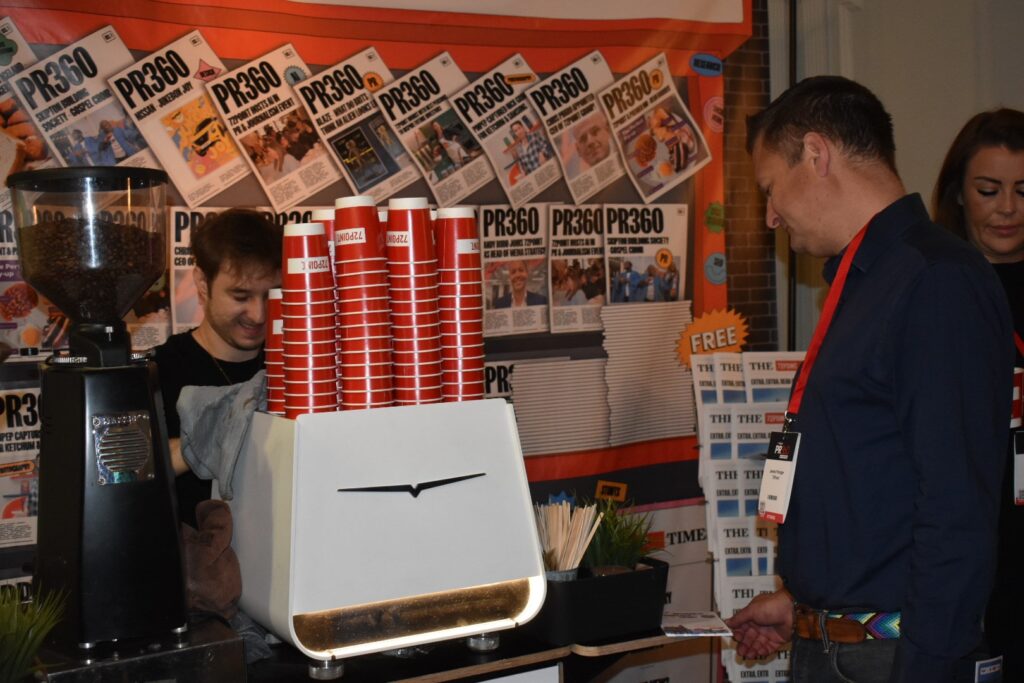
Returning to the office (well home office at least) after spending the last two days in Brighton at PR Week’s PR 360 Event – I thought I would share some reflections from the event and what the key players in the world of PR were talking about.
As the industry navigates its way through some pretty choppy waters in terms of the economic climate – taking inflation into account the entire industry was flat year on year for the first time in many years - technological advancements (AI) and shifting media landscapes are forcing PR practitioners to re-evalutate PR’s role in the marketing mix.
I think there were four key topics that came up in discussions – time and again –
Changes to traditional mainstream media - fewer journalists with less time on their hands is changing the dynamic between the PR industry and the media.
The changing role of influencers (or “earnfluencers” hat tip to our friends at Porter Novelli for that one) in PR – and their increasing importance in a social first world.
The threats and opportunities of AI – will AI sound the death knell for the PR industry or be a catalyst for a new era of PR?
The importance of creativity – Some fascinating insights from both brands and agencies on how they seek to maximise creativity in PR.
The Changing Media Landscape: Navigating Through the Digital-first Terrain
The significant reduction in journalist numbers in mainstream media, the move to digital first publishing and the continued rise of social media revolutionizes the media landscape, blurring the lines between traditional and new media channels.
Getting through to journalists is now tougher than ever. It's crucial to have strong relationships with the media and a clear understanding of the current needs of jounalists in this changing environment – traditional approaches are no longer working.
In this new world, the PR industry is having to re-imagine their approach to media, whilst continuing to craft compelling narratives that resonate across diverse media platforms.
The continued democratisation of content creation is empowering individuals and influencers to wield significant influence, challenging traditional gatekeepers and reshaping brand-consumer dynamics.
But there was a sense that PR is re-evaluating the role of influencers and there was a feeling that a more nuanced approach is required – rather than just chasing large but potentially irrelevant influencers with large followings – a more strategic and targeted approach was required.
There was also a sense that the audience for this social content is becoming more aware and averse to being force-fed commercial content.
The Role of AI in PR and Media: Balancing Threats and Opportunities
I don’t think there was one session where Artificial Intelligence (AI) was not discussed - AI emerges as a double-edged sword in the world of PR. On one front, AI-powered tools can help to streamline processes, automate mundane tasks, and augment data analysis, even help with creativity - empowering PRs to delve deeper into audience insights and craft targeted strategies.
However, the spectre of job displacement looms large, as AI threatens to automate routine tasks, compelling professionals to upskill and adapt to remain relevant in an increasingly AI-driven landscape.
-
PR Reinvented: Creativity as the Catalyst for Innovation
Amidst this evolving landscape, there were some strong voices calling upon the industry to re-establish itself as a cornerstone of the marketing mix, transcending its traditional role and embracing creativity as the catalyst for innovation. I really enjoyed a fascinating presentation by Caroline Fisher, Communications Director at ASICS on the importance of finding new creative ways to tell the same story – talking about the power of great storytelling, to captivate audiences and forge emotional connections that endure beyond fleeting impressions – and importantly drive sales and affect purchasing decisions.
Embracing the Future: Navigating Uncertainty with Agility and Adaptability
As the UK PR industry traverses uncharted territories, practitioners are confronted by a landscape fraught with uncertainty and disruption. Yet, amidst the challenges lie unprecedented opportunities for innovation, growth, and reinvention. By embracing AI as an enabler of creativity, harnessing the transformative power of influencers, and championing a culture of innovation, the UK PR industry can chart a course toward a future where storytelling reigns supreme, relationships are paramount, and creativity knows no bounds.
It feels like now is the time to re-imagine PR.

The Information Superhighway to Heaven

Breathe a sigh of relief, the information superhighway to heaven is open. Or at least, it was ten years ago when FuneralWishes.co.uk approached SWNS with their new ‘digital funeral service’.
Thanks to Roger– a pioneering visionary in the funeral world – bereaved individuals were offered a streamlined approach to all their funeral needs thanks to the interweb and its revolutionary ability to link things up. People with people, firms with firms, vicars with florists, coffins with the deceased, Funeral Wishes became one of many ventures founded on the notion of being able to do things from the comfort of your front room, a sort of computerised Yellow Pages if you will, and found its way to South West News Service as a result.
The story definitely had legs. In an age where people were still becoming accustomed to the ramifications of a global network of computers that can connect the world’s individuals, firms and organisations – AKA the Information Superhighway – an online funeral service demonstrated the potential of being able to do everything online. Today a simple Google search returns more than 66 million results for funeral services, but back then Roger had a real proposition. Put down the phone, don’t bother arranging meetings, just log on to his site and “plan a funeral before your own death or after the death of a relative”. How wonderfully morbid!
Today a simple Google search returns more than 66 million results for funeral services, but back then Roger had a real proposition.
Trailing through the archives at SWNS can often reveal corkers like that, written by SWNS Owner & News Editor Andrew Young at the start of the millennium. Back then the firm was a small news and pictures agency in Bristol and terms such as social media, interactive infographics and viral content would have been as alien to the journalist’s ear as an alcohol-free lunch invitation. But today when we compile digital press releases these are the things that are at the forefront of our minds.
If the same story came across our desks today we would immediately consider how we can engage all the media channels and shape the content to suit the medium. Perhaps a Top 10 tips for planning a funeral or an interactive infographic calculating your own death date and options for planning your own funeral. A video showcasing the site’s functionality with commentary from Roger himself shouts viral; ”I have died about a hundred times checking that the site is all working okay” is just one of his quips in the original feature.
The parallels between our approach then and now highlight how far the company has come. From a news and pictures agency in Bristol SWNS has become a family of firms spanning across the country and internationally that specialise in delivering multi-platform content to suit all audiences. The ‘information superhighway’ has been shown to complement traditional media which means that for companies such as us knowing how to deliver on all fronts is the key to offering our clients the best the market has to offer in public relations. Or in the parlance of Roger, a PR service made in heaven

Influencer Marketing: What's It All About?

Celebrity endorsements have always been used to create excitement around a brand. But the prevalence of social media has welcomed a world of bloggers, content creators and influencers. Brands are noticing this, and now these people are taking over our timelines with #ads and are, in their own way, a whole new type of celebrity.
Influencer marketing involves businesses collaborating with popular, relevant influencers and micro-influencers within their niche to propel their brand’s message. By forming a partnership, the influencer will agree to share the brand through a strategy of reviews, social posts, promotional discount codes, and gifted products, usually on their social media channels.
Unlike celebrity endorsements, influencer marketing does more than just attach the face of a celebrity to a product. Although the strategies tend to overlap, a distinguishing factor separating celebrity endorsements and influencer marketing is that influencers are often real-life consumers themselves, with their passion for certain topics empowering them to influence the decisions of their followers. For example, the perfectly-sculpted fitness blogger who regularly posts their training regime is likely to be asked to advertise for a sportswear brand. The influencer’s followers will trust their recommendation and will probably use their unique promotional code to get discount when they buy the advertised product.
To keep in-line with the brand’s message and build an audience of trusting consumers, it is important to work with a suitable influencer - it wouldn’t make much sense for a food blogger to promote a new make-up product.
Think about Justin Bieber and the #MyCalvins campaign (sorry to bring my celebrity crush into this). Bieber isn’t an underwear expert and doesn’t need to be an underwear expert to recommend Calvin Klein, his fame is enough to drive an interest in the product.
Influencers, however, will often have an area that they specialise in, meaning their followers and themselves share a common interest, so when they endorse or recommend a product their followers are likely to take interest. To keep in-line with the brand’s message and build an audience of trusting consumers, it is important to work with a suitable influencer - it wouldn’t make much sense for a food blogger to promote a new make-up product if they want to appear authentic.
These social media celebs, who could range from a following from just a few thousand, up to several million, are highly regarded by their followers and share a strong rapport and relationship with them. By leveraging the voice of an influencer, a brand can build trust with their target audience by using the influencer to become part of an ongoing conversation across their social channels. With many influencers being bloggers, Youtubers, and models, this means a brand can constantly be provided with new posts, videos, edits and engaging and creative visuals. Influencers are constantly active, and constantly promoting themselves and the brands they partner with, and that’s the great power of social media – it is always ‘on’.
Brands should be using influencer marketing; it has proven to be a positive strategy to create noise and stand out among other businesses online. It is important in this world to have a presence on social media to not get left behind. These influencers can help to build large and engaged followings by driving traffic to social accounts, resulting in more potential consumers. We shouldn’t overlook the power of the Insta-famous!


How well do you know your bones?
Content Marketing Assets For Vitabiotics

Millions of Brits are unable to tell their femur from their fibula.
We created a highly-engaging quiz for Vitabiotics to test Brits' knowledge of the skeletal system, and whether or not they can identify where various bones can be found in the body, landing coverage in Mirror, Independent, Northern Life and The London Economic.
A spokesman for bone supplement Osteocare, which commissioned the research said: “From a young age, you start to notice signs your body isn’t quite as healthy as it once was.''
How well do you know your bones? Take our test to find out:
To find out more on our content marketing services, visit: https://www.72point.com/pr-services/content-marketing/
Request a ratecard

How to Turn a Viral Joke into a PR Payday, Before It’s Over

By Emily Trant, Associate Creative Director, 72PointPLAY
The obvious issue with jumping on viral moments is if you blink, you’ll miss it, and if you blink twice, it’s over, done to death, dead in the water – yesterday’s news.
That’s the cutting truth of the internet’s attention span.
In 2025, the shelf-life of a meme is shorter than Emma Stone’s edgy new pixie cut and if a brand isn’t straight off the bat executing a reactive idea they end up looking irrelevant and downright cheugy...
Take the Ibiza Final Boss – knowing Jack Kay’s 5 minutes of fame would probably be more like 3, brands scrambled to pitch the perfect idea, knowing it had to be speedy, funny and social led.
Those who nailed it were lightning quick, weaponising their socials to bash out memes and mock-ups riffing on Jack’s infamous bowl cut, with the likes of Gregg’s, Curry’s and Halfords serving the goods (as per) ...
Anyone putting out a brand deal at this point, we’re interested to see if the ROI is worth the “5 figure fee” No names here through, we’re professionals (sort of).
So, you’ve spotted an internet moment and you’re ready to assemble your “Viral Vanguard”, a crack squad of creatives, in the hope that you can come up with something viable and have it on shelves (or at least socials) before the world has moved on.
Before you do this, whether you’re in house or agency, here are five tips on how to ensure your finger stays firmly on the pulse when it comes to reactive content:
- Be quick (obvs)
The best reactive stunts latch onto a moment people are already talking about, while people are still talking about it – they don’t claim to own the conversation; they piggyback on it in a way that feels funny and smart.
if you’re dropping your “reactive” gag a even a week late, it’s less viral moment, more yesterday’s breakfast.
- Scrolling on social media is work, don’t let anyone tell you otherwise
Instil a culture within your team that encourages time for reading/scrolling/, because these moments are where all the internet’s hidden gems are mined. Whether it’s reading the papers first thing with a coffee or a cheeky TikTok scroll on the loo, keep a phones out policy – it’s not procrastination it’s research.
Those ‘did you watch Love Island’ conversations are cultural catalysts for ideas, don’t shut those down either.
(It goes without saying that equipping your team with proper social media listening tools is also essential. No one is THAT quick.)
- Be the silliest person in the room
Don’t be afraid to go fully weird during the ideas process - this is where the good stuff grows. Out of the madness, brilliance is harvested.
Reactive PR only works when it feels unexpected and clever, AND it reads that you’re in on the joke. The cheekier the execution, the more likely it is to cut through.
- Simple is always better
If people can’t “get it” in 3 seconds, it won’t work. Don’t overthink it or over complicated it - a funny social post will beat a 37-slide strategy deck every time.
Look at Oreo’s iconic “You can still dunk in the dark” tweet during the 2013 Super Bowl blackout - that was approximately ten seconds of reactive thinking that PRs are still banging on about over a decade later.
- Try to know a little bit about everything
The really good ideas rarely come from big budgets, they come from cultural literacy, speed, and a big old glug of good humour.
Stay curious, read about everything, even if it’s just the headline.
If you can name three lionesses and why Greg Wallace is no longer on Master Chef, you’re probably ok...
So, there you have it - that’s our advice, take it or leave it – the important thing to remember is that a solid reactive idea on your roster makes anyone look like a rockstar so you might as well have a craic, what’ve you got to lose?


How To Reach a News Editor's Desk In 2021
By News Generation Directors Emma Elsworthy and Gemma Francis


In the daily battle for attention that PRs face, many crucial client stories or campaigns can end up never even being seen by the news editors so pivotal to their success. Over the past 15 months, we’ve seen the news agenda go from difficult to downright virtually impossible to contend with.
However, there are some really easy steps to follow to increase the chances of cutting through the noise and getting that all important features editor to take note of your campaign. So, in no particular order:
Smack them in the face with visual assets
Strong visual assets are essential these days and will go a long way to grabbing attention and carrying something into publication. So, if you have strong images / video then put them at the top of your email / message - do not bury them at the bottom and certainly not in an attachment.
All hacks are a sucker for a pun
This is a universal truth, even if they wouldn't dare use a cheap pun in their lofty publication. It will grab their attention, might make them chuckle, and will give them an idea of how to frame / headline the piece. Remember that a good top line with clever wordplay is very often enough to carry a weak story over the line. Make sure your story is as visible as possible in the first two or three lines of copy and include something that will stand out in the subject line of your email.
Put a face to a story
A story that starts 'Man/woman tells how ..." will always beat a story that starts "Company tells how ..." People just love reading about other people and can relate to it. So, if you can 'humanise' your story with an actual person or case study it stands a much better chance.
Drop the branding
We don’t mean altogether, but certainly don’t have branding, logos, and name checks in the first few pars of copy – as that’ll be a turn off straight away. Tell your story first, and then drop your branding in a little lower down – we usually say line five or six, as by that point, editors genuinely want to know where the good story came from.
Don't underestimate the trivial
If something seemingly innocuous sparks a heated debate / banter in the office (or over group chat) then it is probably the starting point of a story. Sometimes a story is simply a talking point, nothing more. And if it can be tied to your brand, then all the better. The most basic example of this is - 'Making a cup of tea - milk or teabag in first?'. Trivial, but always gets people talking.
Go direct if you can
Contrary to popular belief, many journalists are very polite and will respond to a direct approach; it makes them feel special and they are more likely to respond. Whereas if the journo can see they are one of 50 email addresses or a BCC, it's easy to ignore. A personal email which says "Hi, I notice your website / agency / publication does lots of stories on X so I thought this one would work really well for you" is much more likely to get a response.
Use social media
Press releases aren’t the only way to reach publications - most journalists spend their entire working day on social media, and in particular Twitter ... so reach them where they hang out. In addition, all journalists will follow others in their field on social media. If you can't grab the attention of the Consumer Editor of the Sun, you can be guaranteed they will be following the Twitter accounts of all sorts of specialist reporters on smaller publications. So, target the smaller publications and wait for the bigger ones to pick up the story. Or start off in a local paper - it will eventually find its way up the journalistic food chain if it's good enough.
Know your news
It pays to keep abreast of the current news agenda, read the papers, surf the sites, and understand what people are talking about right now. Not only does this help in brainstorms to ensure your ideas are topical and relevant, but it also helps to ensure you are a pitching a story in a timely fashion – and avoid trying to land a story about dream holidays on the day the government announces the traffic light list or restrictions.
We’ve faced one of the most challenging news agendas ever over the past year and it’s often left our industry with the question; do brands still have a story to tell when the nationals are covering such hard-hitting content? The answer is a resounding yes. There will always be room for light-hearted, engaging creative content that provides some tonic and lifts the public’s spirits. And we have the numbers to back it up. Throughout lockdown, we knuckled down and doubled the amount of coverage we secured for our clients. Over the past two months, we have broken our coverage records twice. We have an innate understanding of how the news desks operate and continue to deliver cut-through for our clients.
Get in touch for more information.

How to Make the Most of Marketing Exhibitions
How to Make the Most of Marketing Exhibitions
Exhibitions form a key part of a marketer’s arsenal, offering unique face-to-face communication with prospective clients and vital networking opportunities. But it can be a tricky task to maximise the takeaway from these events. Last week, 72Point attended the Prolific North Live Expo at EventCity in Manchester. If you read our earlier blog (http://www.72point.com/future-digital-media-north-heres/) you will be aware of just how pivitol the North is within the digital industry. 70 per cent of total UK digital tech investment was in regional clusters beyond London, with Edinburgh (£159 million), Manchester (£78 million) and Sheffield (£61 million) among the notable recipients. The event represented a massive opportunity for us to interact with the biggest movers and shakers of the digital sphere, and we wanted to share our strategy for how we maximised our return on investment.
Make sure your branding stands out
Expos offer a fantastic opportunity to get your brand out there, and you should be looking at capitalising on every opportunity you get to do so. From merchandise to sponsored events, billboards and digital content, it is crucial that you utilise as much of the available collateral at hand to make sure your brand has prominence. At Prolific North Live, we sponsored the keynote session as a way of ensuring that our logo was in as many visual slots as possible. Our Managing Director Chris Pharo and ChannelMum’s Jane Hamilton also took to the stage to share their vital experience and insights on the changing world of digital media, news and PR, which reaffirmed our position as a professional, authoritative brand. It also gives attendees some real takeaway – making them more likely to attend and remember your brand.
Keep It Simple
Simple but effective branding is the best way to convey your message. Long-winded, complex collateral can often result in key messaging being lost. Any collateral used at an event should be punchy yet informative. At our exhibition stand at Prolific North Live, we made sure to keep it simple. As an agency that creates, distributes and lands proactive stories in major publications, we can cut out the marketing fluff and just say it as it is, highlighting our key services and ROI for clients. Making sure that your message is conveyed clearly and concisely with your exhibition panels is vital so that any passers by can instantly recognise your specialties at a glance. This will give potential customers a lasting impression of what you specialise in, meaning that you will likely be their first port of call.
Engage with social channels
Events provide great visual content for social media channels, another key way to boost engagement. Followers can be gained by simply interacting naturally with other attendees and piggy-backing on the momentum that any decent expo will generate. The exhibition floor at Prolific North Live was full of cutting-edge brands showcasing innovative tech which lent itself to regular Instragram story updates – great engaging visual content for our followers to view. Through regular updates linked to the event you can boost traffic to your social pages page and gain followers. Twitter feeds work well when utilised on a rolling basis displaying general updates and goings-on at the event including relevant hashtags. This provides followers with a newsfeed, giving them all the information they need.
The take-homes
Marketing events are a great way to boost brand exposure and increase traffic to company websites/social channels – all very viable justifications for allocating spend. But, above everything, attending marketing events allows your company to stay on top of industry trends. They provide a fertile ground for networking with key individuals and learning about what’s current and what’s next to come – allowing you to identify how this relates to you. This knowledge can be invaluable in keeping your brand fresh and relevant.
Try to solve the new Formula Cube! It works exactly like a Rubik’s Cube but it is only $2, from China. Learn to solve it with the tutorial on rubiksplace.com or use the solver to calculate the solution in a few steps.
[simple-author-box]

How to give your story a real Christmas presence
 Mention the word “Christmas” in a 72Point brainstorm session and listen for the audible whoosh of air as every single creative in the room visibly slumps into their chair and lets out a heavy sigh.
We’re in the middle of November, and while we’re not Christmas scrooges (far from it, some of us have already completed our Christmas shopping while others are signing off their emails with Mrs Santa), we have already had more than 20 briefs from PR’s wanting to capitalise on the biggest event in the calendar.
So why such a negative reaction from the team you may ask? Everyone loves Christmas, so it must have great talk value?
Well yes, everyone loves Christmas, but that doesn’t make it news.
The 25th December might be a big deal for PR’s and businesses who will benefit from the event, but for the press it really is just another day in the year.
And if the media aren’t bothered by Christmas, they’re not going to dedicate pages and pages to survey-led stories about opening presents, gobbling turkey and overspending – not unless the stories are REALLY good.
So what are our tips to achieving the most for your brand, in the lead up to Christmas Day?
Don’t send the story out in the lead up to Christmas Day
Okay so this might be an impossibility, but what we’re trying to say is that the competition for coverage at this time in the year is HUGE. So if you do need coverage in December, make sure you’re doing something that will beat all the competition.
Consider Christmas Day
Do you have to send your story out before the big day? If you want coverage in December, but don’t necessarily have a brand which needs coverage to generate sales, you might want to consider lining up a story to go out ON Christmas Day. This is a fantastic ‘open goal’ opportunity for coverage, as news desks are receptive to any light list-based material. Alternatively ‘quick win’ stories are perfect for issue on Christmas Day, so if you’re an internet business capable of monitoring sales quickly contact us. We can very quickly pull together a sales-based story to show how many people are buying holidays / gym memberships / divorces on 25th December.
Don’t send out the same old story
We all know news is on a loop and Christmas is an example of just that. Every year we see the same survey stories make – ‘XX per cent of Brits received unwanted presents’, ‘the average Christmas looks like XXX’, ‘British households look set to spend £XXX on Christmas’ – but they don’t make BIG. If you want more than a ‘nib’ or a ‘stick’, do something different.
If budget allows, make a video
So we know we can’t compete with the John Lewis Christmas advert, which has already had almost 12 million views online, but if you’ve got a little more money to spend, a video is a great way to secure coverage online and has great longevity for the brand. Stories which are cross-platform definitely have the best chance of making, and news sites are crying out for videos to support any content they publish. However make sure the idea has been well thought through - last year TGI Friday had the brilliant idea of sending drones around their restaurants with mistletoe and a ‘kisscam’ but the stunt backfired spectacularly when the drone hit a diner in the face, and the brand received more coverage for the epic fail than the original idea.
DON’T talk about Christmas
The best way to get a survey story into the press in December is to make sure you don’t mention the C-word. So if you’re thinking of a survey led story, think about the USP’s of the brand, and most importantly, why is it so cool the other 364 days of the year? This should be the focus for any story you put out.
Try not to over-brand
Actually this is the advice which we give at all times of the year, but it’s all the more important at Christmas. A great example of a story which cleverly weaves in the key messages about the brand, without being too Christmassy or ‘pluggy’ is our Competitive Mums story we ran for the launch of Nativity 3: Dude, Where’s my Donkey? which subtly makes reference to Christmas nativities without over mentioning.
Think outside the box
Sorry, it’s a cliché, we hate it, but there it is. When generating ideas for Christmas try to step away from the event itself, try to think of something which is funny; if you can imagine talking to your friends about the subject matter for hours and hours, chances are you’re onto something.
Go Negative
A no-no for every PR, and a big fat thumbs up for 72Point, and more importantly for the papers. Want to run a story about how families interact at Christmas? We guarantee you’ll have more luck trying to land a story which looks at the arguments families have on Christmas Day, or the things that went wrong with the dinner, than a story about how well everyone got on and what we love about Christmas.
Consider all avenues
A survey is a fantastic way to achieve national press coverage, but a video or infographic could be the clincher when it comes to online coverage, you might even decide that at this time of year you pay for some native advertising to guarantee you that all important ‘show’.
And lastly, phone us if you’d like a helping hand
You might get some advice you don’t want to hear, you might need to re-think your ideas, but you WILL have a better chance of achieving all you want for Christmas.
How to Get PR Coverage During a Pre-Election Period
In the run-up to any election, the media landscape becomes particularly charged. Political coverage takes centre stage, often overshadowing other news. This shift can make it challenging for brands to secure PR coverage. However, with the right strategy, brands can still shine. Here's how to navigate the pre-election period to ensure your PR efforts are effective and impactful.
Understand the Media Climate
During the pre-election period, newsrooms are inundated with political stories. This intense focus on politics can make it seem like there's little room for other news. However, this is also a time when non-political stories can stand out, especially those that offer a respite from the constant election coverage.
Key Points:
- Political Saturation: Expect heavy coverage on candidates, policies, and election updates.
- Opportunity for Light Stories: Media will seek lighter, feel-good stories to balance the heavy political news.
Timing is Everything
One of the first questions brands face is whether to postpone their campaigns until after the election. While postponing might seem like a safe bet, it's not always necessary. In fact, launching your campaign during a quieter PR period can sometimes give you a competitive edge.
Considerations:
- Campaign Timing: Evaluate the news cycle and identify quieter periods.
- Strategic Launches: Consider launching when the election news is expected to hit a lull, perhaps during weekends or public holidays when political news slows down.
Crafting the Right Story
Not all stories will get coverage during the pre-election period. To cut through the noise, your story needs to be compelling and relevant. Focus on stories that offer value, entertainment, or a unique perspective.
Tips for Story Crafting:
- Human Interest: Highlight stories that showcase personal triumphs, community efforts, or human interest angles.
- Topical Relevance: Tie your story to current trends or events, making it timely and newsworthy.
- Visual Appeal: Provide high-quality visuals to make your story more appealing to editors and audiences alike.
Leveraging the Strength of the Newswire
Newswires, such as SWNS which we use to place our 72Point page-ready news content, are an invaluable tool during this period. They help disseminate your story to a wide audience quickly, increasing the chances of coverage. The strength of the newswire lies in its reach and ability to connect your story with the right journalists and outlets.
Benefits:
- Wide Distribution: Reach multiple media outlets simultaneously.
- Targeted Approach: Use the newswire’s targeting options to focus on specific regions or industries.
- Quick Turnaround: Ensure your story gets out fast, especially if it’s time-sensitive.
Building Relationships with Journalists
Having strong relationships with journalists can be a game-changer. Journalists are more likely to cover stories from sources they trust. Engage with journalists ahead of time, understand their interests, and provide them with valuable content.
Relationship Building:
- Personal Outreach: Reach out to journalists with personalised pitches.
- Follow-Up: Maintain regular communication and follow-up on your pitches.
- Provide Value: Offer exclusive insights, data, or interviews that can make their job easier.
Preparing for Post-Election
While some brands may choose to wait until after the election to launch their campaigns, it's essential to prepare for this period as well. Post-election, there will be a surge of news coverage analysing the results and implications. Having a well-timed, compelling story ready to go can help you capitalise on the renewed attention.
Post-Election Strategy:
- Monitor the News: Keep an eye on the election results and media coverage.
- Be Ready: Have your campaigns ready to launch once the election noise starts to settle.
- Quick Adaptation: Be prepared to adapt your strategy based on the election outcome and subsequent news cycle.
If you want to talk to our team of news experts to scope out your pre-election comms strategy, get in touch with me at andy.rudd@72point.com
