Ode to Twitter
 There’s a lot of talk about the impending death of Twitter; “it’s got no money”, “there are too many spam accounts”; “there’s too much content”; there’s this, there’s that….
All of these things are of course true.
Yes, Twitter is running out of money, that’s no secret but I’m not going to get into that now because, well frankly, money…snore!
Yes, there are too many spam accounts on Twitter. Whether it’s eggs that don’t tweet, naked ladies posting pictures of their flesh, accounts that live to follow people only to unfollow them weeks later and or the trolls, Twitter can at times be an unpleasant, ingenuine place to be and it has damaged the user experience. But they are working on this. Their latest announcement of their advanced muting options, which now allow you to mute offensive words, phrases and emoji in your notifications and mentions so although it won’t stop the existence of bad Twitter users, it will make their impact less noticeable.
Yes, there is too much content. Sometimes going on Twitter can be like wading through the medieval streets of London in flip flops. Treading in other people’s crap left right and centre.
But let me tell you something….I personally don’t care. I love Twitter.
I love that it’s everybody’s dumping ground. Isn’t that why we fell in love with it in the first place?! Because we could dump our thoughts there. Don’t get me wrong, there is sharing and there is over sharing but I’ll tell you this that excessive dumping has given me something that I just don’t get from other social networks: a good laugh. In a world that sometimes makes you want to run for the hills, Twitter can be a source of unlimited joy.
Take the shambles that was Euro 2016. English football fans were left devastated, if unsurprised, about England’s early exit and, although they won’t admit it, by Wales’ disappointing defeat in the Semi-finals. But devastation quickly dissipated when a moth landed on Ronaldo’s face and within minutes endless numbers of ‘Ronaldo’s Moth’ Twitter accounts appeared.
Then there’s Brexit. Millions of people awoke one morning to realise half of the population had potentially thrown their country into turmoil. But it was ok because of the abundance of ‘Twitter bants’ we had to get us through it. Buzzfeed had an absolute field day with them offering us 36 of the best to make us ‘laugh despite everything’. Other lists of Brexit based hilarity can be found on the Poke, IBTimes and Yahoo and, well pretty much all over the internet.
Live scenes from the Channel tunnel. pic.twitter.com/l04wXKpjaq
— John Myers (@johnmyersteam) June 24, 2016
Whoever created this, I salute you. pic.twitter.com/zsyMSd0GIL
— Nick Harvey (@mrnickharvey) October 10, 2016
The same goes for the mind blower that was the US election. When logic and reason had gone out the window, Twitter helped us laugh before we cried. It is also true that Twitter was partly responsible for the ludicrous outcome but it was tweets about Donald Trump that made us rational folk realise quite how ridiculous the man, and the result, is. Carefully edited videos, such as the one to the left, cut through the bile to show a beautiful outcome more positive than the reality. Not only that but the good people of the UK took to Twitter to bring the world back down to reality and help the world see what was really important during this confusing time….the changing shape of Toblerones.
Then there’re the GIFs. Yes, ok, so we can now get those on Facebook but we can also write big, long meaningful statuses on Facebook to convey how we feel. Twitter requires you to think about it. How can you convey how you really, feel with brevity? GIFs. How can you quickly engage someone scrolling through at lightening speed? GIFs. How can you make Ruth really happy? GIFs.
I also love Twitter for its sense of conversation. The world is a lonely place and with everyone supposedly becoming antisocial mobile phone/human hybrids, the truth is we’re actually being very social. It’s just not #IRL social. Everyone is having a chat, online.
The best examples of this are when we look at the link between Twitter and television. Twitter, more than any other social media platform, brings people together during the big (and little) TV occasions creating imagined online communities to fill the void of actual human interaction. Bake Off is perhaps the most obvious example of this.
Bake off is (or should I say was, boo hoo) appointment to view television meaning that, by definition, people are choosing to be inside watching TV and not ‘out’ socialising. But, in reality, the world was watching Bake Off together…tweeting along bake by bake. Innuendo by innuendo.
The correlation between hot TV and Twitter is so
You could hear a rolling pin drop around the country on Wednesday night at this moment. #GBBO #ExtraSlice pic.twitter.com/Bs0MV7060c
— British Bake Off (@BritishBakeOff) October 28, 2016
strong that Twitter is launching their live tv partnership with Apple TV which allows you to watch the live video (say American football) and have a curation of relevant Twitter feed next to it on the screen so that you can engage in conversation whilst you engage with the video.
The other reason I love Twitter is one of its biggest selling points; it’s THE place to go for breaking news. 2016 has been an awful year as far as news is concerned and Twitter has broken most of it to me. Whether it was yet another beloved celebrity who’d passed away or another horrific terror attack or shooting, I find myself going to Twitter rather than news sites for both verification and updates. 1n 2015, a survey conducted by Twitter and the American Press Institute found that 86% of Twitter users say that they use it for news, and the vast majority (74%) do so daily. In fact, the news angle is so prevalent that they have re-categorised themselves in the App Store; they are now listed under news rather than social media. The same cannot be said of Facebook, who are currently battling against their ‘fake news’ problem.
Twitter also has other positives over Facebook. The biggest, for me, being that the app itself and that fact that, well to be blunt, it isn’t Facebook. The Facebook app is enough to make Bruce Banner bust the seams of his clothes and smash up the nearest town. Twitter doesn’t force things on you in the same way. I mean does anybody actually want the Facebook market place to be in prime pressing position on the app? I don’t. I also don’t want to have to go round and round the houses to be able to access the most recent content in my feed. I don’t want to see stuff from last week that I don’t care about at the top of my wall. I didn’t care about it then; I don’t care about it now. Twitter, despite also having algorithms, lets me see what’s happening now. Yes, that might mean that it’s harder for content to stand out or that content might be missed but at least it’s accessible at my fingertips. If Twitter is ‘full of low-quality content’, Facebook is drowning in it.
But I suppose the key pull for me is that it’s based around two very important things: language and creativity. There is absolutely nothing more satisfying to me than getting appreciation for your use and manipulation of language. Conveying your point and personality in just 140 characters. Making someone laugh in 140 characters. Making someone think about something in 140 characters. That’s a skill and the way to make Twitter last is to harness the people who are best at doing that. Creativity, either through language or visual content is harnessed through Twitter. The spam accounts that I mentioned at the start of this, which feels like years ago (…sorry, ironically for a Twitter user, I’m a rambler) they don’t do any of that. And that is what is wrong with Twitter. Twitter isn’t dying. It’s being eaten from the inside by people with a lack of creativity and a poor command of language.
So, what am I really trying to say? Good question. Well, in case I hadn’t mentioned it, I love Twitter. Yes, it’s got its faults but are they problems that are unique to that particular platform?! I personally don’t think so. I think social media would be poorer if the blue bird flew the nest. There is no doubt that it needs to evolve, everything does, but at its very heart is something special and glorious. Whether it’s conversations being had or conversations being sparked from a tweet, conversation is at the heart of Twitter. And really, in the end, isn’t that the main definition of ‘social’.

NOT A PR GIRL - International Women's Day
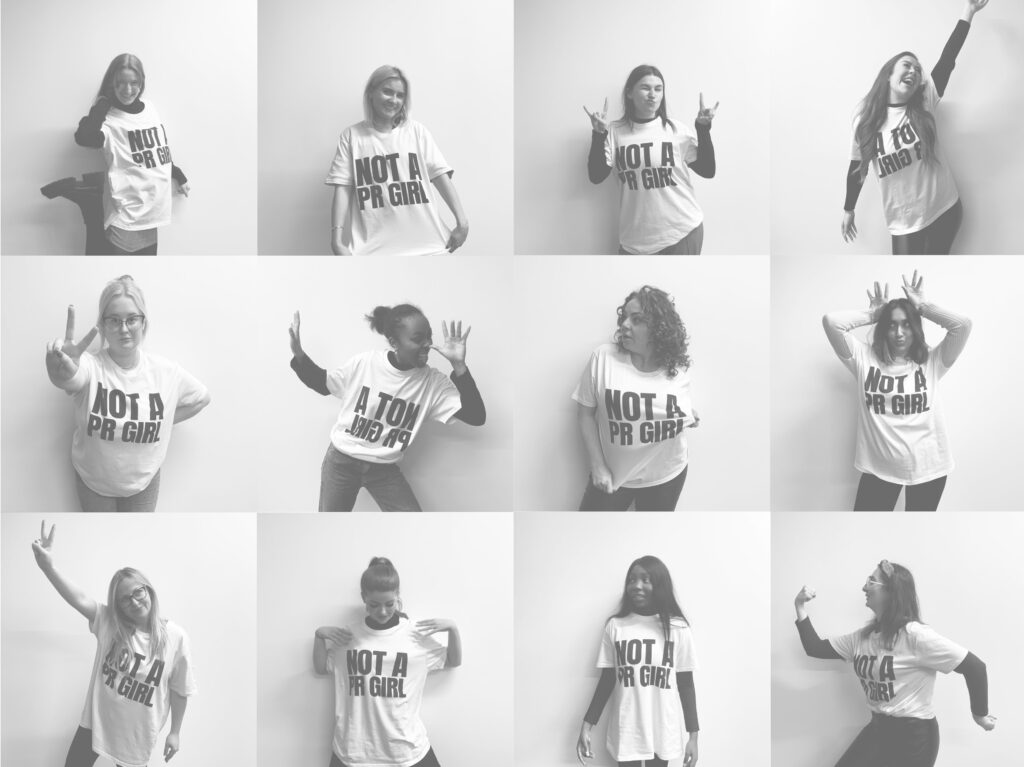
72Point's Creative Director - Sam Brown spills the beans on why the term is part-derogatory, part-sexist, and as such, we are banning it!
PR has always been a very female-friendly business. Agencies and in-house teams are very often female-dominant spaces, and spaces in which intuition and tact is as valued as data and numbers.
But with that female-dominance comes the much-used term of ‘PR Girl’. The term that’s used to describe a communications professional of the female gender. Or is it...!?
In my 20-odd years in the business, I’ve used the term PR Girl numerous times, and of course, I’ve had it used against me. I say ‘against’ as it always feels so derogatory. I admit that I’m guilty of it, even though I roll my own eyes every time it slips out of my mouth.
When you google the term, the first page is full of articles like ’21 tips before you date a PR Girl’, complete with descriptions of the females being multi-taskers who speak in sound bites and immediately hit you up on social media.
The ‘official’ definition is shown as:
‘…pretty event helper who greets your customer, talks a bit about your product or just stands there looking beautiful to draw people to your booth. Some people also use the title to refer to a promo girl, which is basically the same thing.’
Not great, is it?
Don’t get me wrong - this isn’t a menstrual-winge to coincide with International Women’s Day. It’s an issue that reflects our entire industry. Think about how PR is deemed the lesser-sibling of advertising – it’s the Big Ad Men versus the Little PR girls.
Or how (in the 00s and 10’s at least) it was a little PR girl approaching a burly male news editor to pitch their story. PR’s are always the ‘little one’.
But things have so drastically changed. PR’s are often male, news editors are often women, and we don’t have to stumble over a pair of DDs on page 3 to get to the news pages anymore.
The world, it would seem, has moved on.
So, if the industry has evolved so much; if our importance within the marketing mix is so much stronger, and if our work is more measurable and effective than ever… then why, oh why, do we still use the term that is so squarely stuck in the 1980s?
Today – on International Women’s Day 2023 – I am leading the cause, with my colleagues at 72Point by my side, to officially BANISH the term PR Girl!
For this, I am installing a ‘swear jar’ on my desk, and I shall throw in a quid every time it slips out of my mouth. I promise to pull up everyone that I hear saying it… nicely, and in a very tactful way, of course. And I will wear it loud and proud on my t-shirt to literally say it ‘with my chest’!
PR professionals, please join our cause and together let’s BANISH the term PR Girl for good.
It’s not big. It’s not clever. And we’re no longer the little ones.
Navigating the PR Industry as a Mum to a Child with SEND: Insights and Strategies
Being a mum is a full-time job in itself, but when you add navigating the demanding landscape of the PR industry while also caring for a child with special needs and disabilities (SEND), the challenges can seem overwhelming. Today, we hosted discussions with PR Mums, FORA, and CIPR GLG to shed light on some invaluable insights and strategies for thriving in both roles.
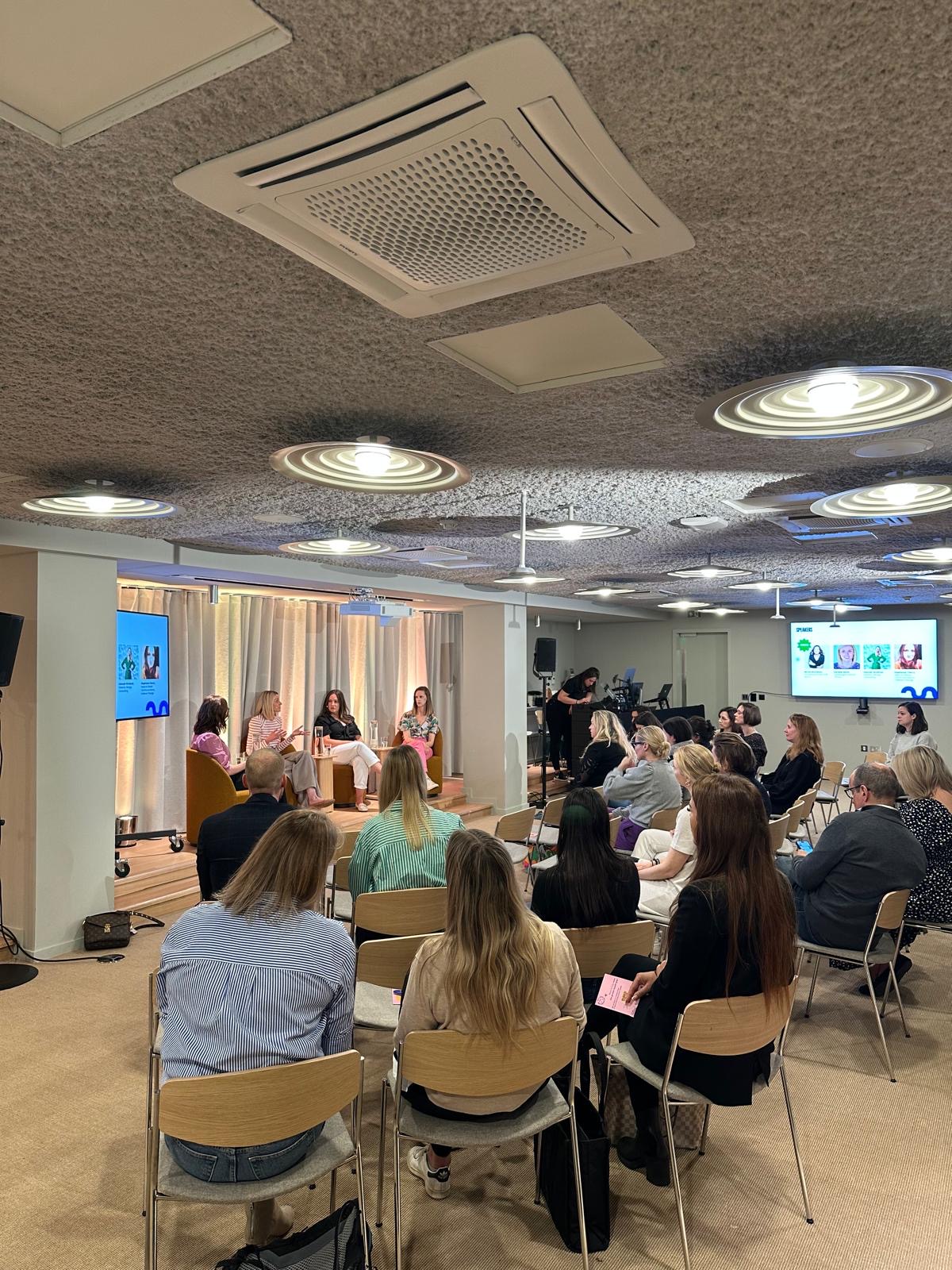
Huge thanks to our speakers:
- Nicola McKelvey, Founding Mother of PR Mums
- Danielle Baird, Campaigns Director, 72Point
- Stephanie Cherry - Head of Global Communications, Unilever Prestige
- Hannah Wrathall, Director, Wrapp Consulting
Who took time to share their personal experience as Mothers with children with special needs. Top take from the panel discussion aways included:
Open Communication is Key
One resounding piece of advice echoed throughout our discussion was the importance of open and transparent communication. Whether it's with your People & Culture team or your line manager, speaking up about your situation, even before diagnosis, can pave the way for understanding and support.
Finding Support in Unexpected Places
For mums with children still in mainstream schools, do ask other parents for support. Explain your situation in the school WhatsApp group. Your mum's group can be an invaluable resource, providing empathy, understanding, and practical advice that only those in similar situations can offer. And you’ll be surprised at how flexible other parents and children will be in joining inclusive activities with your child.
Employer Transparency and Support
Employers at PR agencies and brands alike play a crucial role in creating a supportive environment for mums of children with SEND. Transparency about policies and available support can alleviate some of the stress and uncertainty that comes with balancing work and caregiving responsibilities.
Balancing Career and Caregiving
Knowing when to lean into your career and when to prioritize your caregiving duties is a skill that many PR mums have honed. It's important not to put undue pressure on yourself to excel in both areas simultaneously. Finding a balance that works for you and your family is key to long-term success and happiness. Do have open discussions with your employers and clients and don’t be afraid to request to switch to less pressured accounts if you are working in an agency.
Patience and Long-Term Thinking
Employers should have patience and take a long-term view when it comes to their staff who are mums of children with SEND. Loyalty and dedication often pay off in the form of highly efficient and committed workers who bring unique perspectives and skills to the table.
Multitasking Superpowers
Mums of children with SEND possess multitasking abilities that are second to none. Their capacity to juggle multiple responsibilities with grace and efficiency makes them valuable assets in the workplace.
Harnessing Industry Power
Finally, it's crucial to recognise the power within the PR industry to shape perceptions and generate awareness about the challenges faced by mums of children with SEND. By advocating for inclusivity and understanding, we can create a more supportive and inclusive environment for all.

Native Advertising: What is it and why should you be doing it?
 Of all the ‘Zucker’ web pioneers in the World, Ethan Zuckerman is surely the most loathed. Working for Tripod.com in the 1990s he invented the odious pop-up advertising format which has enjoyed a lucrative career assaulting the eyeballs of innocent web browsers with sponsored messages and swindling clickbait. Last year he issued a public apology for “creating one of the most hated tools in the advertiser’s toolkit” in a paper questioning whether advertising – the “default business model on the web” – could be replaced by other possible revenue models such as subscriptions, micro-payments and crowdfunding. His argument, predicated on the notion that advertising was the internet’s “original sin”, somewhat complicates the solution in search of a face-saving digital utopia. In reality, we just need ads that are better at engaging with online audiences.
In the 72Point report on the state of the digital media industry we coined the term “Citizen Editorship” to demonstrate how we have evolved to cope with the deluge of content online. Rather than acting as spectators, we have become agents in the media cycle and more powerful as a result, which is why disruptive ad formats such as pop-ups have largely fallen into disrepute. Today, browsers demand ads that complement their journey rather than detract from it, and smart marketers, publishers and agencies are moving aggressively to adjust their core strategies to reflect this.
What is It?
Native advertising is a form of online advertising that matches the form and function of the platform on which it appears, or, in the words of Peter Minnium, Head of Brand Initiatives at the Interactive Advertising Bureau (IAB), ads that are “so cohesive with the page content, assimilated into the design, and consistent with the user experience that the viewer simply feels that it belongs.”
Sponsored search results on Google, sponsored posts on Facebook and sponsored tweets on Twitter are all examples of content that is ‘native’ to its platform, and the publishing industry is quickly following suit. Companies such as Time Inc, Forbes, Wall Street Journal, New York Times and USA Today have introduced new advertising integrations that match the form and function of their editorial feeds.
Why Should You Be Doing It?
Native advertising represents a significant shift in the evolution of digital advertising. Not only does it offer a non-disruptive means of communicating brand messages, it also works seamlessly across platforms and is ideal fodder for social media channels.
Well Liked
Research shows that native ads widen the purchase funnel by 29%. Compared to traditional display advertising, there is a considerable uplift in regards to discovery (+33%), trust (+32%) and purchase (+29%). The click-through rate for native ads is 31% higher than regular ads, and in stark contrast to pop-ups and display advertising, the majority (59%) of consumers actually like native ads.
A Good Fit
Brands are spending big marketing bucks online. Digital ad spend has increased from £825 million in 2004 to £7.2 billion in 2014, an increase of 800% in the midst of a severe economic downturn. This extensive increase is thanks to new ad formats that fit around the natural browsing habits of consumers. Share through/IPG Media labs research found 25% more consumers were measured to look at in-feed, native ad placements than standard banners in a recent study that used eye-tracking technology to assess the attention of consumers. Most notably, consumers looked at native ads 2% more than editorial content and spent the same number of seconds viewing.
Changing Consumption Behaviour
One of the other big findings from our Generation Editor report was the extent to which consumers are using multiple devices as part of their browsing experience. A massive 95 per cent of the 7,500 respondents surveyed said they consume media on multiple devices, with mobile and tablet overwhelmingly popular. Content marketing and native advertising already makes up over one fifth of digital display and half of mobile display because it seamlessly fits with this change, or evolution, of consumption behaviour.
72Point Native Advertising Packages
As specialists in writing and landing branded stories within the news pages of national news sites and specialist press outlets we have always been focused on organic coverage. However the native advertising package is a great way of bolstering a campaign with guaranteed regional exposure that complements the coverage we achieve through our traditional methods.
In conjunction with Johnston Press, 72Point can offer an unrivalled native advertising package which guarantees coverage across 185 digital sites in the UK. In comparison to an industry average 0.18% CTR, our ads have been running at an average of 0.37% CTR and are as high as 1.2% thanks to its prominent position on all homepages in the Johnston Press digital portfolio.
If you would like further information on our native advertising packages, don’t hesitate to get in touch.

So Much for Silly Season
 Well, that was that…
‘Silly season’, by far and away the best time of the year to deliver PR content to the UK’s national newspapers, passed by in a blur of war, death, phone hacking and paedophilia.
(By the way, they are not in order of seriousness, they merely read quite nicely in that order).
No room for tales of great white sharks being spotted off the Cornish coast this year – and subsequently very little room for PR stories.
Last year was very different, the country was enjoying a feel good factor, the birth of the young Prince and Andy Murray’s Wimbledon victory gave the nation a huge boost, and opened the door for bucket-loads of PR fun within the pages of the national press.
In PR terms the summer of 2013 was the summer of love. Positivity flowed through the streets of Britain and through page after page. Boasting tans and clutching a glass of Pimms, the media opened their arms to light-hearted content.
Stories which may have squeezed in at the middle or back end of the news pages landed in the first five to seven, leaving the PR industry with a glow as warm as Kate and Wills’.
Fast forward – and this year could not have been more different.
This summer has been flat. A bit like arranging a posh barbecue, inviting 22 friends, spending £300 on steaks, fresh fish and couscous from Waitrose, only for your mate and his not-so-sociable girlfriend to be the only guests to turn up.
Time and time again I have seen good quality PR content, which would have sat nicely up the front of papers, being given a smallish show in the later pages.
Whilst this time last year was the summer of love, we are now in the midst of our very own annus horribilis.
Thinking about it – why didn’t we see it coming?
Should have gone to Specsavers, perhaps.
The tone of the year’s news seemed to be set quite early in March when within six days three massive global stories kicked off, pushing PR-based content off the news list.
First the Oscar Pistorius trial began in South Africa, and the world hung on every piece of evidence put before the court.
Page after page of coverage followed for days on end as the grim final moments of Reeva Steenkamp’s demise were made public.
The trial of publicist and all-round Mr Fix It, Max Clifford, dubbed the showbiz trial of the decade, followed and again took up page after page of the papers.
An art and sub desk’s dream, maybe. Having a string of belters to place on the flat plan after the morning news conference. But a complete nightmare for the PR industry.
They always say things come in threes, and just when we were all hoping things would quieten down and free up a few pages reports started emerging of a missing passenger jet.
And so the greatest mystery in the history of aviation was born.
Never before has a packed passenger jet just vanished without a trace – but it did this year.
Malaysian Airlines MH370, which took off from Kuala Lumpur bound for Beijing, lost contact with air traffic control less than an hour into its flight.
The aircraft, a Boeing 777-200ER, carrying 12 Malaysian crew members and 227 passengers from 15 nations, left Malaysian airspace with a casual ‘good night’ from the co-pilot and is still missing.
Search and rescue teams from around the world joined the hunt for the doomed airliner, hundreds of ships – including dozens of naval vessels were scrambled to the area where experts pinpointed as a possible crash site.
Harrowing photographs of friends and relatives of the missing passengers collapsing under the sheer weight of their grief filled the pages of the world’s media.
Around a month later Britain was stunned by the initially mysterious death of Peaches Geldof at her home in Kent, hours after she posted a photo of herself as a child with her late mum Paula Yates.
From grief and disbelief, the nation’s emotions quickly turned to disgust and deceit and even the feeling we were all duped, when the trial of Rolf Harrisbegan.
Surely at some point there would be some respite for the PR industry, a shard of light at the end of the tunnel – or even a triangular-shaped fin off the coast of St Ives.
But no, the death destruction and mood of media misery continued, this time when after a thoroughly public laundering of the industry’s own dirty washingAndy Coulson was found guilty of conspiracy to hack phones of celebrities, royals, grieving families and even fellow staff from the now defunct News Of The World.
Sandwiched between the Harris and Coulson cases came the sad and untimely death of comedian and all-round good guy, Rik Mayall.
More recently – and right smack bang in the middle of our beloved ‘silly season’ – came another potentially fatal blow for Malaysian Airlines.
The mid-air annihilation of MH17, a packed passenger jet, amid the disputed skies over eastern Ukraine, in what looks likely to be an attack by pro-Russian guerrillas, left the world shocked to the core.
Again, alongside stories of those who died, subsequent tributes and heart-breaking family photographs, those who should have been on the flight but weren’t for one reason or another, told their stories. Within hours graphic images of charred human remains amongst the twisted fuselage of the downed jet, the most haunting pictures of the year in my opinion, began to filter through.
As the ramifications rumbled on, and President Putin did his best to distance himself from the rebels who will surely be held responsible for the atrocity,trouble escalated in Gaza.
Hamas troops launched rocket after rocket over the border at the Israelis, who responded in kind, devastating buildings and leaving hundreds dead, including dozens of schoolchildren. This again providing news outlets with a plethora of horrific images with which to fill their pages and illustrate the humanitarian catastrophe unfolding before us.
Social media and instant news and images have also helped give these stories a shelf life far longer than would have been the case in years gone by.
Each one of these stories has held great images. The visual element of most of them has been gripping to say the least.
Bar the missing Malaysian flight every story, even Harris’s trial in the shape of his arrival at court each day with his wife Alwen and daughter Bindi, and his final trip to court by boat, enabled the media to splash photographs across the pages to accompany the copy.
And each one of these stories has been what we call a ‘runner’; a tale which focuses attention on a ‘day two’ and a ‘day three’ and so on, leaving us PRs facing an uphill battle to snatch a page lead or two.
So – as I write we have around three and a half weeks to go before the PR industry begins to focus on Christmas.
Perhaps there is still time for some good news – or even a shark or two,
I live in hope…
Hang on, seems a global Ebola epidemic may be brewing.…

Movember 2025: Starting Fresh for a Cause That Matters!

After proudly sporting a moustache for a whole year following Movember 2024, the time has come to start from scratch. The tache is gone, and Movember 2025 is here!
Movember isn’t just about facial hair – it’s about making a real difference. This cause holds a special place in my heart because it has personally helped my family and friends over the years. Seeing donations go directly to those in need is something words can barely express.
This year, I’ve shaved it all off to raise money for suicide prevention and mental health support. Hopefully, the moustache will look a little more convincing this time around!
At 72Point, we’re all rallying behind Julien in this amazing effort. If you’d like to support and donate, please visit his Movember page:
👉 https://movember.com/m/julienkirkpatrick?mc=1
Every contribution counts and helps change lives. Let’s make Movember 2025 one to remember!

How mentoring can further your PR career
 With the A level results and intern opportunities on the rise in the PR industry I wanted to take the opportunity to write about a topic which is very close to my heart, mentoring.
We all start with some form of dream, goal or expectation of how life should be.
In the school of life all experiences either move you towards or away from your goal.
I believe the difference lies in the people you have around you.
Yes, you will ultimately have to put in the ground work but it is invaluable to have people around you who can give you advice and support along the way.
I was very lucky to have a mentor early in my career, which meant I accelerated quickly through my early twenties. I am forever grateful for the opportunity to work close with someone who understood what I wanted to achieve in my career and understood where I was in my learning curve.
Another useful tip I was given was to surround myself and reach out to people inside and outside my industry. People who either have the same job as you, have done the job you currently have or are doing the job you aspire to do. Which I did and still do.
Little did I know I would have the biggest mentors right in front of me – my mum and my grandmother. Even though we all work in different industries and span three generations, business is still business, and I have not come across a single situation that they haven’t experienced themselves.
Mentors and role models are everywhere, you just have to look for them.
The PRCA and PRWeek recently launched their own mentoring scheme. The ‘Fast Track in PR’ scheme is ‘aimed at inspiring the next generation of PR leaders’ and sees 9 fellows of the PRCA offer a 6 month period of mentoring to those looking to achieve their goals and further their careers.
If you are lucky enough to have a mentor at work, embrace this opportunity! If not, don’t fear, take what you can get from people around you, go to networking events, read books, articles, use linked in and social media, talk to people and ask questions! We are all people, most of us are very friendly and helpful. If not, then you probably don’t want them as your mentor in the first place!
Successfully managed to find someone you believe can help? The key to get the most out of your mentor relationship is to be clear on what you want to get out of it. That will help steer the questions you ask, help you know advice you are looking for and will ultimately shape what you talk about when you speak with them.
Not sure about how to reach your goal? Here are 10 questions that helped me through process.
- What do you want to achieve in the future?
- If you achieve this goal what value will it bring to your life?
- How will you know when you have achieved this goal?
- Is achieving this goal within your control?
- What are the positive consequences of achieving this goal?
- Do you have all the resources you need to achieve this goal?
- What time frame do you need to achieve this goal by?
- What are the consequences of not achieving this goal on time?
- What steps need to happen to achieve this goal?
- If you could take those steps now, are you ready to do it?
Although these questions look a little formal, answering them made it very clear to me what I needed to do.
Yes, I am very goal driven, and I leave very little down to chance. But there is one thing I wish I could have done differently and it is something that I’m still learning to master, and that is to enjoy the journey and to trust the process. Know what you want to achieve, do things every day that will get you closer to your goal, surround yourself with the right people but remember to enjoy the ride.

Prolific North Awards 2018
May 28 2018
 72Point is proud to sponsor the Video of the Year category at the Prolific North Awards 2018. The awards recognise and reward exceptional talent in the creative and media industries across the North of England. Read why we are celebrating the rise of the Northern Digital Media Powerhouse here.
Marketing to the Millennial Mum
 Mothers, we've all got one, unless you’re a marmorkreb. Facebook has just reminded me that it is my Mum’s birthday today, triggering the annual panic-order of flowers which is well on its way to becoming a tradition.
Still, between the ‘terrible son’ guilt and the ‘these daffodils are a bit pricey’ remorse I was reminded of this report from Hill+Knowlton on the growing influence of the Mummy blogger.
If you've just opened that link and heaved a sigh at the 11 pages in front of you, fear not, here’s the TL;DR (too long; didn't read) version:
- Mums are responsible for 70% of household spending
- ‘The Mummy Pound’ accounts for $20 trillion of consumer spending worldwide
- 23% of Mummy bloggers think that “a lot of marketing by brands that target Mums is not relevant or ineffective’
- 93% want to work with brands but only 13% believe agencies understand how to approach and work with Mummy bloggers
The Mummy bloggers have earned the trust and respect of their audience, but only a small percentage of brands have cracked how to take advantage of this. How do you effectively market to Millennial Mums?
The first thing to consider is that the modern mother is very different to my dear old Mum, patiently awaiting her belated bouquet of daffs. 75% of new Mums are Millennials, making for a hellish Venn diagram-intersection of tough demographics to approach. Essentially, the tried and tested rules of marketing to Generation X are becoming less effective with every passing year.
And it’s all social media’s fault.
You’re a Millennial Mum. On social media, all your friends are having a better time than you. They’re prettier, wealthier and better-dressed. Their selfies are flawless, they've got 20k followers on Instagram and their latest blog was entertaining yet informative.
Worse still, brands are pushing products on you from their Facebook pages like you’re a confident, well-established Gen X baby boomer. These guys took on the world and won with their entrepreneurial spirit. Meanwhile you were nurtured, educated and set on the world with fragile dreams only to be flattened by the grim reality that ‘not everyone gets a trophy’.
It all comes together to create an ideal perception of motherhood that is unrealistic for the Millennial Mum.
This calls for a more understanding mode of marketing. In a world where new Mums are straining under mounting social and economic pressure, brands that provide an escape are more appealing than those perpetuating the Gen X ideal.
59% of Millennial Mums favoured advertising with a more realistic edge, showing real-life situations using real Mums, while 57% looked for humour in the ads. If you are in the business of marketing to mums then shaping your campaigns around these characteristics could be the key to the Millennial Mum market.
And if you’re approaching Mummy bloggers with your content be sure to do your research first. 71% hear from up to 20 different brands a week yet 80% of the pitches they receive end up going unused. Spend some time exploring each blog, check out their social media channels and consider how you could collaborate with the blogger in the future. All the extra effort will be worth it when your content is posted by a prominent Mummy blogger, perfectly tailored to suit the Millennial Mum audience.
'Lowlight? When Jedward threw a can of hairspray at me.' Dan Harding's Creative Q&A with PRWeek
"My background in journalism continues to serve me well, but not resting on your last project is the absolute key. A lot of the time you spend trying to prove you are up to the task. But the reality is, in doing that you are pushing yourself further than ever, regardless of if you thought you could do it or not. I continue to prove to myself that I’m up to the challenge, and any doubt that I have just drives me more. We learn as we go."
Dan Harding's Creative Q&A in PRWeek, read it here.