
Google’s Spambrain: Why Quality Link Building Is More Important Than Ever
Marten Lazarus, Head of SEO
You might remember Google’s announcement back in December 2022, an update to its ever-evolving link spam efforts called “Spambrain”, Google's spam-detection algorithm, designed to find and remove low-quality websites from the search results.
When I fell into SEO over 16 years ago, the techniques we were using to improve our clients’ websites would not even be considered today as it would be both a waste of time and incredibly risky for all parties involved! Google has come a long way in developing its systems and algorithms to, in my mind, try to replace as much of the human review required when determining what is constituted as “spam”.
If you look at what is considered spam today from old backlinks, it is obvious that these pages are not built for humans to read, but purely for links. I still occasionally see examples of this, but nowadays it is far more carefully done. If you look at a bunch of the links pointing to your site and think “I would never read this page” then you might be sitting on a timebomb waiting for Google to bring the match to light the fuse.
As someone who worked in SEO before the Panda (low quality content penalty) and Penguin(low quality backlinks) updates, and can even remember the Caffeine update in 2010, it has (at least in my mind) always been a balancing act when it comes to link building. Something that might provide quick results and shoot your rankings up on Google does often sound very appealing. As the classic saying goes “if it sounds too good to be true”... and you know the rest!
Those that have more of a medium to long term view will already have realised that along with traditional marketing practices, SEO is an ever-evolving practice in which one builds an amazing website upon a strong set of technical principles and foundations.
For PR and SEO, it’s the best ideas executed in the best ways that bring top-class results – something that is true for both disciplines. It is also true that you remember a failed campaign, rather than the great early work that went into it.
When I train or educate people on SEO, it starts with how you think about your business, clients, and current and potential customers. I then branch out into understanding what search engines are built to achieve – the highest possible quality of results based on what the searcher wants. We must first broadly understand the criteria that search engines are using to best match these searches before we can then understand how to adjust things on our websites.
With increasing developments in AI and machine learning, it is a matter of when, not if search engines will be fullyrun by machines. A scary thought? – perhaps this article you’re reading was entirely written by one.


Google isn't moving away from links - it is moving towards more meaningful ranking factors
Guest blog by Jack Peat, Editor of The London Economic

News that a Google algorithm change could be deprioritising the value of links has caused a stir in the SEO world.
Long regarded as a stalwart of the ranking factors there are indications that 'inferred' links - eg brand mentions in context - are becoming increasingly important because Google's algorithms are now sophisticated enough to interpret them.
Where links might once have carried a value of 20 or 50 times that of a brand citation today it is closer to two or three times, depending on the relevance, which is a potentially seismic shake-up if true.
Which it could very well be.
Google changes its algorithms all the time and it has no obligation to tell anyone about it. Sometimes you will get wind of the changes straight away, sometimes you will hear about them in six months time by which point you are already backpedaling.
But this latest change should come as no surprise. Indications that Google was shifting from “exogenous”’ to “endogenous” signals have been there for at least five years. As we wrote in our 2017 white paper, links may well be an indicator of trust, but they are a rater shallow one.
"Google’s algorithms in the future are more likely to incorporate the time people spend on the page and the way they interact with content". Relevance is also key, but the point is to make it work homogeneously, as part of a package.
The underlying shift is that Google is moving towards humanising search rankings. As Rand Fishkin points out, that's because for its first 15 years of existence Google's algorithms were designed by committees of engineers. Today they are designed by people. The old proxies for 'votes' don't rank like they used to.
This is potentially good news as far as the intersection between PR and SEO is concerned. If you already have context, authenticity, relevancy and authority at the heart of everything you do then you are already half way there. If you are already taking a more considered approach towards link building then there should be no issue either.
The key take-home is not that links are no longer relevant, but that they should be considered as just one slice in a more complex SEO pie. Google isn't moving away from links - it's moving towards more meaningful ranking factors.


Good News Update

As a result of the growing appetite from publishers for content from our sister company and news agency SWNS, we are closer than ever to the newsrooms of the mainstream media, and as such from November 1st, feel able to improve our Service Levels to clients for our news generation packages.
In addition to our long standing strength in the non-broadcast, print and digital national media sectors, our growing relations with broadcast media, our social communities and proximity to other digital channels makes this a hugely exciting period to be working with 72Point.
Demand for our services has exploded over the past few months for which we thank all our clients. However, resourcing does not afford us the capability to service the volume of campaigns at current levels to the standards we and our clients expect, so we are forced to cap future capacity to 5 campaigns per day, to ensure both the highest quality creative input, and to achieve the maximum coverage and performance for those projects.
So, from Nov 1st our enhanced packages will be available on the following basis:
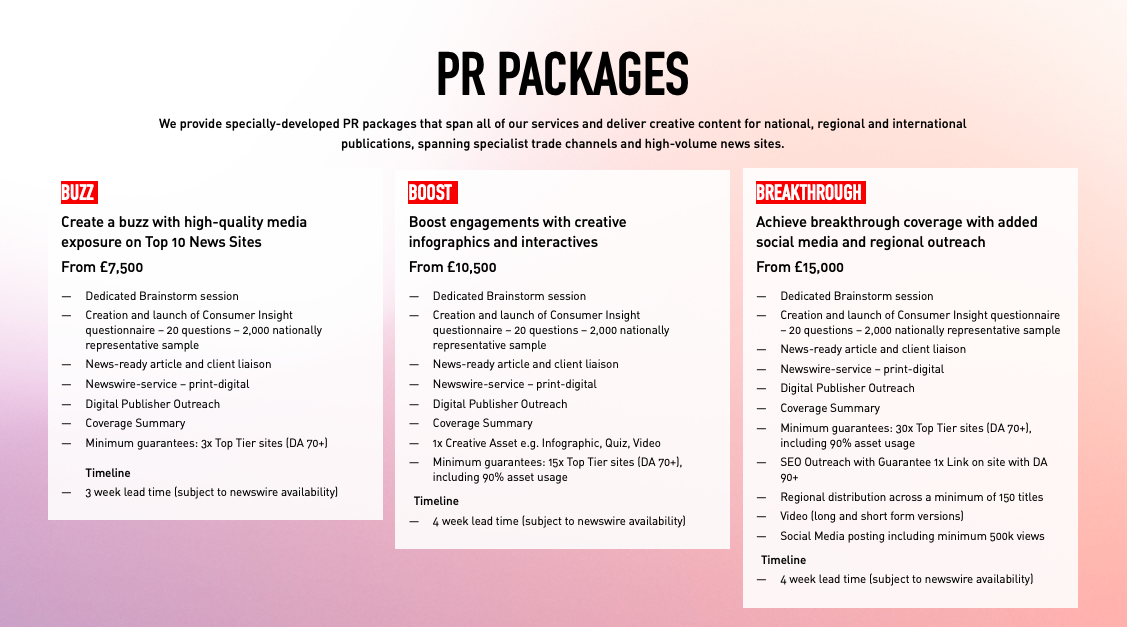
For more information on our new enhanced packages, visit our Packages page.

Generation Editor: a report by 72Point
 The marriage of social media and mobile technology has opened the door to round-the-clock media in our lives. According to Crowdtap research, individuals aged 18 spend an average of 17.8 hours a day with different types of media, often simultaneously handling multiple media types. But does that indicate a deluge, or an evolution?
Our report, Generation Editor, has revealed we have adapted to the 24/7, immersive media environment by developing editorial controls and filters. Consumers have become agents in the media cycle, choosing who to follow based on the content they’re most keen on receiving and becoming more powerful as a result.
Our survey of 7,500 UK adults shows that the perception that consumers can’t cope with a wealth of content needs to be challenged.
Some 56 per cent of people say they don’t feel bombarded by content or messaging and more than a third (36 per cent) say they feel more in control of the news they receive since owning a smartphone or tablet with only 11 per cent saying they feel less in control. Seven in ten say social media has made it easier to access news, with more than four in five 18-24 year-olds and three-quarters of female respondents saying they feel social media has brought them closer to the media.
The study, based on the responses of 7,500 people, shows that the perception that consumers can’t cope with a wealth of content needs to be challenged. Using avenues such as social media, we have greater control over who our media ‘suppliers’ are. Almost a quarter of people say they have friends or follow people who they regard as authorities for news and almost one in five (19 per cent) say they trust their friends to source news. A quarter still rely on media professionals, but a similar amount (23 per cent) say they rely on a mixture of both journalists and friends.
This is a shift we have termed Citizen Editorship, a movement predicated on choice and preference. Media consumers now demand the liberty of choosing which platform or channel they consume media on. A massive 95 per cent of respondents said they consume media on multiple devices and almost half (48 per cent) take a multi-channel approach to media. On social media, we only wait 22.3 days before unfollowing or unfriending a news source we no longer find useful.
For media professionals, infiltrating these editorial controls means delivering flexible, relevant content that transcends channels and platforms. With social media an increasingly important part of the media mix, it is essential that a variety of media is delivered in order to reach intended audiences.
Multi-Platform Content (MPC) is a must in this current climate, which is why it is at the heart of everything we do at 72Point.

GDPR inbox avalanche
Sun Consumer Writer Jane Hamilton on why the avalanche of GDPR emails is nothing compared to a journalists' average day...
BURIED under an avalanche of GDPR emails? How many do you reckon you’ve received? 100? 250? More than 500? Well that’s fewer than an average morning’s in-box worth for a national news journalist.
The forthcoming data-rules change has unleashed a deluge of emails on ordinary Brits causing ‘in-box rage’ and mass deletions - but this is something us journalists deal with every single day.
While the emailed press release remains a useful tool in the PR armoury, public relations firms are always stunned - and a little shocked - when I reveal just how many we journalists actually receive.
 As a national hack writing on issues covering consumer to careers and parenting to property, my ‘beat’ sees from 400 to over 1,000 releases drop in relentlessly each day. And on a ‘calendar occasion’ such as Black Friday or a Bank Holiday, this escalates to an out of control level, topping the 2,000 mark.
When you consider an eight-hour working day contains just 480 minutes, you don’t have to be a maths whiz to work out there’s no time to read them all.
And don’t get me started on follow-up calls - I really don’t need 1,000 of those a day.
Instead - and in common with almost every other journalist I know - we skim, select ones from our key contacts, or seek out the top-line tales which look like they will work.
It hasn’t always been this way. Even five years ago, in-boxes were manageable; we had time to spend with key contacts and agencies, and were able to spend more time crafting exclusives.
But staff cutbacks and the demand for rolling online content means every journo now needs to pen more stories in less time. And interestingly, fewer hacks has meant more PRs - and more releases - as ex-wordsmiths swap careers and head to the darkside.
Recent figures revealed since 2013, the number of PRs has risen by 50 per cent, while the number of journalists has fallen by nine per cent. This trend will only continue, so how can we manage it so it works for both sides?
Firstly, however grumpy a journo is, most of us do need - and even rely - on PRs. A good PR who understands your readers and your ‘patch’ is a very valued contact. Aim to be that PR who we will answer the phone to.
Secondly, a release has got to be what the publication wants - not what the client wants. It has to be a ‘new news’ story to entertain and inform a readership or viewer.

Thirdly, If the client wants it a certain way and won’t bend, remember YOU are the expert. If the client could do it himself, he would and save paying you. He can’t, so work on him until he takes your advice. Client won’t budge? Then he needs an advert, not PR.
Fourthly, craft it like a news story. Help me out and give me the ‘who, what, why, where and when’ it the top paragraph. Don’t give me the client’s company mission statement.
Finally, you may have the best release in the world, but if it gets missed, it won’t get in. With in-boxes clogged, sadly it does happen. Targeting and delivery is everything, so aim to build a relationship with your key journos so we open whatever you send. Or use a purpose-built delivery agency like 72Point who guarantee to get your story under the nose of news editors.
I hope this has helped and I’m happy to chat further with you if you’d like to talk more. Just put in the email subject line that it’s an important one for me to read!
The future of digital media is in the North - here's why
The future of digital media is in the North - here's why
In what is being dubbed a “digital migration” in the industry, many media organisations that once housed their digital functions in London are migrating to the North of the country.
Although the shift can be attributed to a number of factors, early signs that London has been caught napping while the digital revolution took hold are certainly there.
According to one recruitment consultant there has been a significant increase in the demand for experienced digital professionals throughout the north, with Leeds a particular hotbed for such talent over the years.
Here's how the north positioned itself as the chief beneficiary of a digital migration.
The Past
There once was a time when London had a monopoly over the media industry. In fact, so concentrated was the media landscape that in 2003 the government was forced to intervene with the Communications Act, which required a proportion of programmes by the UK’s main broadcasters be made outside the M25. This acted as a catalyst for big media moving to the north.
The Present
Fast forward to today and the news on the media front is that Salford outranked both London and Manchester to become the UK’s top city for starting a new business in 2017. Sunderland also laid claim to the most new tech businesses in the UK, with the turnover of digital tech businesses in the city growing by 101 per cent between 2011 and 2015.
This is even further exemplified by the fact that nearly 70 per cent of total UK digital tech investment was in regional clusters beyond London, with Edinburgh (£159 million), Manchester (£78 million) and Sheffield (£61 million) among the notable recipients.
Significantly, digital employment in Sheffield and South Yorkshire stands at over 21,000 and digital firms in the region boast one of the highest growth rates of any cluster in the UK, with turnover increasing at 47 per cent.
In Birmingham, there are already an estimated 50,000 creative workers in the city area, and more than 5,800 companies. Little wonder, therefore, that Birmingham successfully lobbied to gain more investment from the BBC in the same vein as Salford by pitching itself as "young, diverse and digital".
The Future
The impact of Media City’s introduction to the wider region and the rate of growth should not be understated, as thousands of start-ups now rub shoulders with the likes of the BBC and Channel 4, who headquarter in the city.
It would appear the only way is up for the region. In 2016 a £1 billion plan to double the size of MediaCityUK was given the green light. Moreover, according to a study by DueDil, if Salford maintains its startup growth rate, the city could be on course to produce 5,286 new businesses this year alone, a huge increase of 2,436 from the previous year.
According to Stuart Clarke, who headed up the Leeds Digital Festival in June 2016, Leeds has the potential to become ‘digital capital of Europe.’ Thanks in part to the rising costs of running a business in London an increasing amount of start-ups are heading to Yorkshire to capitalise on its burgeoning digital sector. The Leeds University backed SPARK programme supports student entrepreneurs, while Futurelabs, Duke Studios, Leeds Beckett Digital Hub and ODI Leeds provide space and networking opportunities. A £3.7 million grant from Leeds City Council will be divided between innovative tech projects, and Creative England backed Gameslab Leeds will continue to support games studios in the area.
The North East is also in the process of handing the keys to the region over to tech-savvy Millennials. The IPPR “State of the North” report pointed to the opportunities afforded by the creative and tech sectors in the region that will necessitate more digital skills. Sunderland now has the highest rate of digital tech business startups in the country, while Newcastle and Middlesbrough both have higher birth rates than the national average – with a hotbed of IT and digital talent and creativity there to welcome firms who take a punt on the country’s chilly North East.
In Birmingham, the digital scene is thriving with the youthfulness and diversity of its workforce, as Under 25s make up 40 per cent of the population, making it among the youngest cities in Europe with an increasing supply of talent for media firms operating in the digital space.
Conclusion
With the secret now out, it will be interesting to see how aggressive this migration is set to be. Although London is undoubtedly important to the Digital Media sector, it seems like the tide has turned to the North with only greater growth expected in 2018.
72Point's Jack Peat will be leading Prolific North Live’s Digital Keynote Theatre on 28th February and 1st March, for more details, see https://live.prolificnorth.co.uk/.
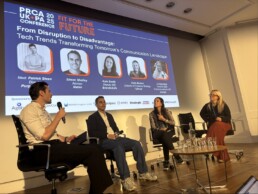
From Disruption to Advantage: Tech Trends Shaping the Future of PR

At today’s PRCA UK Conference, a panel of industry leaders explored how technology is reshaping the PR landscape. Hosted by Patrick Steen (Purpose Union), the session brought together voices from across the industry including Katie Earlam (72Point), Kate Smith (Brands2Life), Simon Shelley (Natter) and Jo Ogunleye (Google). Together, they shared sharp insights on how disruption is becoming a springboard for opportunity.
The AI Tipping Point
The conversation quickly turned to what many see as the most disruptive force in PR today: artificial intelligence. Much like Twitter’s launch in 2006, the arrival of tools such as ChatGPT signals a fundamental shift. But whereas Twitter transformed where we tell stories, AI is transforming how we create, shape and distribute them.
AI is already being used to automate processes, uncover trends and generate media insights. It helps identify the right stories at the right time, freeing teams to focus on strategy and creative execution. Yet the panel agreed on a crucial principle: while AI is an enabler, it is not a replacement for the human craft of storytelling. Authenticity, originality and a human touch remain essential for stories to cut through.
Using AI as an Enabler, Not a Shortcut
Across the industry, AI is being applied thoughtfully. From building custom bots to stress-test pitches to speeding up reporting and trend analysis, the goal is to unlock capacity and sharpen creative thinking. But technology must serve human creativity, not dilute it. Transparency about when and how AI is used will also be key to maintaining trust with clients and audiences.
Beyond AI: Other Tech Trends on the Horizon
While AI dominates the headlines, the panel highlighted several other tech-driven shifts shaping PR’s future.
Social-First Storytelling: Campaigns increasingly start with social platforms and build outward. For younger audiences, influencers and user-generated content often carry more trust than traditional publishers. The evolution of visual-first platforms such as TikTok and YouTube is particularly exciting, this is why we see it a huge opportunity for 72Point’s clients. With our latest acquisition of Creatorville, our new enhanced social arm, we can now deliver fully integrated campaigns that combine standout creative, original social video with influencers and publishers, and remarkable news coverage.
Data Visualisation and New Formats: Fresh ways of presenting data are helping brands capture attention and increase coverage. From interactive graphics to dynamic video formats, creativity in how information is packaged is now as important as the story itself.
The Rise of Employee Influencers More people are unfollowing brands and instead following individuals they trust. This trend is pushing businesses to empower employees as authentic brand storytellers.
Generative AI and the Media (and the influence on Generative Engine Optimisation or GEO): The conversation also explored the intersection of generative AI and journalism. Large Language Models scrape information from trusted sources, and the media is one of the most important. This is where 72Point is perfectly positioned to support brands. With our page-ready news content, brands have greater control over their messaging and we’re able to generate mass coverage via the newswire, ensuring that what LLMs find is accurate, trustworthy and aligned with brand values.
Risks and Responsibilities
With opportunity comes responsibility. Concerns include misinformation, copyright issues and the risk of devaluing creative skills if automation is overused. Instances of publishers pulling AI-generated stories highlight the continued need for trusted, human-led journalism, and for PR professionals to provide it.
Turning Disruption into Advantage
Disruption in PR is nothing new, but today’s tools are more powerful and the stakes higher. With the right balance of creativity, human judgement and smart tech adoption, the industry can transform disruption into competitive advantage.
At 72Point, we’re already putting this into practice, combining human creativity with data-led insights and emerging technologies to deliver stories that resonate in a fast-moving, fragmented media landscape.

Football clubs are putting PR at the heart of their comms strategy - and reaping the rewards
Football fans up and down the country will know the feeling. Constantly refreshing your Twitter feed to check if your team has found the final jigsaw puzzle to propel them toward the Premier League title. He finally signs - cue fanfare, interviews with the player, general knowledge articles and all-round hysteria. It demonstrates how in just a matter of years social media has become integral to fanship and football.
The worlds of marketing, PR and social media are now a big part of how football teams operate. But believe it or not there was a time before all this, when the world's biggest football teams were not paying such close attention to their PR departments.
Manchester United are the biggest football team in England and, debatably, the world. For me they are a huge example of how pivotal PR has become in football. Six years ago they allowed one of their hottest young prospects, Paul Pogba, to move on for free to Juventus in Italy. Fast forward four years and they buy Pogba back, initiating one of the most drawn out transfer sagas in football history that would eventually make him the most expensive footballer in the world (at least for a while).
Fans were literally champing at the bit for confirmation of the transfer, and when it finally came Pogba had already inherited a popstar-esque stature. Social media was sent into overdrive with content and hashtags centred around the French star returning, with Man United running ‘#Pogback’ with even his own emoji.
Then there was a collaboration video featuring Pogba (an Adidas athlete) and Stormzy (a prominent UK rapper, also part of the Adidas roster) rapping and dancing dressed in Manchester United kit (Man U are also sponsored by Adidas).
The whole thing was a PR explosion and for the first time in a while I had started to believe the football world had gone mad. From a business perspective, allowing a player who was on your books to leave for free, only to buy him back four years later for £90 million seems absolutely ludicrous. Surely that's a shocking investment and a hugely avoidable mishap that would punch a hole through the heart of Manchester United’s financial situation? Right?
Wrong. When you factor in his shirt sales reaching £190 million within three weeks, then the whole PR stunt makes perfect sense. Not only are United getting a player of extreme quality, but also by turning him into an international popstar they are actually getting value for their money at £90 million! How insane is that? And this is before we even mention the benefits for Adidas, the kit manufacturer who sponsor Man U and also Pogba.
In other words, the deal made perfect sense for everyone involved, especially Adidas, who hold Pogba as arguably their most prized asset - someone who they invest most of their marketing and advertising budgets into.
Now, let's take a look further down the leagues. This year, Bristol City (who play in the English Championship) have implemented a PR stunt that was never before seen in the world of Football. They used their Twitter account to give fans a glimpse of the players, which is nothing groundbreaking, but the way in which they did it has hooked the nation, and has pretty much made them the nation’s favourite second team.
Whenever City score, instead of tweeting an ordinary goal update, their twitter account will tweet a hilarious gif of the goalscorer doing something completely random! Examples include players cracking eggs on their heads, brushing their teeth or even doing the ironing, and this one of midfielder Bobby Reid cracking 2 beer cans over his head!
GOAL: #BristolCity 1-0 Wolves, Reid 53. #BRCvWOL pic.twitter.com/Pu8K4e3Rx5
— Bristol City FC (@bcfctweets) December 30, 2017
(See more here)
So here we see a Football team using clever content not only to give their fans fun insights into their players, but also to boost their engagement and exposure with general fans of football up and down the country. One would be forgiven for mistaking them for a PR company!
When you consider their strong start to the season which places them firmly in the promotion race and a massive cup win against the aforementioned juggernauts Manchester United, then you have a football team who are massively on the up. All this on pitch success enhances the clubs stature and size, but the clever off-field PR moments have also hooked onto fans and keeps Bristol City at the forefront of their minds.
The world of PR is ever-changing. With the explosion of social media, content has been adapted to be more snappy and hard-hitting than ever, and football has changed to match it. Football teams are paying more attention to their PR then ever, and are reaping the business and exposure benefits because of it.
More Fool You: The Art of Creating Shareable Content
 One of my favourite scenes in The Adventures of Huckleberry Finn is when the duke and dauphin put on a makeshift and utterly farcical show called “The Royal Nonesuch” to make a quick buck. The audience on the first night, completely infuriated by what they had paid to see, decided that in order to avoid becoming the laughing-stock of the town they should tell all of their friends and neighbours how great the show was, so the play attracted sell-out audiences night after night until, on the final night, Huck noticed the crowd weren’t newcomers but people who had been there earlier and who had their pockets full of rotten eggs and vegetables. He informed the other guys and they skipped town with a small fortune in door money.
The scam worked because they evoked an emotional response that people shared. The anger of being lured in to a rip-off play by posters that read “ladies and children not admitted” was too much for the audience to supress and they felt compelled to action a response which capitulated on the final night when revenge was nigh. It paints an early and quite entertaining example of how to prompt a shareable action. It may have been a nasty trick, but it’s no more culpable than the first chain emails that promised eternal wealth if you forwarded it to five of your friends (I’m still waiting to cash in on that).
The art of creating shareable content is an age-old concept being carried out on new age platforms. Jonah Peretti, a founder of BuzzFeed, says shareable content is a delicate balance between something that is too shocking or controversial to be shared and something that is so ordinary it gets overlooked or ignored. Finding that happy medium between the two and ensuring it is relatable, engaging, funny or nostalgic is what propelled sites such as Buzzfeed to success, but increasingly digital users are looking to be engaged in order to share.
The digital world has made the art of shareable content both more arduous and more achievable
The digital world has made the art of shareable content both more arduous and more achievable. We’re more connected through social channels but have a shorter attention span and have evolved in the way we consume media. The solution, we have found, is multimedia. The 72Point Media Consumption report found that people are overwhelmingly more likely to share multimedia content on social media such as videos, animations and interactive games.
We recently recreated “The Royal Nonesuch” in an interactive game developed for Interparcel. The game, hosted here, was a ‘super-sharable’ bit of multimedia designed to test your patience, running on the back of a successful MPC (Multi-Platform Content) campaign that can be viewed here. Like the unsuspecting victims of the duke and dauphin’s show, if you’re fooled by the game it makes you more likely to share it in order to dupe your friends into doing the same thing. 21st century trickery at its best; Mark Twain eat your heart out!
To grab the minds of people today, you need content that is quick, visual and, most importantly, memorable enough so that they share it. - Hugh McIntyre
If Facebook hosts news, I'm hiring...
 Humans are inherently lazy - and product managers are aware of this.
The swiping motion with which we command our phone screens reduces us to the basest of motor skills we learn virtually at birth, while voice commands have superseded even the remote control as our preferred way to interact with entertainment systems in the home.
I mean, why would I read a whole IKEA instruction manual when I can just watch a video instead? (Just kidding - I don't shop at IKEA).
Facebook, never one to miss a trick where the user experience is concerned, is in talks with media groups about hosting news content within the social network, enabling users to consume entire stories without tapping out to external hosts.
While such an alliance presents obvious gains for Facebook and publishers alike, most of which concern economics and reach, it also throws up plenty of positives for content suppliers and the humble reader too.
As a supplier of branded news, I can see demand for our content growing in-line with audience expectations on the channel and the increased needs of the news outlets we provide to – so more video, more visuals, more copy and more stories in general to meet increased publisher outputs. Happy times.
Additionally, and I may be getting a little ahead of myself here, if Facebook were to pull a Vice and launch a standalone Facebook News sub-brand, then it gives me yet another outlet to sell stories in to and potentially partner with - plus they really don’t come bigger in terms of audience size and segmentation.
Back to the user experience and it’s still good news.
Facebook hosting will make shaping content for social consumption mandatory for publishers, ensuring all outputs are visual, digestible, shareable and mobile – marry this to the convenience of consuming content from multiple outlets in a single space (while also doing all of your social housekeeping) and we could easily save 10-15 minutes a day on our reading time.
Finally, and this is of benefit to reader, platform and content supplier alike, Facebook hosting will lead to deeper engagement and all-round satisfaction – longer reads, greater dwell times, more sharing, increased content performance, happier authors and happier clients.
And for those who fear Facebook dominance, there will always be an alternative – there always is.
Just think of this Facebook/publisher partnership as being one of several labour-saving devices delivered over the years, enabling us to open our ever-expanding daily procrastination window to more cat gifs such as this one and Tinder freaks (I don’t use Tinder).