

Exploring the Impact of AI in PR and Journalism: Insights from our recent roundtable breakfast
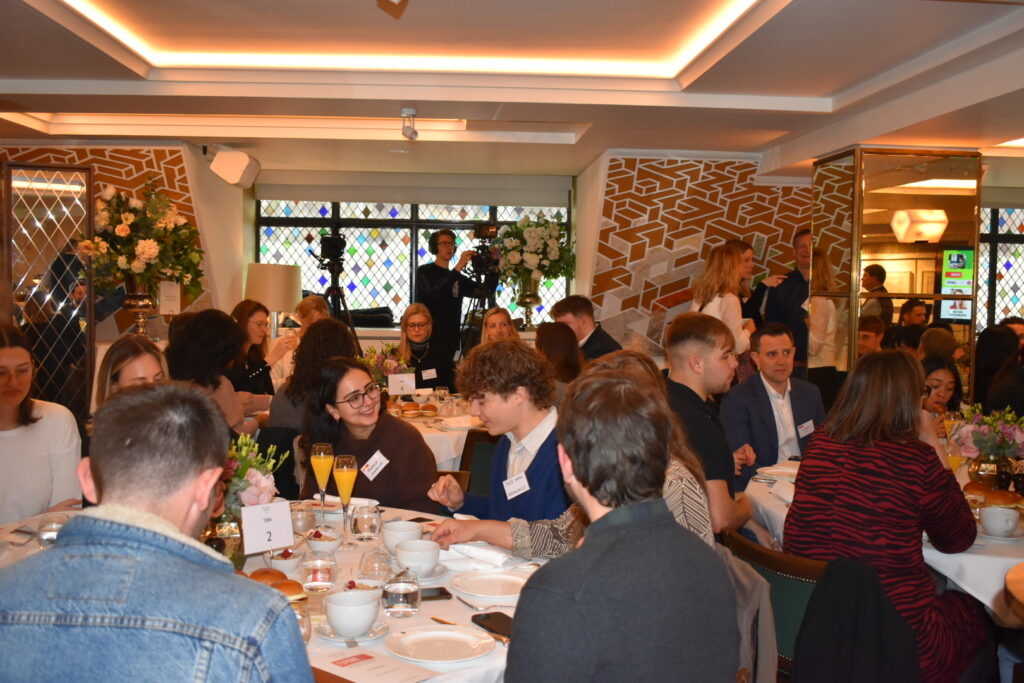
On Tuesday we gathered experts to discuss the profound influence of artificial intelligence (AI) on public relations (PR), journalism, and visual communication. Moderated by our own Sam Brown, the event featured insightful discussions and demonstrations on the role of AI in shaping content creation, crisis management, and ethical considerations. Huge thanks to Stuart Bruce from Purposeful Relations, Karyn Fleeting from Reach PLC and AI artist Duncan Thomsen for joining us and sharing their knowledge.
Below we delve into some key highlights from the event, but you can also rewatch the full discussion HERE.
AI in PR and Journalism
The discussion opened with the practical applications of AI in PR and journalism. Karyn highlighted the automation of routine tasks such as research, media monitoring, and audience insights, emphasising the need to balance automation with human expertise. Stuart delved into the role of AI in personalising content and pitching strategies, while exploring the intersection of AI and PR innovation.
Karyn discussed AI’s transformative impact on data-driven reporting and investigative journalism. The conversation also touched on the benefits and challenges of incorporating AI tools into journalistic practices, with a keen focus on maintaining editorial integrity and accuracy. Stuart provided insights into the implications of AI advancements for PR professionals, highlighting the importance of adapting to evolving media landscapes.
AI's Influence on Creative Ideas
Duncan's captivating artwork served as a backdrop to explore AI's influence on creative ideation and visual communication. The panel discussed the potential of AI to contribute to creative processes traditionally driven by human intuition and imagination. The conversation also delved into the implications of AI-generated content for PR and journalism, sparking thought-provoking reflections on consumer perceptions and engagement.
Enhancing Visual Storytelling with AI
The panel examined how AI enhances visual storytelling in PR and news media, with Karyn shedding light on its role in generating compelling images. Stuart explored AI's efficiency in content creation, particularly in generating visually engaging materials. Duncan raised ethical considerations surrounding the use of AI to manipulate and analyse images, prompting discussions on transparency and accountability.
AI in Crisis Management
The serious side of AI deployment was explored, particularly in crisis management scenarios. Stuart elaborated on AI's role in sentiment analysis and real-time monitoring during crises, citing examples of successful AI-driven strategies. The discussion underscored the importance of leveraging AI technologies to detect and respond to emerging news and trends effectively.
Ethical Considerations in AI
Ethical considerations took centre stage, with Karyn sharing insights into Reach's comprehensive AI policy. The panel delved into the ethical implications of bias in AI algorithms for PR and journalism, advocating for transparency and trust-building measures. Discussions also revolved around addressing privacy concerns related to AI data collection and usage, highlighting the need for robust ethical frameworks.
Future of AI in PR and Journalism
As the event drew to a close, the panelists pondered the future of AI-driven PR and journalism. They identified key skills and knowledge areas essential for success in the AI-driven landscape while acknowledging adoption barriers and emerging trends. The conversation concluded with optimistic predictions for the continued evolution of AI in PR, journalism, and visual communications, underlining the transformative potential of responsible AI deployment.
We have more great events in the pipeline - If you’d like to be included on the invite please email victoria.obrien@72point.com.


Digital PR Campaigns. How Important Are They?
At 72Point we are constantly experimenting to try and create digital PR campaigns that work for our clients and publishers.
Interestingly we're seeing great results from online quizzes, which are getting great digital pick up with the added benefit of real engagement from readers.
This represents a win for both parties. The client is getting thousands of completions on their quiz which is specifically designed to align with their messaging and the publishers are getting an uptick in terms of dwell time.
Our in-house design team, Oath Studio, create these assets to engage target audiences spanning and coupled with our experience of what stories drive the news agenda, these digital-first campaigns have been driving punchy results for our clients.
YourRedCar
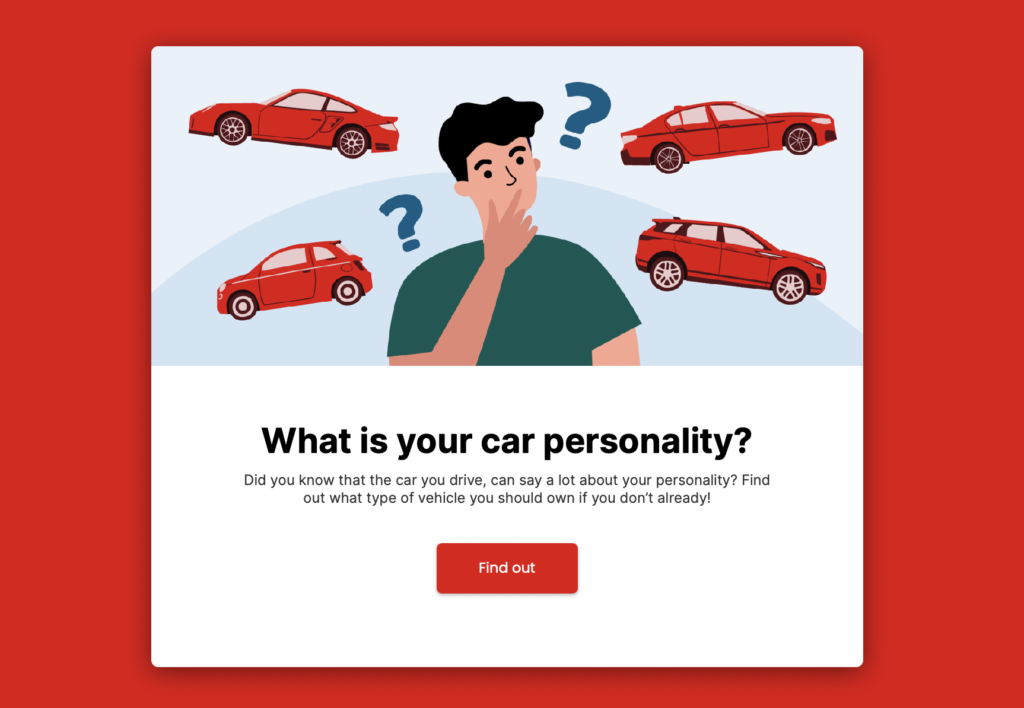
Our recent project for The Romans and YourRedCar featured a fully branded quiz to discover what your car choice says about your personality.
As well as the vast news coverage secured, the quiz delivered 11,568 completions, providing great engagement with the brand and carrying their key message to their audience in a fun and memorable way.
Average completion time of the quiz was 2 minutes and 30 secs, showing that visitors had a solid dwell time too.
Fixter
Likewise, MOT and car service provider Fixter needed content to engage their audience. We put together a quiz to test for dashboard knowledge, promoting their key message of being a revolutionary car maintenance provider.
That quiz generated 11,300 plays to give Fixter a highly engaging asset to embed on their website and supplementing the widespread media coverage secured.

As part of SWNS Media Group, we have access to a social media audience of over 540,000 users, meaning that we can distribute content to a wide audience on those digital platforms, ultimately directing viewers to our clients' websites.
If you'd like to know more, drop us a line. Hello@72point.com

Snapchat and Infographics
By Evelina Peterson
A demand for visual news bites on social media apps such as Snapchat is giving infographics a new lease of life.
Graphic visualisations of research and insights came to the fore on the back of the online news boom, giving editors a dynamic piece of content that is appealing to internet audiences.
But now they have found new avenues thanks to various social media channels such as Facebook, Twitter and, most recently, Snapchat.
Thanks to the new ‘Discover’ channels, graphic statistics and news content have taken on a more important role as publishers strive to reach a more millennial audience.
As a platform that is more intimate and absorbing than other social networks, infographics have found a more natural fit on Snapchat’s easily-to-consume news channels, and it’s an area that is playing into the hands of PR firms.
Chocolate gets snapped
A recent 72Point story distributed on behalf VoucherCodes garnered significant traction after it was picked up by The Sun’s discovery channel on Snapchat.
With a reported 150 million daily-active users on the channel it demonstrated tremendous value for money for the client, driving users to a wide spread of online coverage.

Senior Designer Matt Harvey from 72Point, emphasises the success of infographics, saying: “Content marketers are well aware of the value of visuals like infographics as they increase engagement that connect your audience to your brand.”
“To maximise engagement and their value it is important to tailor infographics for the platform they are published on and supply in formats that are easy for editors to use.
“For example supplying infographics as one image but also design it so it can be split into sections, providing options and maximising the chance of pickup.”
“It is also important to strike a balance between creating content that is engaging but also uses a visual style that ties the content to the brand”
Why Infographics?
One of the most powerful aspects of an infographic is the way that colour can be used to help suggest which emotion should be felt by the reader, therefore making the content seem more personal and connecting the individual to the information being processed.
This can be deemed particularly important as readers don’t want to be ‘sold’ to but expect the brands they associate with to enhance their experience with useful resources, which is exactly where infographics come in to play.
At 72Point we always aim to target our infographics to specific audiences to make the graphic as captivating as possible in order to catch the eye of other audiences.
Research by MIT, which conducted an extensive study on the way the human brain processes visual information, revealed that poorly designed infographics are useless to the brain, no matter how interesting they are.
As users demand more special interest content that is in bitesize format and easily digestible the need to keep up with methods of presenting ideas will increasingly become mission-critical.
Get in touch to see how we can help you today, and to follow 72Point’s new Snapchat channel, please see @ThisIs72Point.

2018: The PR Trends that you need to monitor

Jack Granard looks ahead to the trends you need to monitor in 2018. See the first of this two-part feature on the digital media predictions of 2017 that you should have followed here.
2017 oversaw the continued evolution of what it is to be a PR professional, as it became more influenced by digital elements, social media and marketing.
Importantly, as content became more visual, it superseded the tried tested methods, such as traditional press releases, whilst also bringing about the rise in the use of video, influencer and infographic content. This article will highlight the upcoming trends that need to be monitored in 2018 and how it can be incorporated by your company.
The Future Role of PR: The Statistics
The advancement of the PR role is indicative of the importance of reacting quickly to the latest PR trends so as not to be left behind.
A 2017 USC Annenberg Global Communications study which interviewed 875 PR executives and 101 marketers from around the world found that digital storytelling is the biggest future PR trend with 88% citing it as important. Moreover, social listening ranked second (82%) followed by social purpose (71%) and Big Data (70%).
In terms of skills for future growth, strategic planning with 89% was voted as the most important, followed by written communications (86%), social media (84%), multimedia content development (82%), and verbal communications (80%).
87% of professionals believe the term “public relations” will not describe the work they do in five years, which exemplifies the initial point about being reactive. This is given further strength, where 60% of marketing executives believe PR and marketing will become dramatically more aligned in the near future.
Ultimately, these figures suggest the importance of being a well-rounded PR executive. It is essential to keep on adapting, otherwise the PR professional today could become extinct in as soon as 5 years.
Dark Social Media
Data coverage and tracking in the PR industry has become a fundamental element of presentation and success for clients, in identifying social influence and monitoring performance. However, what is impossible to track is dark social, which is defined as the communication through private messaging platforms, such as, text, email, Whatsapp, Messenger and Skype. The importance of tracking this is accentuated by the likes of Forbes.
Bearing any privacy concerns, the main interests in measuring this is emphasised by the notion that increasingly we are more likely to share a link via dark social than on your Facebook profile. Consequently, PR firms are incapable of measuring this and are left confused as to where the rise in traffic to websites stems from. Significantly, standard web analytics are incapable of measuring this and key insights are lost.
Therefore, to start measuring dark social, one method could be to really emphasise the social sharing buttons on your site, whilst making sure all buttons have trackable links. Alternatively, if your direct track URLs are too long, it will be more unlikely to have been typed in their browser.
Overall, with this being a recent hot point, it is notable to keep your eyes peeled for new developments.
Artificial Intelligence
As stated throughout, data measurement has been very important to the PR role and AI has the potential to extend this further, through being utilised for basic research and media monitoring.
By utilising data scientists to predict future trends and investing in artificial intelligence to also combat this, it could pave the way for workload to be reduced for PR companies and to predict when and what businesses need to change. However, one topic that has been heavily discussed is the usage of intelligent chatbots. These bots powered by artificial intelligence could evolve the way customer communication is utilised and may also be used to create a new fun concept to promote a brand. Further weight is given, as it was highlighted by Business Insider as “the biggest thing since the iPhone.”
Speech Recognition Technology
Whether you have seen the parody videos or you have utilised the technology in Amazon Echo, Apple Siri or Google Home, it is largely agreeable that it has been a strong talking point recently.
Speech recognition built into modern devices is quick, accurate and definitely the future. With the possibility of it being used more frequently it could bring about a process where ads and SEO are not relevant. This has been heavily advocated by Steve Waddington (Social Media Director at Ketchum) who believes it will “create another wave of internet disintermediation.”
With rising incomes and interest in becoming more technological, firms should try to incorporate this technology into their campaigns and find new ways to be different.
Personal Brand Reputation and Social Ethics
Is it obvious? Yes.
Does, more need to be done? Yes.
Social media has brought about exposure in new ways, putting us all under scrutiny. However, this is also a positive thing as it allows the opportunity for engagement with all these individuals through social media to gauge what this company is like. Previously, executives would target features in broadsheet papers but now optimising social networks is essential to harbouring not just brand reputation but a personal relationship with the consumer.
72Point has effectively created a space to combat this and has evolved through its recent brand revamp to better understand our organisation, our consumers and our goals. Now with increasing competition and shorter attention spans, only specialised websites who understand how to communicate effectively with all these new tools can succeed.
The PR industry is only likely to become more ethically focused with the Public Relations Communication Association’s (PRCA) expulsion of Bell Pottinger being a major point in 2017. Therefore, more awareness and positive messaging needs to be shown to restore trust.
Conclusion
This year will involve more competition and more technologies to use than ever before. At 72Point, we attempt to stay one step ahead and monitor these trends carefully. The PR world is a jungle and it has been shown to be ruthless in the past year. Therefore, more personal and genuine campaigns need to be implemented this year before it is too late.
[simple-author-box]

The art of storytelling
It’s easy to tell a story, watch:
Steve Martin walks into a room. He sits down in front of a vintage typewriter, looks pensively at the clock and begins, slowly to type. As his fingers move from key to key, a single word is stamped onto the page...
You want to know what the word is, don’t you? Is it a happy word? Is it a suicide note? Is that the actual Steve Martin, from Father of the Bride, or just some guy called Steve Martin?
Storytelling gives you the power to change a world – a world of your own creation. If you get the world right, like JK Rowling or JRR Tolkien, you can bring billions of people into it with you, eager to find out what the next word is.
Storytelling doesn’t have to be about creating fantastic universes, either. You could tell a story about the most banal interactions of daily life, and if it resonates with people then it will find an audience.
At 72Point, storytelling is in the essence of everything we do. We’re looking to find stories that will evoke a reaction in as many people as possible, who may then share that story online, in their workplace or at home, starting conversations and debates.
A lot of our work starts with a very small survey – in a meeting or brainstorm, someone will toss out a statement like ‘I realised this morning I’ve been singing Blank Space by Taylor Swift wrong for months’ and that will start a conversation about your hearing going in old age, or the differences between women and men, or how often misheard lyrics replace the real ones in your mind. If it gets us talking, we think it will get the general public talking, and so we’ll then take that idea, create a big survey around it then we’ll have a new story – like the song lyrics that everyone gets wrong.
That story worked because it’s a conversation that millions of people might not think to have, without a little push from us. But once they do, they realise that actually this is a topic that everyone has an opinion on - and if it raises a little awareness of hearing aids, then that’s our work done.
Storytelling isn’t simply about words, either. We’re increasingly using other methods to get across our ideas, from 360-degree videos where online users can explore a new space, to interactive puzzles as well as our in-house-produced video content. We’re covering all the bases when it comes to getting messages and stories into the press.
For crystal-clear visual representation of a story, our talented designers are on hand to create infographics and animations that can bring a static story to life. The best examples of our work are the ones that bring together elements of everything we can do, to deliver a story that everyone can take something from – like this example about debt levels.
Personally, my opinion on telling a story is simple – just keep people reading, one word after the next. If your content is engaging then you’ll do exactly that.
And hey, you made it down this far, didn’t you?

5 Ways to secure backlinks from media publications
 Securing ‘follow’ links on media publications is the latest KPI for the PR industry to grapple with.
As if we didn’t already have enough on our plate, right? But don’t despair, link building is a perfectly legitimate process that has been tainted by bad practice, and if you can do it properly, you can justify a whole lot more PR spend.
Media publications have a naturally high domain authority and have therefore become the target of SEO teams looking to piggyback on their search ranking. For Google, news outlets are a dream source of information because, like Wikipedia, they provide fact-checked answers to relevant questions. As the Google bots move from “exogenous”’ to “endogenous” signals, online publications will become even more relevant.
So how can a brand rub shoulders with digital media titles and get some tasty Google juice on the back of it to boost their search engine visibility? Through PR, of course. We’ve drawn up a list of five ways to secure backlinks from media publications to help you adjust to the murky world of SEO KPIs:
1. Citations
Writing brand citations as a domain address can prompt journalists to link it up.
Although a full http:// or even www. can be off-putting, most publications won’t see anything too explicit in a dot com or .co.uk.
Or so Jack Peat of 72point.com believes.
2. Link Targets
To encourage publishers to link out, you need to give them a tangible link target. Rather than simply linking to a brand’s website, we advise that you link to a page on the brand’s website that offers further information or other incentives to link away. This could be a landing page with further information on the story, a white paper with full research results, a graphic, a campaign microsite, a quiz or interactive.
3. Number of Links
We recommend including no more than one link to a brand’s website per piece. If you fill the press release with links it automatically looks spammy and will ultimately lessen the chance of the content being used at all.
4. High-Quality Content
High-quality consumer journalism is of paramount importance. For digital titles, the use of multimedia is equally important and will increase the chances of backlinks been included. Take visual puzzles, for example. Our ‘Where’s Wayney’ puzzle got Ladbrokes a follow link from The Sun amongst others. Infographics are another great example. Our infographic for Intrepid Travel made the MailOnline complete with a follow link.
5. Educate
Finally, it’s important to educate clients on link building best practice and also reassure them that landing links is not the be all and end all. As Google moves to endogenous signals a simple citation will deliver significant Google juice, so rest assured, your content is still hard at work on the search engines!
Does 'pure PR' still exist?
 After almost 50 years of operating as the Public Relations Consultants Association, the PRCA has launched an industry-wide consultation into whether it should change its name. They will consider whether to drop the ‘C’, which is deemed too inclusive for an organisation that has members from across the entire breadth of the industry, and also ‘PR’, which is considered to be a redundant term in a sector of wide and varied specialities. Go the ‘A’ Team!
The public consultation raises the question over whether “Pure PR” still exists. According to The 'A Team', public relations is the intersection between people and a brand, and is primarily concerned with “reputation” and “gaining trust and understanding” between an organisation and its various publics - whether that's employees, customers, investors, the local community - or all of those stakeholder groups. PR professionals use a variety of techniques to achieve this, and differ from marketers because they secure ‘earned’ media rather than ‘paid’.
But there are very few PR professionals left operating so rigidly. "As the dividing lines between practices have blurred over the years, many within our industry no longer term themselves as offering pure PR,” the PRCA statement read, “the industry has changed in nature”.
They’re not the only ones to notice. As Fifth Ring’s Katherine Fair says, “it is getting difficult to pinpoint exactly how communications, marketing and public relations differ from each other”, which, according to Ogilvy’s Stuart Smith, means there is a rush to be “THE agency” that can “own the insight, the big creative idea, produce the content and optimise the channel: paid, owned, earned media”. The definition of PR as being focused on getting a good press “is close to being redundant”, Alastair Campbell says. PR is now about marrying several disciplines to achieve numerous objectives.
We have coined this ‘The Content Umbrella’. It’s a simple concept. It denotes the merger of previously detached industries, including, but not limited to PR, digital marketing, social media marketing, search engine optimisation and content marketing, and it is a shift that has been on the cards for some time.As Google demands better quality content, online media consumers get turned off by display and brands look to engage rather than convert an amalgamation of disciplines has occurred leveraged on the basic principles of creating and distributing content.
“Pure PR” is a relic of a time gone by. Today, PR professionals must marry several principles that fall under the content umbrella and in doing so re-shape the industry’s outlook. The re-naming of the PRCA is a symbolic move for the industry as a whole; PR is dead, long live PR.
How to give your story a real Christmas presence
 Mention the word “Christmas” in a 72Point brainstorm session and listen for the audible whoosh of air as every single creative in the room visibly slumps into their chair and lets out a heavy sigh.
We’re in the middle of November, and while we’re not Christmas scrooges (far from it, some of us have already completed our Christmas shopping while others are signing off their emails with Mrs Santa), we have already had more than 20 briefs from PR’s wanting to capitalise on the biggest event in the calendar.
So why such a negative reaction from the team you may ask? Everyone loves Christmas, so it must have great talk value?
Well yes, everyone loves Christmas, but that doesn’t make it news.
The 25th December might be a big deal for PR’s and businesses who will benefit from the event, but for the press it really is just another day in the year.
And if the media aren’t bothered by Christmas, they’re not going to dedicate pages and pages to survey-led stories about opening presents, gobbling turkey and overspending – not unless the stories are REALLY good.
So what are our tips to achieving the most for your brand, in the lead up to Christmas Day?
Don’t send the story out in the lead up to Christmas Day
Okay so this might be an impossibility, but what we’re trying to say is that the competition for coverage at this time in the year is HUGE. So if you do need coverage in December, make sure you’re doing something that will beat all the competition.
Consider Christmas Day
Do you have to send your story out before the big day? If you want coverage in December, but don’t necessarily have a brand which needs coverage to generate sales, you might want to consider lining up a story to go out ON Christmas Day. This is a fantastic ‘open goal’ opportunity for coverage, as news desks are receptive to any light list-based material. Alternatively ‘quick win’ stories are perfect for issue on Christmas Day, so if you’re an internet business capable of monitoring sales quickly contact us. We can very quickly pull together a sales-based story to show how many people are buying holidays / gym memberships / divorces on 25th December.
Don’t send out the same old story
We all know news is on a loop and Christmas is an example of just that. Every year we see the same survey stories make – ‘XX per cent of Brits received unwanted presents’, ‘the average Christmas looks like XXX’, ‘British households look set to spend £XXX on Christmas’ – but they don’t make BIG. If you want more than a ‘nib’ or a ‘stick’, do something different.
If budget allows, make a video
So we know we can’t compete with the John Lewis Christmas advert, which has already had almost 12 million views online, but if you’ve got a little more money to spend, a video is a great way to secure coverage online and has great longevity for the brand. Stories which are cross-platform definitely have the best chance of making, and news sites are crying out for videos to support any content they publish. However make sure the idea has been well thought through - last year TGI Friday had the brilliant idea of sending drones around their restaurants with mistletoe and a ‘kisscam’ but the stunt backfired spectacularly when the drone hit a diner in the face, and the brand received more coverage for the epic fail than the original idea.
DON’T talk about Christmas
The best way to get a survey story into the press in December is to make sure you don’t mention the C-word. So if you’re thinking of a survey led story, think about the USP’s of the brand, and most importantly, why is it so cool the other 364 days of the year? This should be the focus for any story you put out.
Try not to over-brand
Actually this is the advice which we give at all times of the year, but it’s all the more important at Christmas. A great example of a story which cleverly weaves in the key messages about the brand, without being too Christmassy or ‘pluggy’ is our Competitive Mums story we ran for the launch of Nativity 3: Dude, Where’s my Donkey? which subtly makes reference to Christmas nativities without over mentioning.
Think outside the box
Sorry, it’s a cliché, we hate it, but there it is. When generating ideas for Christmas try to step away from the event itself, try to think of something which is funny; if you can imagine talking to your friends about the subject matter for hours and hours, chances are you’re onto something.
Go Negative
A no-no for every PR, and a big fat thumbs up for 72Point, and more importantly for the papers. Want to run a story about how families interact at Christmas? We guarantee you’ll have more luck trying to land a story which looks at the arguments families have on Christmas Day, or the things that went wrong with the dinner, than a story about how well everyone got on and what we love about Christmas.
Consider all avenues
A survey is a fantastic way to achieve national press coverage, but a video or infographic could be the clincher when it comes to online coverage, you might even decide that at this time of year you pay for some native advertising to guarantee you that all important ‘show’.
And lastly, phone us if you’d like a helping hand
You might get some advice you don’t want to hear, you might need to re-think your ideas, but you WILL have a better chance of achieving all you want for Christmas.
A holistic approach to blogger outreach
 What is ‘blogger outreach’ and how do I do it?
That was the prominent undertone from a series of creative workshop sessions we recently hosted in the trendy Ace Hotel in Shoreditch. The proliferation of alternative media platforms has rendered the PR industry perplexed, and the knee-jerk reaction has been to throw money at it. But a holistic approach to blogger outreach is possible, and it is a far more attractive proposition for both brands and bloggers alike.
Marketing Land defines blogger outreach, or influencer marketing, as the process of leveraging influencers with an established and substantial following in exchange for “free access to the product or service” or a fee for publishing content. But the notion that bloggers are simply ‘reviewers with reach’ is misguided, and PR professionals are missing a trick if they define them as such.
Successful bloggers are able to reach large networks of people because they produce great content that resonates with a target audience. Talya’s blog Motherhood: The Real Deal, is a good example. The hilarious account of the “general WTF-ness” that comes with being a mother embodies the spirit of being a blogger by connecting to her audience with good content that is relevant. We landed this release not because we paid, but because we have established a relationship centred around those principles.
As a PR firm working from inside the media – the so-called Trojan horse effect – we are able to land branded content across the board because we take a media-first approach to outreach. At a blogger level, that is about supplying good content, engaging with blogger communities and using our media-base to collaborate with bloggers to ensure the content cycle is rewarding for all parties involved.
Here’s a short guide to our blogger outreach programme.
Content generation
Bloggers, like any other publishing genre, are in the business of providing engaging content to readers. Where they differ is that they have free reign over how they produce that content. Unlike mainstream media outlets there is no protocol when it comes to blogging, which breaks the mould of the holistic model applied by PR companies when outreaching to the media. Press releases are outmoded, spokespeople are redundant and branded messages can be off-putting, but that doesn’t mean that content is unwanted.
At 72Point, we take a hands-off approach to content distribution. Our own digital media hub is tailored exclusively to online publications, providing all the necessary materials in a simple-to-use format. We encourage collaborators to get creative with the content we provide them, or even engage with it. Like this.
Building communities
Communities are a focal part of the blogger ecosystem. Social media communities exist across all genres, many of which are active with meetups and conferences regularly taking place across the country. In order to have a feel for the pulse of the community, it is really important to engage with these networks.
The digital hub has a large community of more than 500 bloggers which we endeavour to engage with on a regular basis. Our Ambassador Programme gives us access to key influencers who work within blogger communities, and we regular discuss topics such as content generation and co-creation in our forum, as well as outreaching over social media.
Co-creation
We strongly believe that bloggers should be a part of the creative process, and we endeavour to involve bloggers in the work we do wherever we can. Our ambassadors have worked with us on several releases which have subsequently given them great exposure in the national press. Here’s a couple of examples:
Plus Size Bloggers Speak Out About Body Shaming
Demand for Ethically Sourced Clothes Increasing
The blogging community has been somewhat neglected by the PR industry thus far, and it is to our detriment. Alternative media outlets offer a lot of promise and arguably as much or more ROI in terms of engagement and social interaction than national press. But involving them in the outreach process should be less about throwing freebies their way and more about involving them in the creative process. It’s undoubtedly a long-term endeavour, but ultimately for a very worthy cause.
The power of free text
 “We want a holiday idea to go out in August!”, “We’d like to be considered as ownership contenders of Valentine’s Day!” “We want to send a home improvements idea out this Bank Holiday!” Sound familiar? News tends to be on a loop. There are always new angles to take but there isn’t always the opportunity to explore them. This is something that every PR professional will know.
Clients can sometimes be hell-bent on a specific angle and timings but it’s your job to make it new and interesting.
This is where the power of ‘free text’ comes in and steals the show for you and your client. A free text question, in case you're reading this feeling somewhat perplexed, is simply a question that doesn’t have any options. It’s a blank box that gives respondents the chance to tell their own story or give their own opinion rather than choose one we have given to them.
In the past we’ve asked respondents to tell us about the strangest interview questions they’ve faced – the result was a page lead in the Daily Mail and a whole host of further media coverage.
Asking the panel to give you their own personal experiences can be a daunting thought to those who haven’t tried it. When we suggest it to clients we often get asked if “the story will stand up if there isn’t a percentage?” The answer is ‘absolutely’.
While we base our stories on the results of research it’s not always essential to include the stats. You’re telling a story not writing a report.
We love stats. We'd be lost without them, so we’re not saying the free text questions are the best and only option – but they are there to make sure you’ve got something personal to add to your version of the tale. Something that nobody else will have.
Free text works for both serious and light stories. They can bring humour or they can add a more humbling point of view. You can really add a little extra ‘something’ with a free text answer. It could take up the majority of the copy or it can just give you an edge that backs up one of the stats you’ve already mentioned.
The truth is, if you’re willing to sift through hundreds of stories from respondents, you’re certain to be paid off with a few gems. You only really need three or four to really give you a good start.
Of course you’ll get several ‘don’t know’ answers and the odd questionable response but you just need to persist and look out for that one story that will give you your top line.
We’ve asked for embarrassing stories, disastrous car journeys, dangerous experiences and everything in between. Our panel never disappoints. And If worst comes to the worst and you don’t get anything you can use, at least you get to sit at your desk chuckling away at the situations people get themselves in.