
Digital PR Campaigns. How Important Are They?
At 72Point we are constantly experimenting to try and create digital PR campaigns that work for our clients and publishers.
Interestingly we're seeing great results from online quizzes, which are getting great digital pick up with the added benefit of real engagement from readers.
This represents a win for both parties. The client is getting thousands of completions on their quiz which is specifically designed to align with their messaging and the publishers are getting an uptick in terms of dwell time.
Our in-house design team, Oath Studio, create these assets to engage target audiences spanning and coupled with our experience of what stories drive the news agenda, these digital-first campaigns have been driving punchy results for our clients.
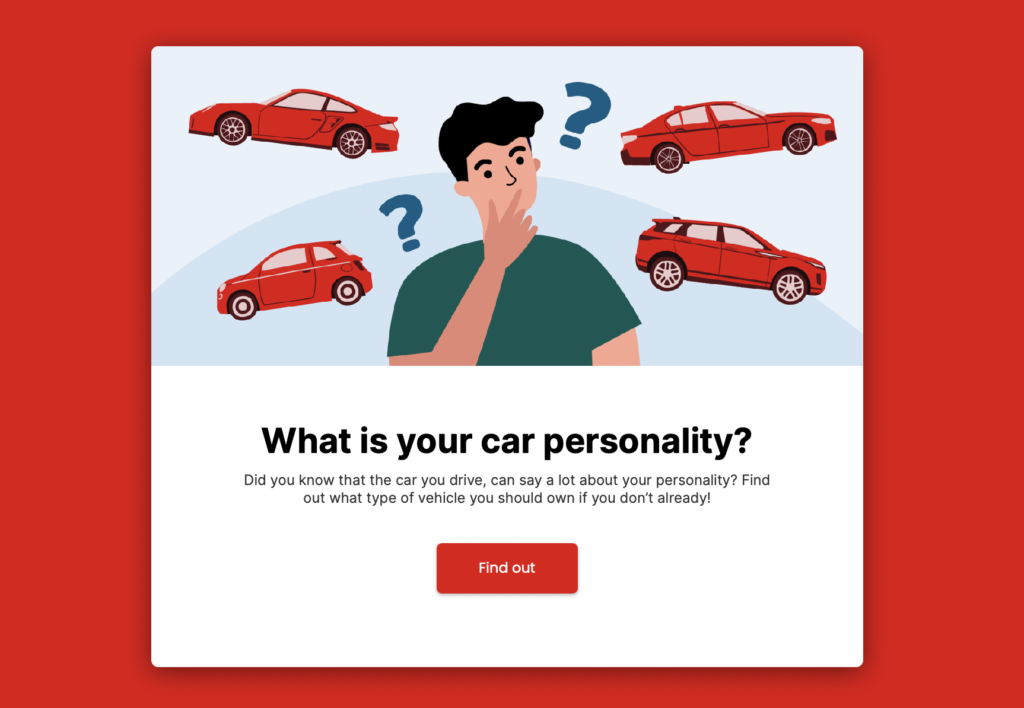
YourRedCar
Our recent project for The Romans and YourRedCar featured a fully branded quiz to discover what your car choice says about your personality.
As well as the vast news coverage secured, the quiz delivered 11,568 completions, providing great engagement with the brand and carrying their key message to their audience in a fun and memorable way.
Average completion time of the quiz was 2 minutes and 30 secs, showing that visitors had a solid dwell time too.
Fixter
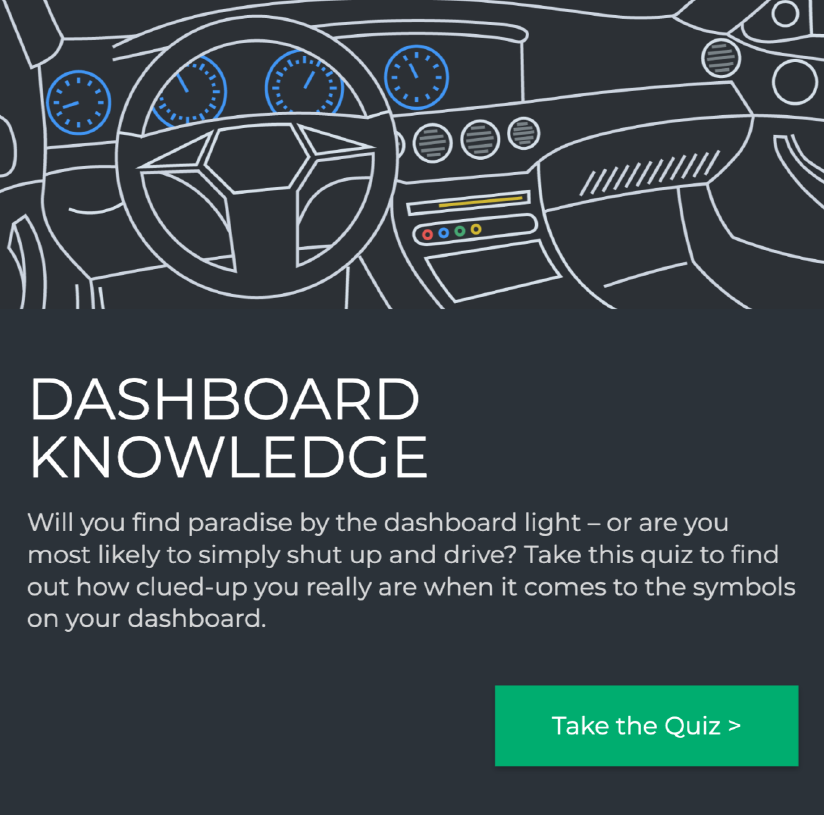
Likewise, MOT and car service provider Fixter needed content to engage their audience. We put together a quiz to test for dashboard knowledge, promoting their key message of being a revolutionary car maintenance provider.
That quiz generated 11,300 plays to give Fixter a highly engaging asset to embed on their website and supplementing the widespread media coverage secured.
As part of SWNS Media Group, we have access to a social media audience of over 540,000 users, meaning that we can distribute content to a wide audience on those digital platforms, ultimately directing viewers to our clients' websites.
If you'd like to know more, drop us a line. Hello@72point.com

Snapchat and Infographics
By Evelina Peterson
A demand for visual news bites on social media apps such as Snapchat is giving infographics a new lease of life.
Graphic visualisations of research and insights came to the fore on the back of the online news boom, giving editors a dynamic piece of content that is appealing to internet audiences.
But now they have found new avenues thanks to various social media channels such as Facebook, Twitter and, most recently, Snapchat.
Thanks to the new ‘Discover’ channels, graphic statistics and news content have taken on a more important role as publishers strive to reach a more millennial audience.
As a platform that is more intimate and absorbing than other social networks, infographics have found a more natural fit on Snapchat’s easily-to-consume news channels, and it’s an area that is playing into the hands of PR firms.
Chocolate gets snapped
A recent 72Point story distributed on behalf VoucherCodes garnered significant traction after it was picked up by The Sun’s discovery channel on Snapchat.
With a reported 150 million daily-active users on the channel it demonstrated tremendous value for money for the client, driving users to a wide spread of online coverage.

Senior Designer Matt Harvey from 72Point, emphasises the success of infographics, saying: “Content marketers are well aware of the value of visuals like infographics as they increase engagement that connect your audience to your brand.”
“To maximise engagement and their value it is important to tailor infographics for the platform they are published on and supply in formats that are easy for editors to use.
“For example supplying infographics as one image but also design it so it can be split into sections, providing options and maximising the chance of pickup.”
“It is also important to strike a balance between creating content that is engaging but also uses a visual style that ties the content to the brand”
Why Infographics?
One of the most powerful aspects of an infographic is the way that colour can be used to help suggest which emotion should be felt by the reader, therefore making the content seem more personal and connecting the individual to the information being processed.
This can be deemed particularly important as readers don’t want to be ‘sold’ to but expect the brands they associate with to enhance their experience with useful resources, which is exactly where infographics come in to play.
At 72Point we always aim to target our infographics to specific audiences to make the graphic as captivating as possible in order to catch the eye of other audiences.
Research by MIT, which conducted an extensive study on the way the human brain processes visual information, revealed that poorly designed infographics are useless to the brain, no matter how interesting they are.
As users demand more special interest content that is in bitesize format and easily digestible the need to keep up with methods of presenting ideas will increasingly become mission-critical.
Get in touch to see how we can help you today, and to follow 72Point’s new Snapchat channel, please see @ThisIs72Point.

2018: The PR Trends that you need to monitor

Jack Granard looks ahead to the trends you need to monitor in 2018. See the first of this two-part feature on the digital media predictions of 2017 that you should have followed here.
2017 oversaw the continued evolution of what it is to be a PR professional, as it became more influenced by digital elements, social media and marketing.
Importantly, as content became more visual, it superseded the tried tested methods, such as traditional press releases, whilst also bringing about the rise in the use of video, influencer and infographic content. This article will highlight the upcoming trends that need to be monitored in 2018 and how it can be incorporated by your company.
The Future Role of PR: The Statistics
The advancement of the PR role is indicative of the importance of reacting quickly to the latest PR trends so as not to be left behind.
A 2017 USC Annenberg Global Communications study which interviewed 875 PR executives and 101 marketers from around the world found that digital storytelling is the biggest future PR trend with 88% citing it as important. Moreover, social listening ranked second (82%) followed by social purpose (71%) and Big Data (70%).
In terms of skills for future growth, strategic planning with 89% was voted as the most important, followed by written communications (86%), social media (84%), multimedia content development (82%), and verbal communications (80%).
87% of professionals believe the term “public relations” will not describe the work they do in five years, which exemplifies the initial point about being reactive. This is given further strength, where 60% of marketing executives believe PR and marketing will become dramatically more aligned in the near future.
Ultimately, these figures suggest the importance of being a well-rounded PR executive. It is essential to keep on adapting, otherwise the PR professional today could become extinct in as soon as 5 years.
Dark Social Media
Data coverage and tracking in the PR industry has become a fundamental element of presentation and success for clients, in identifying social influence and monitoring performance. However, what is impossible to track is dark social, which is defined as the communication through private messaging platforms, such as, text, email, Whatsapp, Messenger and Skype. The importance of tracking this is accentuated by the likes of Forbes.
Bearing any privacy concerns, the main interests in measuring this is emphasised by the notion that increasingly we are more likely to share a link via dark social than on your Facebook profile. Consequently, PR firms are incapable of measuring this and are left confused as to where the rise in traffic to websites stems from. Significantly, standard web analytics are incapable of measuring this and key insights are lost.
Therefore, to start measuring dark social, one method could be to really emphasise the social sharing buttons on your site, whilst making sure all buttons have trackable links. Alternatively, if your direct track URLs are too long, it will be more unlikely to have been typed in their browser.
Overall, with this being a recent hot point, it is notable to keep your eyes peeled for new developments.
Artificial Intelligence
As stated throughout, data measurement has been very important to the PR role and AI has the potential to extend this further, through being utilised for basic research and media monitoring.
By utilising data scientists to predict future trends and investing in artificial intelligence to also combat this, it could pave the way for workload to be reduced for PR companies and to predict when and what businesses need to change. However, one topic that has been heavily discussed is the usage of intelligent chatbots. These bots powered by artificial intelligence could evolve the way customer communication is utilised and may also be used to create a new fun concept to promote a brand. Further weight is given, as it was highlighted by Business Insider as “the biggest thing since the iPhone.”
Speech Recognition Technology
Whether you have seen the parody videos or you have utilised the technology in Amazon Echo, Apple Siri or Google Home, it is largely agreeable that it has been a strong talking point recently.
Speech recognition built into modern devices is quick, accurate and definitely the future. With the possibility of it being used more frequently it could bring about a process where ads and SEO are not relevant. This has been heavily advocated by Steve Waddington (Social Media Director at Ketchum) who believes it will “create another wave of internet disintermediation.”
With rising incomes and interest in becoming more technological, firms should try to incorporate this technology into their campaigns and find new ways to be different.
Personal Brand Reputation and Social Ethics
Is it obvious? Yes.
Does, more need to be done? Yes.
Social media has brought about exposure in new ways, putting us all under scrutiny. However, this is also a positive thing as it allows the opportunity for engagement with all these individuals through social media to gauge what this company is like. Previously, executives would target features in broadsheet papers but now optimising social networks is essential to harbouring not just brand reputation but a personal relationship with the consumer.
72Point has effectively created a space to combat this and has evolved through its recent brand revamp to better understand our organisation, our consumers and our goals. Now with increasing competition and shorter attention spans, only specialised websites who understand how to communicate effectively with all these new tools can succeed.
The PR industry is only likely to become more ethically focused with the Public Relations Communication Association’s (PRCA) expulsion of Bell Pottinger being a major point in 2017. Therefore, more awareness and positive messaging needs to be shown to restore trust.
Conclusion
This year will involve more competition and more technologies to use than ever before. At 72Point, we attempt to stay one step ahead and monitor these trends carefully. The PR world is a jungle and it has been shown to be ruthless in the past year. Therefore, more personal and genuine campaigns need to be implemented this year before it is too late.
[simple-author-box]

5 Ways to secure backlinks from media publications
 Securing ‘follow’ links on media publications is the latest KPI for the PR industry to grapple with.
As if we didn’t already have enough on our plate, right? But don’t despair, link building is a perfectly legitimate process that has been tainted by bad practice, and if you can do it properly, you can justify a whole lot more PR spend.
Media publications have a naturally high domain authority and have therefore become the target of SEO teams looking to piggyback on their search ranking. For Google, news outlets are a dream source of information because, like Wikipedia, they provide fact-checked answers to relevant questions. As the Google bots move from “exogenous”’ to “endogenous” signals, online publications will become even more relevant.
So how can a brand rub shoulders with digital media titles and get some tasty Google juice on the back of it to boost their search engine visibility? Through PR, of course. We’ve drawn up a list of five ways to secure backlinks from media publications to help you adjust to the murky world of SEO KPIs:
1. Citations
Writing brand citations as a domain address can prompt journalists to link it up.
Although a full http:// or even www. can be off-putting, most publications won’t see anything too explicit in a dot com or .co.uk.
Or so Jack Peat of 72point.com believes.
2. Link Targets
To encourage publishers to link out, you need to give them a tangible link target. Rather than simply linking to a brand’s website, we advise that you link to a page on the brand’s website that offers further information or other incentives to link away. This could be a landing page with further information on the story, a white paper with full research results, a graphic, a campaign microsite, a quiz or interactive.
3. Number of Links
We recommend including no more than one link to a brand’s website per piece. If you fill the press release with links it automatically looks spammy and will ultimately lessen the chance of the content being used at all.
4. High-Quality Content
High-quality consumer journalism is of paramount importance. For digital titles, the use of multimedia is equally important and will increase the chances of backlinks been included. Take visual puzzles, for example. Our ‘Where’s Wayney’ puzzle got Ladbrokes a follow link from The Sun amongst others. Infographics are another great example. Our infographic for Intrepid Travel made the MailOnline complete with a follow link.
5. Educate
Finally, it’s important to educate clients on link building best practice and also reassure them that landing links is not the be all and end all. As Google moves to endogenous signals a simple citation will deliver significant Google juice, so rest assured, your content is still hard at work on the search engines!
Top tips for achieving video success
 Videos entertain, inform and give people access to digestible news on the go. They are also one of the best ways to achieve exposure. In fact, including them in your PR strategy is a no brainer.
There is no greater example of how influential video can be than the rise of the ‘Youtube’ stars. Ordinary, everyday folk turned into celebrities and idols (although I use that term loosely, very loosely) simply as a result of posting a video online. Whether it’s someone giving hair styling tips, baking tutorials or just playing a computer game. The potential influence of video is plain to see.
Dan Patterson of ABC News Radio said that ‘Humans are incredibly visual and powerful, moving images help us find meaning… [And] video helps capture and contextualize the world around us’. It is not surprising therefore that we extended our portfolio of services to include video.
Among our favourite campaigns we have worked on were two social media campaigns for supermarket Asda. One was a video for their Facebook page featuring magician and star of ITV’s Tricked, Ben Hanlin. We filmed Ben at an Asda store in London performing magic tricks for customers, including pulling money from items such as bread, unopened crisp packets and sealed yoghurt pots. The video achieved nearly 1 million views on Asda’s Facebook page.
The other, entitled 'Pimp my BBQ', was a fun, quirky video that unsurprisingly showcased a costumed ‘pimped’ BBQ. The BBQ featured additions such as a selfie stick, iPad stand, neon lights to name but a few. This video had pick-up all across a wide range of sites and proved especially popular with the MailOnline and Lad Bible
We’re lucky to have the services of incredible cameramen, video producers and editors from SWNS behind us to help us make the most of our video content.
If you’re looking to produce a video there are a few things to bear in mind.
1. Audience and Content
Cisco has predicted that video will account for 69% of all consumer internet traffic by 2017, so to truly have a place in this market we need to know what our audience want.
Not only must the video content we create chime well with the survey stories we produce, but we must keep trying to be as inventive and creative as possible. This comes not only from our own creative process but also from watching the video market and staying relevant and in line with what viewers want.
Videos don’t have to be elaborate. Yes sometimes a brief may call for a big stunt or a big name to appear in it but it doesn’t always have to. Sometimes a simple vox pop style video can be just as effective. After all, the people on the street are the people you are trying to attract so why not make them the centre of attention. Look at your brief and decide who you are trying to reach, how you’re going to do it and what style is going to have the most impact.
Watch our video showreel below to see the variation of video styles we've used for our clients:
2. Platform and Length
Only two years ago videos would be produced that could last over 5 minutes for just one story. We have learnt rapidly that most people’s engagement and time spent on a video last no more than 60 seconds, which is why as a rule at 72Point we produce nothing longer than 1 minute. This allows us to keep costs lower for the client - and crucially - we stay relevant for our publishers and help them engage with their audiences.
Videos will become even shorter as the use of mobile devices to access content continues to rocket. Evidence of this can be seen in the popularity of Vine which is based around 6 second videos, and Instagram which only allows 15 seconds. People now spend more time viewing stories on their mobiles than desktops and with that comes a shift in content presentation. This means a mobile-first approach is crucial for 72Point and its clients in 2016. Once you know who your video is aimed at, what you’re trying to say and how you’re going to share it, then everything else should slot into place. But if not here are some of our top tips for video success:
- Make it clear in your headline what the video is about
- Videos must have rich SEO within the metadata
- Be creative in how you link videos to text stories
- Always always share your video on social media
- Keep them short and snappy
- Don't try to be too clever - it can come across as false
- Make the first 8 seconds as attention-grabbing as possible. That’s all our attention span will take to lose interest.
So much is changing in the world of content and video as it continues to play a huge role in the market place. If we can utilise video and embrace the technology that comes with it, and the interactivity it gives audiences, then we and our clients are set for a bright and fun future.
Visit our video page to find out more about our video offering.Written by our video team: Issy Potts and Jessica Macdonald.
The changing media landscape
 Digital media has radically altered the way we consume and interact with news. For more than 50 years, newspapers and TV have dominated news coverage almost everywhere until the internet created the low cost opportunity to go global.
Digital natives rushed to change the news, while publishers and broadcasters started to build online audiences producing video-rich news channels that are accessible across the world at the touch of a button. Let’s refer to this as “News 3.0” – the age in which companies as diverse as Bloomberg, ESPN, CNN, Daily Mail, Huffington Post , BuzzFeed and the like joined the worldwide fight for online viewers, readers and listeners.
Multi-channel, multi platform news that is distributed socially is a way of saying to the consumer “you are in control: you decide if our content is entertaining and relevant and we’ll supply it when and where you want it”. However this fusion of traditional and new media is a big challenge for many; most of all for the daily newspaper which faces the need to make a real strategic leap for survival. How can they compete in a socially enabled environment? Especially one where such a wealth of content is so readily available that we no longer have to go out of our way to access it? Where do they start?
Let’s refer to this as “News 3.0” – the age in which companies as diverse as Bloomberg, ESPN, CNN, Daily Mail, Huffington Post , BuzzFeed and the like joined the worldwide fight for online viewers, readers and listeners.
Start at the beginning. Content. Digital content is not about the traditional attention grabbing font-size and designs but reflecting the needs of online consumers. Mediocrity and repetition don’t pay anymore. Investigative, newspaper-centric journalism is what papers do best therefore they should seek to maximise the impact of genuinely exclusive coverage, while also providing links to alternative sources and ‘aggregated’ content. The value in creating the ‘best’ or ‘exclusive’ coverage is that competitors will end up linking back to you.
On the other hand, news sites should remember what so many readers have always liked about newspapers: the happy chance of coming across something they weren’t looking for and didn’t expect to find. Crowdtap research found individuals aged 18 to 36 spend an average of 17.8 hours a day with different types of media, with the notion of “multi-channel” (merging digital, print and broadcast channels) media consumption commonplace therefore audiences have to be cultivated and ‘trained’ to become habitual users and will seek out news. This also means that element of surprise has been removed; the joy of coming across something they did not expect to find is reduced by the fact that they are actively searching for it and that their news feeds are tailored to things they want.
Video will likely become an online battle ground as audiences become more and more accustomed to consuming news through TV and digital. A key shift of resources for newspapers will be building up substantial video content to compete with TV news. Take for example the deal made between the NY Times and the US broadcaster PBS to share video journalism.
Digital media is not restricted to news sites and video. News mediums cannot afford to forget about the possibilities that social media can bring. All news organisations have to have an imprint on social media due to it being where so many of their audience regularly engage. It is a key source of content, distribution and competition. Facebook, Twitter, LinkedIn and Snapchat increasingly see themselves as platforms for news and information. Reuters Institute Digital News Report 2014 found Facebook to be the most important network for news with some 42% of respondents saying they select the media they consume online from their Facebook news feed. Almost a quarter said they have friends or follow people who they regard as authorities for news and almost 1 in 5 said they trust their friends to source news. The pull of Facebook as an access point for news has been further strengthened by addition of their ‘read-in’ feature which allows people to read news without navigating away from their social feeds. The concept of contributing content to ‘public spaces’ over which they have no control represents a challenge for newspaper-centric companies. They must collaborate with social media but should consider reserving their exclusive “branded” content for their own platforms.
It is already clear that most news providers will simply not be able to depend on readership revenues. News is something that most readers now do not expect not to pay for. This is reflected by the recent decision from NME to become a free publication following their significant drop in paid over the past few years. The decision was made to hopefully push circulation from 15,000 to 300,000, a risk which seems to be paying off.
Crowdtap research found individuals aged 18 to 36 spend an average of 17.8 hours a day with different types of media, with the notion of “multi-channel” (merging digital, print and broadcast channels) media consumption commonplace...
Most news will be funded by a combination of advertising and e-commerce therefore newspapers will need to abandon their traditional sense of ‘control’ and seek partnerships, collaborations and alliances in order to compete in the digital marketplace. Alternatively, as BuzzFeed founder Jonah Peretti recently suggested, perhaps the natural answer is for the printed newspaper to charge a higher price so that (perhaps) it can be viable just with its most loyal and committed readers.
Personally, I enjoy having a paper under my arm. I love the act of turning a page and the satisfaction of finishing a worn and well-loved book, so I will continue to read the Metro, occasionally buy a paper and always pick a paperback over a kindle. Surely I cannot be alone in this! So maybe this means that print will always have a place. After all you cannot fold the corner of your kindle for later. Let's hope that the feeling i get from holding that newspaper under my arm will be shared by the generations of kids who have grown up with technology available to them since birth. It’s this generation that hold the future of print media in their hands.I'm sure their love of "retro" mediums can nurture the print industry back to full health.

A holistic approach to blogger outreach
 What is ‘blogger outreach’ and how do I do it?
That was the prominent undertone from a series of creative workshop sessions we recently hosted in the trendy Ace Hotel in Shoreditch. The proliferation of alternative media platforms has rendered the PR industry perplexed, and the knee-jerk reaction has been to throw money at it. But a holistic approach to blogger outreach is possible, and it is a far more attractive proposition for both brands and bloggers alike.
Marketing Land defines blogger outreach, or influencer marketing, as the process of leveraging influencers with an established and substantial following in exchange for “free access to the product or service” or a fee for publishing content. But the notion that bloggers are simply ‘reviewers with reach’ is misguided, and PR professionals are missing a trick if they define them as such.
Successful bloggers are able to reach large networks of people because they produce great content that resonates with a target audience. Talya’s blog Motherhood: The Real Deal, is a good example. The hilarious account of the “general WTF-ness” that comes with being a mother embodies the spirit of being a blogger by connecting to her audience with good content that is relevant. We landed this release not because we paid, but because we have established a relationship centred around those principles.
As a PR firm working from inside the media – the so-called Trojan horse effect – we are able to land branded content across the board because we take a media-first approach to outreach. At a blogger level, that is about supplying good content, engaging with blogger communities and using our media-base to collaborate with bloggers to ensure the content cycle is rewarding for all parties involved.
Here’s a short guide to our blogger outreach programme.
Content generation
Bloggers, like any other publishing genre, are in the business of providing engaging content to readers. Where they differ is that they have free reign over how they produce that content. Unlike mainstream media outlets there is no protocol when it comes to blogging, which breaks the mould of the holistic model applied by PR companies when outreaching to the media. Press releases are outmoded, spokespeople are redundant and branded messages can be off-putting, but that doesn’t mean that content is unwanted.
At 72Point, we take a hands-off approach to content distribution. Our own digital media hub is tailored exclusively to online publications, providing all the necessary materials in a simple-to-use format. We encourage collaborators to get creative with the content we provide them, or even engage with it. Like this.
Building communities
Communities are a focal part of the blogger ecosystem. Social media communities exist across all genres, many of which are active with meetups and conferences regularly taking place across the country. In order to have a feel for the pulse of the community, it is really important to engage with these networks.
The digital hub has a large community of more than 500 bloggers which we endeavour to engage with on a regular basis. Our Ambassador Programme gives us access to key influencers who work within blogger communities, and we regular discuss topics such as content generation and co-creation in our forum, as well as outreaching over social media.
Co-creation
We strongly believe that bloggers should be a part of the creative process, and we endeavour to involve bloggers in the work we do wherever we can. Our ambassadors have worked with us on several releases which have subsequently given them great exposure in the national press. Here’s a couple of examples:
Plus Size Bloggers Speak Out About Body Shaming
Demand for Ethically Sourced Clothes Increasing
The blogging community has been somewhat neglected by the PR industry thus far, and it is to our detriment. Alternative media outlets offer a lot of promise and arguably as much or more ROI in terms of engagement and social interaction than national press. But involving them in the outreach process should be less about throwing freebies their way and more about involving them in the creative process. It’s undoubtedly a long-term endeavour, but ultimately for a very worthy cause.
Native Advertising: What is it and why should you be doing it?
 Of all the ‘Zucker’ web pioneers in the World, Ethan Zuckerman is surely the most loathed. Working for Tripod.com in the 1990s he invented the odious pop-up advertising format which has enjoyed a lucrative career assaulting the eyeballs of innocent web browsers with sponsored messages and swindling clickbait. Last year he issued a public apology for “creating one of the most hated tools in the advertiser’s toolkit” in a paper questioning whether advertising – the “default business model on the web” – could be replaced by other possible revenue models such as subscriptions, micro-payments and crowdfunding. His argument, predicated on the notion that advertising was the internet’s “original sin”, somewhat complicates the solution in search of a face-saving digital utopia. In reality, we just need ads that are better at engaging with online audiences.
In the 72Point report on the state of the digital media industry we coined the term “Citizen Editorship” to demonstrate how we have evolved to cope with the deluge of content online. Rather than acting as spectators, we have become agents in the media cycle and more powerful as a result, which is why disruptive ad formats such as pop-ups have largely fallen into disrepute. Today, browsers demand ads that complement their journey rather than detract from it, and smart marketers, publishers and agencies are moving aggressively to adjust their core strategies to reflect this.
What is It?
Native advertising is a form of online advertising that matches the form and function of the platform on which it appears, or, in the words of Peter Minnium, Head of Brand Initiatives at the Interactive Advertising Bureau (IAB), ads that are “so cohesive with the page content, assimilated into the design, and consistent with the user experience that the viewer simply feels that it belongs.”
Sponsored search results on Google, sponsored posts on Facebook and sponsored tweets on Twitter are all examples of content that is ‘native’ to its platform, and the publishing industry is quickly following suit. Companies such as Time Inc, Forbes, Wall Street Journal, New York Times and USA Today have introduced new advertising integrations that match the form and function of their editorial feeds.
Why Should You Be Doing It?
Native advertising represents a significant shift in the evolution of digital advertising. Not only does it offer a non-disruptive means of communicating brand messages, it also works seamlessly across platforms and is ideal fodder for social media channels.
Well Liked
Research shows that native ads widen the purchase funnel by 29%. Compared to traditional display advertising, there is a considerable uplift in regards to discovery (+33%), trust (+32%) and purchase (+29%). The click-through rate for native ads is 31% higher than regular ads, and in stark contrast to pop-ups and display advertising, the majority (59%) of consumers actually like native ads.
A Good Fit
Brands are spending big marketing bucks online. Digital ad spend has increased from £825 million in 2004 to £7.2 billion in 2014, an increase of 800% in the midst of a severe economic downturn. This extensive increase is thanks to new ad formats that fit around the natural browsing habits of consumers. Share through/IPG Media labs research found 25% more consumers were measured to look at in-feed, native ad placements than standard banners in a recent study that used eye-tracking technology to assess the attention of consumers. Most notably, consumers looked at native ads 2% more than editorial content and spent the same number of seconds viewing.
Changing Consumption Behaviour
One of the other big findings from our Generation Editor report was the extent to which consumers are using multiple devices as part of their browsing experience. A massive 95 per cent of the 7,500 respondents surveyed said they consume media on multiple devices, with mobile and tablet overwhelmingly popular. Content marketing and native advertising already makes up over one fifth of digital display and half of mobile display because it seamlessly fits with this change, or evolution, of consumption behaviour.
72Point Native Advertising Packages
As specialists in writing and landing branded stories within the news pages of national news sites and specialist press outlets we have always been focused on organic coverage. However the native advertising package is a great way of bolstering a campaign with guaranteed regional exposure that complements the coverage we achieve through our traditional methods.
In conjunction with Johnston Press, 72Point can offer an unrivalled native advertising package which guarantees coverage across 185 digital sites in the UK. In comparison to an industry average 0.18% CTR, our ads have been running at an average of 0.37% CTR and are as high as 1.2% thanks to its prominent position on all homepages in the Johnston Press digital portfolio.
If you would like further information on our native advertising packages, don’t hesitate to get in touch.
Social Media Content: It's a dog's life
 Working at a press agency means I’m constantly surrounded by creative, passionate people in an office buzzing with ideas. Every morning my colleagues scour the news pages and sites to see if their stories made. Hours are spent every week brainstorming ideas for clients and writing witty, compelling copy. They deliberate headlines, by-lines and always push themselves creatively. In a competitive market, they are constantly asking themselves the age old advertising question: What sells?
In my role as OnePoll’s online community manager, it is my job to interact with our OnePoll panelists. Whether it’s competitions, answering member queries or just posting an image that I think they might like – the latter of which I like to do on a Friday to cheer everyone up for the weekend. A while back, I posted a picture of a dog. A picture of a wet dog if you want to be specific. Why I hear you ask. Well it had been a long week so work so I decided to Google ‘frazzled dog’, as one does. I saw the picture and loved it. I decided to add a few words to it, to really drive home my message. It turns out that this dog was no ordinary dog. It was internet gold. The image has so far reached 22 million people, been shared by more than 350,000 and has over 50,000 likes.
Who knew those words and that image would resonate with so many people! People have shared stories about their stresses at work, their lives in general and have told me about their beloved pets. They tagged people and those people tagged other people. At first we had a few likes and shares, then those likes and shares doubled, then tripled.
After a week we reached nearly 500,000 people (the most likes a post had got before was 819, and the post was boosted, so beating that was my original goal). I kept refreshing the page until it crashed and refused to update. I left work on Friday feeling super successful….just like Dave from Money Supermarket.
It was pretty surreal seeing my post pop up on my newsfeed because someone I know has shared it, without knowing who I work for, and colleagues (yes you Rick Maughan), telling me their friends are also sharing it. It was just plain odd.
I post on the OnePoll members Facebook page every day, it’s my job, and never before has anything taken off in such a way. So what is so special about this post?
Obviously we need to make something clear. The OnePoll Facebook page is a B2C. This gives it the freedom to feature light hearted, jovial content whether it be memes, YouTube videos, dogs, cats, goats …anything really. It’s the go to page for our panel; it’s the home of OnePoll’s online community. Being a Facebook page for our OnePoll community means therefore that follower numbers are considerably more substantial that other B2B accounts, which means the impression rate is automatically more impressive.
These things don’t automatically mean that content will go viral – an overused buzzword for the 21st century – but they do obviously lend a hand in making them popular.
In the serious world of journalism and B2B marketing there were mixed feelings about the success of the image, or ‘cognitive dissonance’ if you want to be smart (Jay Williams, our Content Director!). On one hand, as Jay puts it, there is a sense of frustration that a picture of a soapy dog has done so well. But, on the other hand, and I’m quoting Jay directly here for maximum embarrassment, ‘Look! It’s a soapy dog! That’s soooooo cute!’ (Yes, he did over extend ‘so’. That really happened).
So why has the image done so well? Obviously no-one can predict what’s going to go viral (there’s that word again, sorry), but in an article for the Guardian in 2014 Buzzfeed’s editorial director, Jack Shepherd, gave the world some insight in to what makes it more likely.
His first piece of advice was to avoid the term ‘viral content’ like the plague, hence my overly apologetic use of the phrase earlier on. Shepherd described the term as sounding ‘like a vomit bag’. Lovely.
His second piece of advice was to share things that people can relate to, or in other words ‘things people share the most are things about themselves’. Shepherd commented that in the modern online world ‘your readers are your publishers’ – sentiments that relate strongly to our own findings from our Generation Editor report. ‘They are more likely to do that if the act of sharing helps them to make a strong statement about who they are.’ That doesn’t mean that the thousands of people who shared our dog image think of themselves as wet dogs, although some of them might and who are we to judge? What it means is that something about this image related to them on a personal level. Maybe it was the sentiments of the text. Maybe all 381, 839 shares were from people who had had the week from hell.
Shepherd’s third piece of advice was that people are more likely to engage with a something if they have ‘a strong, positive emotional response to it’. The guardian article refers to findings of a 2010 study into the New York Times’ “Most emailed” list (an early form of viral content, before social shares) which found that items on the list fell into one of four categories:
- Awe-inspiring
- Emotional
- Positive
- Surprising
Ok, so the soapy dog isn’t awe-inspiring, emotional or surprising but it is positive. The dog has had a rough week and come out fighting! (I know I sound crazy, but please suspend your disbelief for a bit longer).
Last and by no-means least, and this isn’t Shepherds insight, it’s a cute dog. Animal posts do well. It’s an unexplained phenomenon. You just have to look at the rise to fame of the host of internet cat celebrities….wow, there’s a phrase we never thought we’d hear. Since the early days of the internet cat posts have always done well, starting with email and chatroom images, then to the rise of LOLCats (which now has over 100 million views a month), right through to Keyboard cat, grumpy cat and Nyan (who isn’t even a real cat). One of our panelists even commented on a later post featuring a dog, that it’s nice to have a break from cat pictures.
Truth be told, we will never know for certain why this image was so popular. In my own personal opinion, as OnePoll’s online community manager I have come to realise that people take an interest in your post when it’s either humorous or potentially offensive. Also it was a Thursday and people were feeling tired and stressed out. The dog in the picture also reminds them of their own pet, which invokes a multitude of emotions. It’s relatable, both on a personal and professional level and who doesn’t love a photogenic dog! Turns out, from further investigation that it’s a famous dog, called Tusk. You can visit his Instagram and Twitter accounts. Bottom line though…everyone loves pictures of cute animals. It’s human nature and sometimes that’s all it takes.
Written by Jade Easton and Ruth Davison
Breakfast News: How Media Consumption Has Become Routine
 Most mornings I’ve looked at my phone before I’ve even had a chance to open both eyes.
Swiping off my alarm, I’ll immediately raise the handset above my hideously scrunched face and, with one gunky eye half-open, allow the glare to bring me round to full consciousness.
First, I’ll deal with push notifications. Not thirty seconds awake and I’ve been pushed by my own technology. My bastard phone has the audacity to wake me up and then it bosses me around.
That’s how it is now, to get read, heard, noticed it takes a good old-fashioned holler in your face. Not a nice ‘here we are, how about a little read of this, in your own time of course’ but a loud, playground-style shove.
Following the alerts, usually BBC or Sky news updates, I’ll deal with emails. A scan of the work inbox is followed by the familiar barrage of living social deals, Metro’s news stories of the day, the Buzzfeed newsletter and, would you know it, Amazon have more stuff for me - I love stuff! Also Zizzi are still cooking food, Spotify have music and ASOS have a clothes sale.
Next, the mandatory Facebook check. First, it tells me I have memories (Facebook tells me what to remember now). Then I’ll browse the timeline because I may have missed a vital update in someone’s life in the seven hours since I last checked.
It’s only at this point that I’ll get out of bed and address the basic issues of hygiene (shower), nudity (clothes) and sustenance (cereal). But while shovelling heaps of Coco Pops (When ‘grown up’ cereals turn the milk chocolatey I’ll consider switching) I’ll be reading BuzzFeed. I’ll jump onto Vice and then back to Facebook probably ending up lost in an article a mate’s liked, posted or commented on.
The commute sees more consuming:
Road crossing. Red man. Loads of time, I’ll just look at my phone a bit quick.
Train platform - sure as hell won’t be making eye contact with anyone, phone out.
Carriage – I’ll grab a hard copy of the Metro- cover-to-cover scan.
Even when finally at the desk, I’ll still do a whistle-stop tour of the basic sites, a few news aggregators, a few football sites, another look at Facebook because I may have missed a vital update in someone’s life in the 46 minutes since I last checked.
Then I’ll try and do the work I’m paid to do in between my non-stop news consumption. But, as we all know, when we’re sat with access to the big everything machine that is the internet at our fingertips, we’re never far from a quick scan of a few sites, a sneaky minimized window behind the work, a few more push notifications from our attention-seeking smart-arsed phones.
The way we take in stories is changing and, as research shows, we read more, we read mobile and we’re pickier because of the volume available. Whether it’s at the desk, on the commute or in the toilet even, we’re editing our own constant stream of news and consuming in spaces we didn’t before. We’re watching more videos and curating our own news from what friends are posting, liking, moaning about.
As ever though, story is king and no matter how much something is pushed to a publication or an audience, knowing your content will set tongues wagging or have the strength to cut through the noise remains more crucial than ever.
Now, a quick look at Facebook, because I may have missed a vital update in someone’s life in the 22 minutes since I last checked.