

Navigating the Evolving Visual Landscape
The visual content landscape has changed dramatically in recent years. As attention spans shrink, platforms evolve and audience expectations rise, both news publishers and PR teams are being forced to rethink how stories are told.
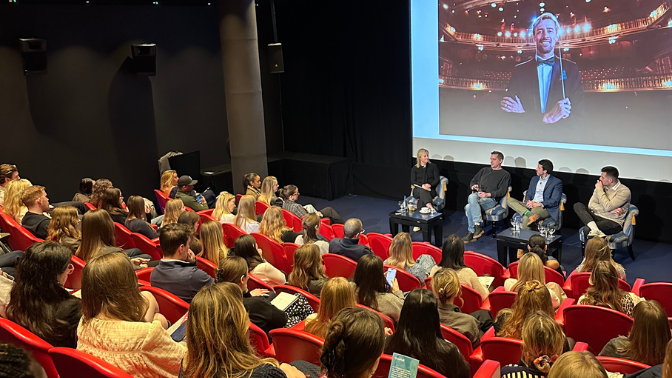
I recently joined a panel discussion alongside industry leaders from PinPep, Daily Mirror and Daily Mail, where we explored how visual storytelling is evolving and what PR professionals need to do to stay relevant. From shifting editorial metrics to the growing demand for authenticity, one thing is clear: success today is about impact, not output.
Quality Over Quantity: A New Editorial Reality
One of the clearest shifts highlighted during the discussion was the move away from volume-driven content. Publishers are no longer chasing page views alone. Instead, quality, relevance and meaningful engagement are the new benchmarks.
Johnny Goldsmith, Picture Editor at the Daily Mirror, spoke candidly about this change, explaining how falling page views have pushed editorial teams to prioritise quality-led storytelling. Metrics such as bounce rate and scroll depth now carry far more weight, offering a clearer picture of whether content is genuinely resonating.
Dan Quinnell, UK Social Video Lead at the Daily Mail, echoed this shift, describing how major publishers are increasingly operating like social-first brands. Content must be brand-safe, culturally relevant and instantly engaging—especially on platforms where users scroll fast and skip faster.
For PR teams, this reinforces the need to focus on fewer, stronger visual assets that earn attention and justify their place in a crowded feed.
Authenticity and the Rise of Human-Centred Storytelling
Alongside quality, authenticity has become a defining factor in visual performance. Audiences are increasingly disengaged from overly polished, generic visuals that feel manufactured or distant.
At PinPep, we’re seeing growing demand for content that feels real—human moments, first-person perspectives and visuals that prioritise emotional connection over perfection. On the panel, we discussed how audiences are fatigued by stock-style imagery and are far more responsive to content they can genuinely relate to.
Publishers reinforced this point, noting that first-person storytelling and unforced content consistently outperform traditional formats. Whether it’s behind-the-scenes imagery, creator-led visuals or user-generated content, authenticity is now a powerful engagement driver.
Collaboration and Transparency: Building Stronger Partnerships
Another key takeaway was the importance of early collaboration between PR teams and publishers. Strong visual content rarely happens at the pitch stage—it’s built through shared thinking from the very beginning.
From the perspective at PinPep, being involved early allows us to guide creative decisions, shape visual approaches and ensure assets truly align with editorial needs. That early input leads to more relevant, usable content and stronger outcomes for everyone involved.
Transparency also plays a crucial role—particularly as new technologies such as AI-generated imagery become more widely used. Clear communication around how visuals are created, what’s real and what’s enhanced helps maintain trust and credibility with publishers and audiences alike.
Blurring the Lines: Publishers as Creators
The conversation also explored how publishers themselves are evolving. Many are now building in-house creator teams and embracing the creator economy, producing social-first and platform-native content at scale.
For PR professionals, this shift presents both challenges and opportunities. The lines between publisher, creator and brand are increasingly blurred, which means strategies must be more flexible, collaborative and culturally informed than ever before.
Key Takeaways for PR Professionals
- Prioritise quality over quantity by focusing on engagement rather than reach
- Champion authenticity and human‑led storytelling that feels genuine and relatable
- Collaborate early and openly with publishers to ensure alignment from the outset
- Be transparent, particularly when using emerging technologies
- Stay agile as publisher and creator roles continue to merge
We believe the future of visual storytelling lies in thoughtful collaboration, creative honesty and a deep understanding of what audiences truly connect with. By embracing these shifts, PR teams can build stronger partnerships with publishers and create content that doesn’t just get seen—but genuinely lands.


Hold the Front Page – The 10 Things Every PR Needs to Know About AI Right Now!
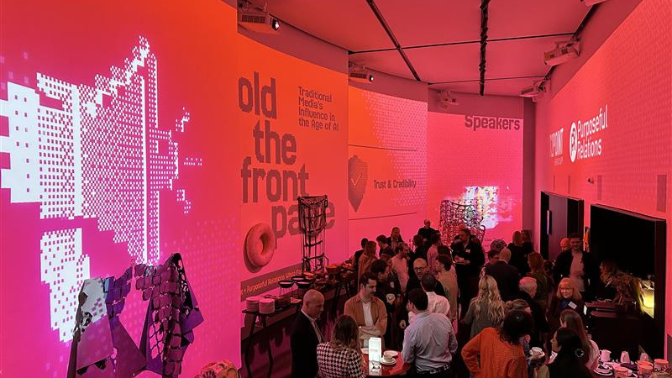
Our Hold the Front Page event brought together senior comms leaders, journalists, and AI experts to tackle the biggest shift facing our industry: AI becoming the front door to the internet.
Here are the essential takeaways 👇
1 – AI is now a trusted source
Research with Purposeful Relations reveals that 55% of people trust mainstream media, while 44% trust AI. Furthermore, 71% believe AI provides accurate answers. This shows AI is quickly closing the gap with traditional media in terms of public trust.
2 – AI is now a stakeholder
Brands must treat AI models as they would media, customers, and regulators. AI doesn’t simply retrieve information; it generates responses based on existing content. This makes AI an active participant in shaping perceptions.
3 – Earned media drives AI visibility
Up to 95% of AI-generated citations originate from editorial media rather than paid or owned content. High-quality journalism is now the foundation of Generative Engine Optimisation (GEO), making earned media critical for brand presence in AI answers.
4 – GEO is not SEO
SEO was like playing checkers; GEO is more like chess. AI answers are built from countless natural-language queries, multiple models pulling from diverse sources, and structured content such as paragraphs, tables, and opinions—not just links. This is a new discipline where PR professionals can lead.
5 – Recency, Accuracy, and Depth Matter
Three factors determine whether AI surfaces your brand:
Recency: AI prioritises fresh, up-to-date data.
Accuracy: Outdated or incorrect websites will be ignored.
Depth: Detailed, long-form content signals expertise and wins visibility.
6 – AI Can Resurface Past Issues
Historic controversies or crises may reappear in AI-generated answers because models aim for balanced perspectives. This means crisis communications now have long-term algorithmic consequences.
7 – Journalism Needs Industry Support
If media outlets cannot sustain trustworthy journalism, AI’s reliability suffers too. Brands should support the ecosystem by entering awards, sponsoring events, and paying NLA/CLA fees to help maintain credible reporting.
8 – Technical Hygiene Is Essential
Ensure your site is AI-friendly:
Fix your robots.txt file.
Update structured data.
Make sure AI can crawl and interpret your content.
If AI cannot access your site, it cannot cite your brand.
9 – Audit AI Answers Regularly
If media outlets cannot sustain trustworthy journalism, AI’s reliability suffers too. Brands should support the ecosystem by entering awards, sponsoring events, and paying NLA/CLA fees to help maintain credible reporting.
10 – Early Action Beats Panic
We’re still in the early stages of this shift. Experiment, test, and refine strategies while keeping earned media central. Traditional media isn’t disappearing - it’s becoming the training data for AI. This makes credibility, journalism, and evidence-based PR more important than ever.
Click here if you're interested in downloading the full report
- https://www.72point.com/geo-report-2025/
If you're interested in the full recording, fill out the form in the link below - https://assets1-gbr.mkt.dynamics.com/7c8a4954-81ef-ef11-b013-002248c68dae/digitalassets/standaloneforms/ff368a61-00ca-f011-8544-7c1e52038bd6

Why Earned Media Matters More Than Ever in the Age of LLMs

There’s been a quiet but seismic shift in how audiences are discovering content and it’s one every comms professional, strategist and marketer needs to understand. With the rapid rollout of Large Language Models (LLMs) in search, the internet is being reorganised around trust.
These new systems are fundamentally changing how information is found and surfaced. And they’re rewriting the rules of brand visibility in the process.
The rise of LLM-powered discovery
In the old search world, if you wanted to be seen, you had to play the SEO game - optimise for keywords, rank high, and win the click. But LLMs like ChatGPT, Perplexity and Google’s AI Overviews don’t serve up ten blue links. They generate answers, pulling content from across the web, distilling it, and delivering it in one seamless response.
So what gets referenced? Not the loudest brand. Not necessarily the brand with the most paid placements or the highest ad spend.
It’s the brand that’s trusted. The one cited in news stories, mentioned by credible sources, and surrounded by signals of authority. That’s where earned media suddenly jumps from a comms goal to a central discovery strategy.
Earned media is now training data
At its core, an LLM is only as good as the data it learns from. And some of the most authoritative, high-signal data online comes from journalism. News content is timely, fact-checked, and subject to editorial oversight. That makes it exactly the kind of source LLMs prefer when deciding what to reference.
If your story has run in a national paper, been covered by a regional site with high E-E-A-T (experience, expertise, authoritativeness and trustworthiness), or generated links and social engagement - there’s a much greater chance it will appear in an LLM’s response. In effect, it becomes part of the next layer of the internet’s collective knowledge.
We’re entering an era where earned visibility feeds machine visibility.
Implications for brand strategy
This shift has big consequences for how brands show up in the world:
- Authority is no longer optional. To be referenced by LLMs, brands must have signals of legitimacy across trusted third-party sources.
- PR becomes part of the SEO ecosystem. Creative campaigns that generate media coverage now directly contribute to your brand’s discoverability in AI-led search.
- Content needs to be newsworthy, not just optimised. The bar is higher. LLMs are trained to distinguish between genuine stories and branded puff pieces.
- Search becomes storytelling. We’re moving from keyword stuffing to strategic storytelling. What you say and where it’s said now shapes how machines understand and surface your brand.
What we’re doing at 72Point
At 72Point, we’ve always believed in earned content as a force multiplier for brands. But in this new search environment, its value only grows. We’re helping brands not just land media coverage - but create content that’s designed to build trust, engage audiences, and be recognised as credible by both people and platforms.
That means focusing on stories that resonate emotionally, socially and editorially because these are the signals LLMs are learning from.
It also means making strategic distribution decisions: partnering with high-authority news brands, ensuring relevance to real-world conversations, and using our insight tools to identify what’s cutting through in a noisy media landscape.
Final thought
The race isn’t to be everywhere. It’s to be credible in the places that count.
In the LLM era, earned media is no longer just a nice-to-have for awareness - it’s the foundation of being discoverable, trustworthy, and top-of-mind when audiences go looking.
And if we want to show up in tomorrow’s answers, we need to be in today’s headlines.