
72Point Appoints Chris Grabowski as Creative Director

72Point has appointed Chris Grabowski as creative director. The appointment follows a rise in our brand-led RFPs and reinforces the group’s creative leadership across brand storytelling, out of home (OOH) and experiential campaigns.
Chris joins 72Point with an extensive and highly regarded background in creative PR and earned-first campaigning. Most recently, he was creative director at Cirkle, where he helped lead the agency to being named SABRE EMEA Creative PR Consultancy of the Year 2023. Over more than six years at the agency, he delivered high-impact, culturally resonant ideas for major brands, spanning PR, social, experiential, and integrated channels.
Prior to Cirkle, Chris held senior roles at STIR, PrettyGreen, and Citizen Relations, building a strong reputation for big, earned-led ideas designed to drive conversation, coverage and cut-through.
In his new role, Chris will lead creative development across 72Point’s campaigns, working closely with strategy, planning and media teams to deliver bold, attention-grabbing ideas at scale.
Chris’ appointment underscores 72Point’s continued investment in creative excellence as the business expands its offering across earned media, social, experiential and fully integrated brand campaigns. While 72Point continues to work with 63% of the UK’s top 50 consumer agencies, the business has also seen an 18% year-on-year increase in brands engaging directly. These partnerships increasingly take the form of integrated, project-based work that delivers measurable impact and clear value for money.
Katie Earlam, acting managing director at 72Point, said, “We’re thrilled that Chris has chosen 72Point as his next creative home. He brings with him an exceptional creative pedigree and a proven ability to deliver ideas that genuinely earn attention. At a time when brands are increasingly looking for high-impact experiential work, there is significant opportunity ahead, and Chris’ experience and creative ambition will be instrumental as we continue to build bold, culturally relevant campaigns for our brand clients.”
Commenting on his appointment, Chris Grabowski said, “72Point is that rare comms unicorn: a place that understands what makes a newsworthy story, has a culture that backs brave ideas - but also has the media know-how to land it on scale. It’s exactly the kind of environment any creative would want to be part of. I’m excited to join the team and help build work that people don’t just see but share and talk about.”


Movember 2025: Starting Fresh for a Cause That Matters!

After proudly sporting a moustache for a whole year following Movember 2024, the time has come to start from scratch. The tache is gone, and Movember 2025 is here!
Movember isn’t just about facial hair – it’s about making a real difference. This cause holds a special place in my heart because it has personally helped my family and friends over the years. Seeing donations go directly to those in need is something words can barely express.
This year, I’ve shaved it all off to raise money for suicide prevention and mental health support. Hopefully, the moustache will look a little more convincing this time around!
At 72Point, we’re all rallying behind Julien in this amazing effort. If you’d like to support and donate, please visit his Movember page:
👉 https://movember.com/m/julienkirkpatrick?mc=1
Every contribution counts and helps change lives. Let’s make Movember 2025 one to remember!


The Agency Opportunity: Helping Brands Win in the GEO Landscape
Generative AI is becoming the front door to information, and the rules of visibility and influence are being rewritten in real time. For agencies, this is not only disruption, it is opportunity.
Our Hold the Front Page report with Purposeful Relations finds that earned media from trusted journalistic sources is now the single most powerful influence on how AI models describe and recommend brands. News coverage has become structured data for machines, the stories you place today are the inputs shaping tomorrow’s AI generated answers.
From SEO to GEO, a new frontier
Search changed everything. SEO became a specialist craft, while PR adapted slowly. Today we are at another crossroads. GEO unites storytelling with machine logic. It is not about gaming systems, it is about teaching AI what credibility looks like, with recency, relevance, and reputation carrying the most weight.
Agencies are perfectly positioned to lead. Influencing AI requires authentic storytelling, factual precision, reputation management, and consistent distribution across credible outlets, exactly the skills great PR and comms teams already bring. GEO adds a layer of structure and verification so that content is readable by people and machines.
Building algorithmic equity
Brands that earn strong, positive, and frequent coverage in reputable media are far more likely to be recommended inside AI platforms. PR output does not just shape perception, it shapes the answers machines give. Agencies that help brands achieve consistent, high quality editorial visibility are building algorithmic equity, one credible citation at a time.
Why 72Point
72Point bridges the gap between brand ambition and media authority. Our network and editorial expertise deliver mass media coverage in trusted sources, which is exactly what generative engines reward. We help partners future proof their reputation strategies by combining creative storytelling, credible journalism, and GEO ready distribution.
The next wave of influence will not be bought, it will be earned, structured, and surfaced by AI. Agencies that recognise this will become indispensable partners to brands navigating the generative era. The opportunity is now, and we are perfectly positioned to help you seize it.
If you'd like to discuss this further, drop me a line paul.billingham@72point.com


What Makes a Story Broadcast-Worthy in 2025?
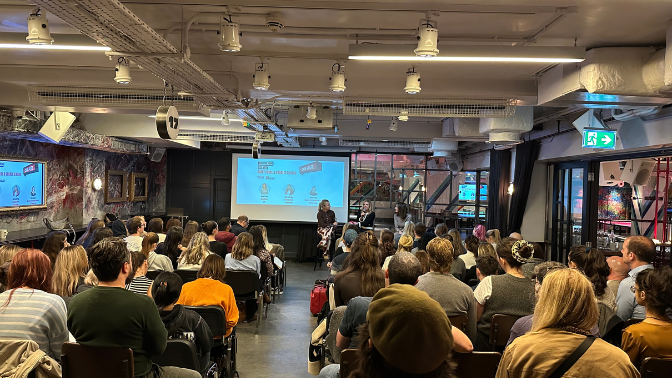
A brilliant event diving into what makes stories truly broadcast-worthy — with open, honest insights straight from those who decide what makes it on air.
Here’s what we learned 👇
Broadcast Still Starts With the Story
Producers are looking for real people with genuine experiences. Human-interest stories – told with authenticity and emotion – connect far better than heavily branded messaging. Trust and relatability are what make people tune in.
Make It Relevant, Make It Targeted
The fastest way to lose a producer’s attention? A blanket email. The best PRs do their homework — tailoring pitches to the show, the presenter, and the audience. If you can say why your story fits this station, this week, you’re already ahead.
Yes, Pick Up the Phone
Email first, but don’t be afraid to follow up with a quick call — especially if it’s timely or strong. A personal touch still cuts through the inbox noise. (Just not during live broadcast hours!)
Right Spokesperson, Right Fit
Celebrity doesn’t always mean coverage. Authenticity matters more than fame. Producers and listeners can spot an unconvincing ambassador instantly — especially if they don’t have a genuine link to the story.
Think Multi-Platform from the Start
Broadcast now means radio, TV, podcasts, video clips, and social content. When pitching, think visually and audibly — have case studies, soundbites, and short-form assets ready to bring your story to life across every channel.
Keep It Clear, Keep It Human
Avoid jargon and overcomplication. Producers have seconds to grasp your story — so make your subject line and first line count. If it reads like a press release, it probably won’t land.
Relationships Build Results
Strong media relationships still matter most. Be realistic, deliver what you promise, and respect producers’ time. Consistency and credibility turn a “one-off pitch” into a trusted partnership.
Timing Is Everything
Stories tied to what people are already talking about — seasonal moments, national trends, cultural touchpoints — perform best. Broadcast thrives on relevance.
It was a brilliant reminder that while platforms and formats keep evolving, the fundamentals of broadcast storytelling stay the same: clarity, humanity and timing.
Thanks to everyone who joined us — and to our expert panel for such sharp, honest insight into how to make stories sing on air.


Is AI Forcing PR Back in Time?

Artificial intelligence has become the unavoidable elephant in the room in PR offices and newsrooms alike. From fake experts offering their ‘views’, to fact-checking, AI has become standard practice across the communications industry.
On the one hand, technology is advancing faster than ever. Generative AI has transformed how content is produced, consumed, and distributed. But on the other, the very same rise of AI is fuelling a renewed appetite for something far more traditional: trust, credibility, and good old-fashioned human relationships.
In some ways, it feels like we’ve gone full circle.
The New Reality: AI is Both Threat and Opportunity
There is no denying that AI has disrupted the PR and media landscape. Content is easier to generate than ever before, but that ease brings risks. Fake experts, misleading claims, and AI-written articles has created doubt. Journalists are more sceptical of what lands in their inbox, while audiences are switching onto the fact that what they are reading may not be authentic.
This scepticism has a silver lining: earned media is still crucial for visibility.
With Google’s AI Overview (GEO) now surfacing quick answers at the top of search results, credibility matters. Studies suggest that up to 90% of what shows up in these overviews is drawn from earned media sources. That means journalists’ stories, reputable outlets, and trusted commentary are shaping the very first thing people see when they search online.
For PR professionals, this is both a challenge and an opportunity. The challenge is and always has been how do we stand out amid a flood of AI-assisted pitches. But the opportunity is massive and the result could be huge. Your brand doesn’t just appear in an article, it has the potential to be surfaced by Google itself as the answer.
Relevancy and Authenticity: Growing in importance
Relevancy and authenticity have always been at the core of effective PR and how brands engage with their target audience. But in today’s AI-driven landscape, authenticity is crucial.
Journalists like Rob Waugh have already highlighted the rise of fake experts infiltrating newsrooms. When AI makes it easy to fabricate a convincing bio, journalists become far more pragmatic about who they trust.
The best way to stand out? Provide the real thing. Verified experts. Genuine insights. Stories grounded in data, not just spun with buzzwords.
The Human Connection is Making a Comeback
It wasn’t long ago that journalist-PR meetings were declining. COVID restrictions, remote working, and shrinking newsroom staff all contributed to a reliance on digital communication. Pitching moved to emails and the personal touch fell by the wayside.
But with AI muddying the waters, we’re seeing a quiet comeback of something that feels refreshingly old-school: face-to-face connection.
In a world where machines can mimic humans with startling accuracy, it’s the human element that restores trust. Even a five-minute phone call or coffee meeting can be the difference between your pitch being buried in an inbox avalanche or landing as a featured story.
Journalists are seeking reassurance that what they’re getting is credible, and PRs are seeking confidence that their stories will resonate. Meeting in person, or at least having a real conversation, creates that reassurance that is much sought after.
This return to relationship-driven PR may feel like going backwards, but in reality it’s just a reminder of what always worked best: building trust.
GEO: The Fierce New Battleground
For the average person, Google is the front door to information. And with the rollout of AI Overviews, people aren’t going much further to get their information.
Most users won’t scroll past the overview box at the top of the page. That means brands and experts featured in these summaries gain instant authority - whether they’re a household name or not.
We know GEO relies heavily on earned media. It doesn’t pull from random blogs or branded puff pieces; it pulls from trusted outlets. That means PR pros have an unprecedented chance to amplify their impact by focusing on securing coverage in reputable publications.
In the age of GEO, a single piece of earned coverage could be surfaced to millions of searchers again and again. The ripple effect is massive and we are still learning so much about it.
What PRs MUST Do to Adapt
The shifting landscape is forcing PRs to adapt but fundamentally it comes down to three priorities: credibility, relationships, and adaptability.
- Double Down on Trustworthiness
- Do your research on your experts and vet them.
- Provide data and references to back up claims.
- Be transparent about affiliations, partnerships, or limitations.
- Journalists are wary of “too good to be true” stories - so make sure it holds up under scrutiny.
- Rebuild Human Relationships
- Don’t underestimate the value of grabbing a coffee, attending industry events, or picking up the phone.
- Invest in the journalist-PR relationship beyond a single pitch. Find out what they actually need, what deadlines they face, and how you can make their lives easier.
- Authentic relationships build trust - and trust is what is going to land you coverage.
- Think GEO-First
- Frame your pitches with SEO and search intent in mind. If a story could realistically answer a user’s query, it has a higher chance of being surfaced in GEO.
- Work with experts who can provide quotable insights that align with real search behaviour.
- Stay Flexible and Transparent with AI
- Don’t pretend AI doesn’t exist - use it responsibly.
- By embracing AI transparently, PRs can position themselves as forward-thinking while still grounded in authenticity.
Back to the Future of PR
So, is AI forcing PR back in time? In some ways, yes. The demand for credibility, authenticity, and human connection feels like a throwback to the early days of media relations. But it’s not regression, it’s evolution.
AI has amplified the value of what PR has always done best: telling authentic stories, building genuine relationships, and helping brands earn trust in the public eye.
The tactics may look familiar: coffee meetings, trust-building, pitching journalists carefully chosen angles - but the stakes are higher. Now, those efforts don’t just land you a story in tomorrow’s paper. They could put your brand front and centre in Google’s AI Overview, shaping the answers millions of people see.
In other words: the fundamentals haven’t changed. But the focus has.
For PR professionals, the way forward is clear. Double down on trust. Lean into human connection. Secure earned media that resonates. AI may have disrupted the industry, but in the end, it’s reminding us of something timeless: credibility is the currency of communication.


Why Diversity, Equity and Inclusion Must Stay at the Heart of PR

At the recent PRCA UK Conference, Koray Camgöz, Chief Executive of the Taylor Bennett Foundation, delivered a powerful reminder of why inclusion isn’t just a moral imperative, it’s a business-critical one.
He opened with a striking example. A university lecturer helping international PR students apply for placements discovered none were receiving responses. When the students changed their names to more Western-sounding ones, nearly all received replies, and many were invited to interview. It was a clear demonstration of the unconscious (and sometimes blatant) bias that continues to shape opportunities in communications.
For Koray, names matter. They carry history, pride, and identity. His own Turkish surname, complete with the two dots above the “O” that he once avoided using, has become something he now embraces and insists on spelling correctly. It’s a reminder that our industry must recognise and respect difference, because identity is never something to erase.
Diversity: The Business Case
Inclusion conversations are often mischaracterised as “political” or “culture war” issues, but Korey was unequivocal: this is about performance. Research shows that companies in the top quartile for ethnic diversity are 37% more likely to outperform competitors. Diverse teams make better decisions, improve productivity, and strengthen retention.
He illustrated this with his time at Ketchum, where he worked alongside creative director Indy Selvarajah and his diverse team. For Indy, diversity didn’t just improve creativity, it defined it. The fusion of perspectives became the “secret sauce” that powered award-winning work.
The flipside is just as telling. Tesco’s Eid Mubarak range once included smoky bacon Pringles, and Samsung released an ad showing a woman running carefree through London at 2am, in the wake of tragic, high-profile murders. Both examples sparked public backlash and highlighted what can happen when the people making decisions all come from similar backgrounds.
Where PR Stands Today
Our industry still has a long way to go. Nine in ten communications professionals identify as white. Around 28% are privately educated - four times the national average. And because success in PR often comes down to networks rather than qualifications, the playing field remains far from level.
But Koray was clear: the way forward isn’t about abstract ideals, it’s about practical steps.
- Start with data. Who’s getting promoted? Who’s leaving? What do exit interviews reveal?
- Observe your culture. Who’s dominating meetings? Whose voices are missing from decision-making?
- Set goals. Link inclusion directly to business objectives and keep them alive by talking about them at every level.
- Seek help. Grassroots organisations such as the Black Comms Network, Asian Communications Network, People Like Us, and the Taylor Bennett Foundation exist to support employers on this journey.
The Taylor Bennett Foundation in Action
The Taylor Bennett Foundation has spent 17 years creating opportunities for Black, Asian and ethnically diverse professionals in PR. Its flagship PR Training Programme has a 97% employment success rate, while initiatives like Summer Stars internships and Reverse Mentoring pairings are reshaping the industry from entry-level to leadership.
Koray closed with the story of Suleika Mahamud, a trainee whose candid account of her family’s experience with polio during a Gates Foundation masterclass eventually led to her speaking on a panel in Brussels alongside Bill Gates himself. One opportunity changed her career trajectory - and that, Korey said, is exactly what true inclusion makes possible.
A Call to Action
At 72Point, we know PR thrives on fresh perspectives, creativity, and cultural understanding. As Koray reminded us, inclusion isn’t about “special treatment” - it’s about recognising that opportunities are not evenly distributed and working actively to close the gap.
The challenge is real, but so is the opportunity. By embedding equity and inclusion into our industry’s DNA, we don’t just create fairer workplaces, we create better, braver, and more effective communications.
We are proud to be supporting The Taylor Bennett Foundation’s PR Cup initiative, raising money for their vital work in opening up opportunities and championing diversity and inclusion in our industry.

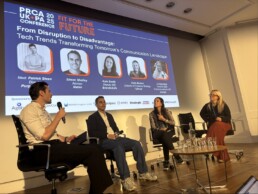
From Disruption to Advantage: Tech Trends Shaping the Future of PR

At today’s PRCA UK Conference, a panel of industry leaders explored how technology is reshaping the PR landscape. Hosted by Patrick Steen (Purpose Union), the session brought together voices from across the industry including Katie Earlam (72Point), Kate Smith (Brands2Life), Simon Shelley (Natter) and Jo Ogunleye (Google). Together, they shared sharp insights on how disruption is becoming a springboard for opportunity.
The AI Tipping Point
The conversation quickly turned to what many see as the most disruptive force in PR today: artificial intelligence. Much like Twitter’s launch in 2006, the arrival of tools such as ChatGPT signals a fundamental shift. But whereas Twitter transformed where we tell stories, AI is transforming how we create, shape and distribute them.
AI is already being used to automate processes, uncover trends and generate media insights. It helps identify the right stories at the right time, freeing teams to focus on strategy and creative execution. Yet the panel agreed on a crucial principle: while AI is an enabler, it is not a replacement for the human craft of storytelling. Authenticity, originality and a human touch remain essential for stories to cut through.
Using AI as an Enabler, Not a Shortcut
Across the industry, AI is being applied thoughtfully. From building custom bots to stress-test pitches to speeding up reporting and trend analysis, the goal is to unlock capacity and sharpen creative thinking. But technology must serve human creativity, not dilute it. Transparency about when and how AI is used will also be key to maintaining trust with clients and audiences.
Beyond AI: Other Tech Trends on the Horizon
While AI dominates the headlines, the panel highlighted several other tech-driven shifts shaping PR’s future.
Social-First Storytelling: Campaigns increasingly start with social platforms and build outward. For younger audiences, influencers and user-generated content often carry more trust than traditional publishers. The evolution of visual-first platforms such as TikTok and YouTube is particularly exciting, this is why we see it a huge opportunity for 72Point’s clients. With our latest acquisition of Creatorville, our new enhanced social arm, we can now deliver fully integrated campaigns that combine standout creative, original social video with influencers and publishers, and remarkable news coverage.
Data Visualisation and New Formats: Fresh ways of presenting data are helping brands capture attention and increase coverage. From interactive graphics to dynamic video formats, creativity in how information is packaged is now as important as the story itself.
The Rise of Employee Influencers More people are unfollowing brands and instead following individuals they trust. This trend is pushing businesses to empower employees as authentic brand storytellers.
Generative AI and the Media (and the influence on Generative Engine Optimisation or GEO): The conversation also explored the intersection of generative AI and journalism. Large Language Models scrape information from trusted sources, and the media is one of the most important. This is where 72Point is perfectly positioned to support brands. With our page-ready news content, brands have greater control over their messaging and we’re able to generate mass coverage via the newswire, ensuring that what LLMs find is accurate, trustworthy and aligned with brand values.
Risks and Responsibilities
With opportunity comes responsibility. Concerns include misinformation, copyright issues and the risk of devaluing creative skills if automation is overused. Instances of publishers pulling AI-generated stories highlight the continued need for trusted, human-led journalism, and for PR professionals to provide it.
Turning Disruption into Advantage
Disruption in PR is nothing new, but today’s tools are more powerful and the stakes higher. With the right balance of creativity, human judgement and smart tech adoption, the industry can transform disruption into competitive advantage.
At 72Point, we’re already putting this into practice, combining human creativity with data-led insights and emerging technologies to deliver stories that resonate in a fast-moving, fragmented media landscape.


Why Your Brand Needs to Plan Its Christmas & Winter PR Activity Now

By Charlie Biggs-Thomas, Senior Creative Account Manager, 72Point
If you don’t already have your Christmas and winter PR activity mapped out, you could be missing one of the biggest opportunities of the year.
The winter calendar is full of opportunities for storytelling, brand visibility, and connecting with audiences during a busy and emotionally charged season.
But to make the most of this critical period, you need to get ahead of the game. Here’s how to sharpen your seasonal PR strategy.
Step 1: Be Clear on What You Have to Say
Ask yourself: does your brand have something valuable to add to the conversation? If not, it may be better to sit this one out. Forced messaging rarely lands well, and journalists can see through it.
That said, the media is always hungry for expert voices who can contextualise events, trends, or breaking news. If you can authentically provide insights, practical advice, or human-interest angles, you should absolutely be pitching.
The key thing to remember is journalists want real-world stories that show how people are affected, not abstract brand soundbites.
Authenticity is key in the eyes of consumers, so making sure the opportunity you are going after is relevant is crucial in winning over your target audience.
Step 2: Preparation is Everything
Timing can make or break your seasonal activity. Journalists and editors work to tight deadlines, especially around the holidays, so the earlier you prepare, the better.
For example, with the UK’s Autumn Budget arriving in November, you can anticipate likely announcements by reading the papers, following the commentary, and drafting insights ahead of time. By pitching proactively, you position your brand as a go-to resource before the news breaks – which means contacts are more likely to come to you when they’re on deadline.
And when you do pitch? Make it easy. Provide everything a journalist needs upfront – quotes, data, imagery, and supporting context – so it’s effortless for them to include you in their coverage.
Step 3: Take Inspiration From the Landscape
Another trick is to keep your finger on the pulse of what’s already being covered – then think about how your brand can elevate the conversation. Could you add expert analysis, consumer research, or a surprising twist?
The best PR campaigns often come from spotting where the noise is loudest and finding a fresh way to cut through.
Key Dates to Keep on Your Radar
Here’s a snapshot of seasonal events the media will already be planning for – and that your brand could tap into with the right angle.
October
- Coffee Day – 5th
- Diwali – 21st
- Clocks Go Back – 26th
- National Cat Day – 29th
- Halloween – 31st
November
- Bonfire Night – 5th
- Autumn Budget – 26th
- Thanksgiving – 27th
- Black Friday – 28th
December
- Christmas Jumper Day – 11th
- Winter Solstice – 22nd
- Christmas – 25th
- New Year’s Eve – 31st
Final Thoughts
Seasonal PR isn’t about ticking boxes or rushing out half-hearted stories. It’s about making sure your brand is part of the cultural moments your audiences care about – in a way that feels timely, relevant, and valuable.
So, if you haven’t already mapped out your Christmas and winter PR activity, now’s the time. With careful planning, you can not only gain traction for your brand but also secure meaningful media coverage during one of the busiest times of the year.

This is how flower walls started a marketing shift….

By Charlotte Minett, Creative Campaign Manager, 72Point
This is how flower walls started a marketing shift….
How many pictures do you have on your camera roll? More than 10,000? I thought so.
We take pictures of everything and anything we like, from special moments with friends and family to a particularly beautiful sunset, a stunning new set of nails – or... just our lunch.
But why wouldn’t we do this? Pictures are the best way to preserve memories, and we have a camera at our disposal every minute of every day.
Social media has allowed us to turn these moments into our personality or, in other words, ‘our aesthetic’. Does your most recent picture or video on your grid perfectly compliment the last? No? Don’t post it then.
This is where brands can really come into their own – especially those targeting a younger audience. It’s simple really. Make sure your products or services are extremely ‘aesthetic’.
… and it all started with the not so humble flower walls (thanks to EL&N and Peggy Porrchen), swinging seats and angel wings painted on walls.
They are all tactics to reel people in, enticing customers with a fantastic opportunity for a new Instagram grid pic. We are all guilty.
Now all the brands are doing it, bigger and better every time – so take it to the next level or you’ll be on the backfoot no matter the size of your business.
Take the restaurants Ave Mario and Sketch in central London, for example. They have even made the loos a social media staple. You simply can’t leave without taking a selfie in them. It’s the new normal.
I’m not talking providing customers with perfectly polished content to add to their own feeds. Brands must stay authentic to themselves as this is what consumers are looking for. Give people the tools to be creative in their own way that matches their own feeds.
Glossier’s press mailers are a prime example. Their send outs are unmatched – quite literally. For the launch of a lip balm the mailer consisted of a miniature Glossier branded laptop, a lip balm presented in a pink branded tie and a teacup and saucer. This resulted in masses of ‘unboxing’ videos and ‘helloooo Instagram’ product flat lays.
It’s going to be interesting to see what will be next to replace the flower wall. Could it be your brand or client?
PR Tip – if you need ‘aesthetic’ inspiration for your brand or client immediately book a flight to Copenhagen and you will be inundated.


How to Turn a Viral Joke into a PR Payday, Before It’s Over

By Emily Trant, Associate Creative Director, 72PointPLAY
The obvious issue with jumping on viral moments is if you blink, you’ll miss it, and if you blink twice, it’s over, done to death, dead in the water – yesterday’s news.
That’s the cutting truth of the internet’s attention span.
In 2025, the shelf-life of a meme is shorter than Emma Stone’s edgy new pixie cut and if a brand isn’t straight off the bat executing a reactive idea they end up looking irrelevant and downright cheugy...
Take the Ibiza Final Boss – knowing Jack Kay’s 5 minutes of fame would probably be more like 3, brands scrambled to pitch the perfect idea, knowing it had to be speedy, funny and social led.
Those who nailed it were lightning quick, weaponising their socials to bash out memes and mock-ups riffing on Jack’s infamous bowl cut, with the likes of Gregg’s, Curry’s and Halfords serving the goods (as per) ...
Anyone putting out a brand deal at this point, we’re interested to see if the ROI is worth the “5 figure fee” No names here through, we’re professionals (sort of).
So, you’ve spotted an internet moment and you’re ready to assemble your “Viral Vanguard”, a crack squad of creatives, in the hope that you can come up with something viable and have it on shelves (or at least socials) before the world has moved on.
Before you do this, whether you’re in house or agency, here are five tips on how to ensure your finger stays firmly on the pulse when it comes to reactive content:
- Be quick (obvs)
The best reactive stunts latch onto a moment people are already talking about, while people are still talking about it – they don’t claim to own the conversation; they piggyback on it in a way that feels funny and smart.
if you’re dropping your “reactive” gag a even a week late, it’s less viral moment, more yesterday’s breakfast.
- Scrolling on social media is work, don’t let anyone tell you otherwise
Instil a culture within your team that encourages time for reading/scrolling/, because these moments are where all the internet’s hidden gems are mined. Whether it’s reading the papers first thing with a coffee or a cheeky TikTok scroll on the loo, keep a phones out policy – it’s not procrastination it’s research.
Those ‘did you watch Love Island’ conversations are cultural catalysts for ideas, don’t shut those down either.
(It goes without saying that equipping your team with proper social media listening tools is also essential. No one is THAT quick.)
- Be the silliest person in the room
Don’t be afraid to go fully weird during the ideas process - this is where the good stuff grows. Out of the madness, brilliance is harvested.
Reactive PR only works when it feels unexpected and clever, AND it reads that you’re in on the joke. The cheekier the execution, the more likely it is to cut through.
- Simple is always better
If people can’t “get it” in 3 seconds, it won’t work. Don’t overthink it or over complicated it - a funny social post will beat a 37-slide strategy deck every time.
Look at Oreo’s iconic “You can still dunk in the dark” tweet during the 2013 Super Bowl blackout - that was approximately ten seconds of reactive thinking that PRs are still banging on about over a decade later.
- Try to know a little bit about everything
The really good ideas rarely come from big budgets, they come from cultural literacy, speed, and a big old glug of good humour.
Stay curious, read about everything, even if it’s just the headline.
If you can name three lionesses and why Greg Wallace is no longer on Master Chef, you’re probably ok...
So, there you have it - that’s our advice, take it or leave it – the important thing to remember is that a solid reactive idea on your roster makes anyone look like a rockstar so you might as well have a craic, what’ve you got to lose?
