
What makes a story newsworthy and what does it take to get it published?
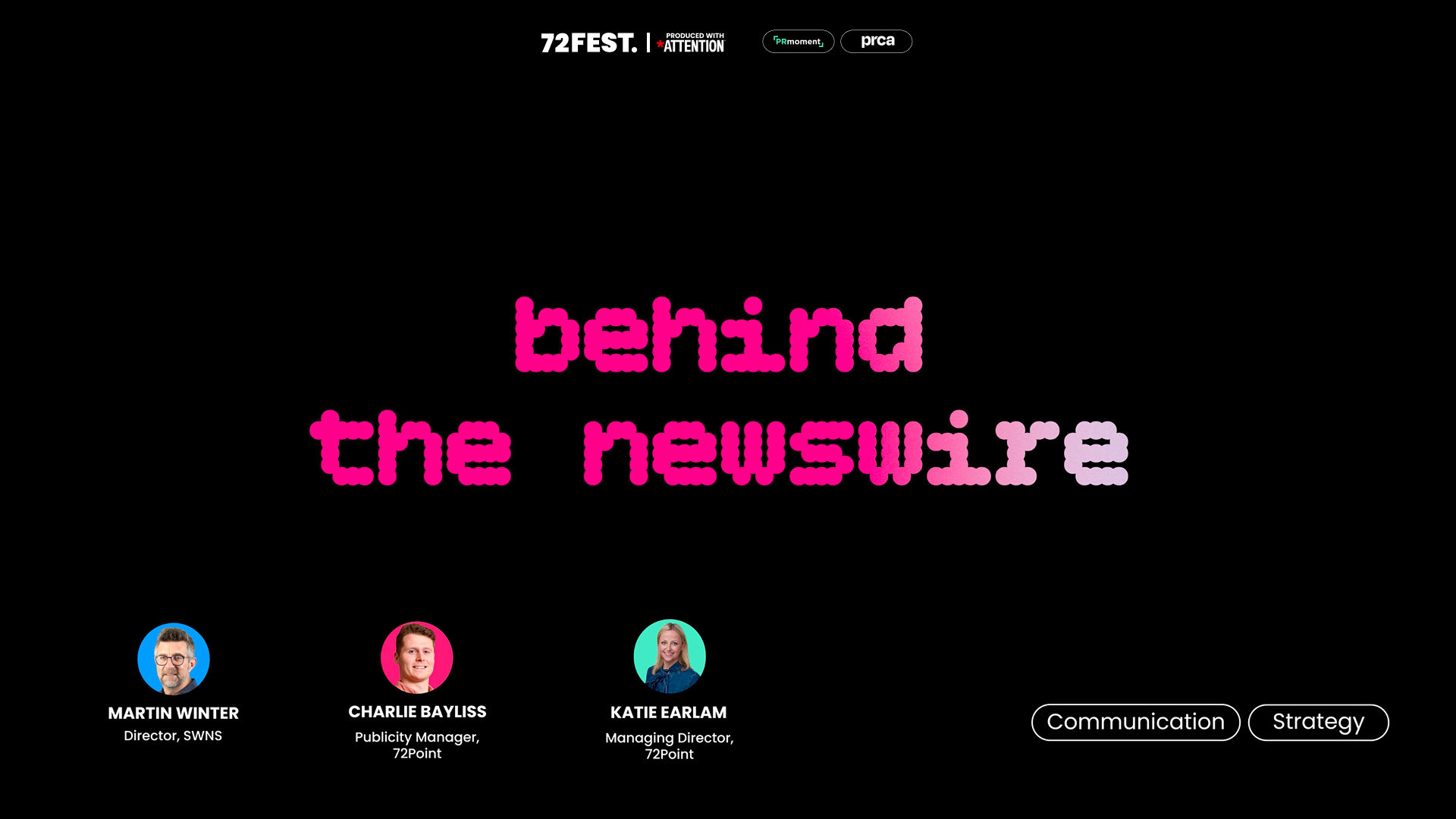
At this year’s 72Fest, Katie Earlam, Managing Director of 72Point, joined fellow 72Point colleague Charlie Bayliss, Publicity Manager, and Martin Winter, Director of SWNS, to reveal how stories move from an initial idea to headlines across the media.
The session offered an inside look at the relationship between creative PR, newswire distribution and editorial decision-making, exploring what publishers want and why some stories make the headlines while others never leave the newsroom.
PR meets the newswire
Charlie Bayliss explained how 72Point develops creative communications campaigns using research, content creation, social media, design and PR expertise.
Starting with a client brief, the team develops ideas that meet the client’s objectives while offering genuine interest to the public.
Martin Winter explained how SWNS takes the process forward, with its editorial team assessing stories before they are distributed to publishers.
Protecting credibility is central to this process. As Martin explained: “We’ve spent 50 years building trust and credibility and protecting that reputation is incredibly important.”
What makes a story newsworthy?
SWNS specialises in the human side of news, from changing consumer habits and generational differences to real-life experiences and cultural trends.
The strongest stories often reveal something new about how people live today. When readers recognise their own experiences or notice a behaviour they have seen around them, the story becomes relatable.
The panel also highlighted the importance of combining research with real people. Data can provide an interesting starting point, but authentic experiences and first-hand perspectives help bring findings to life.
As Charlie explained: “If you can make the audience feel something, you’ve got a far better chance of success.”
From brief to headline
The journey begins with a client brief, followed by creative development, editorial input, research, writing and the creation of supporting assets.
Stories are then submitted to the SWNS editorial team for review. The newswire provides publishers with ready-to-use copy, images and video, making it easier for busy newsrooms to assess and publish content.
The panel also discussed the growing importance of individual bylines, which help provide transparency around who has written a story and reinforce accountability.
Editors always have the final say
One of the session’s clearest messages was that creating a compelling story does not guarantee coverage.
While PR teams can develop strong angles and make content easy for publishers to use, the final decision always rests with editors and the needs of their audiences.
For attendees at 72Fest, the takeaway was simple: the best stories are not created solely for brands. They are created for people.
By combining meaningful insights, strong storytelling and authentic human experiences, PR professionals can give stories the best possible chance of making the headlines.