
Understanding what audiences think is one thing. Understanding why they think it is another.
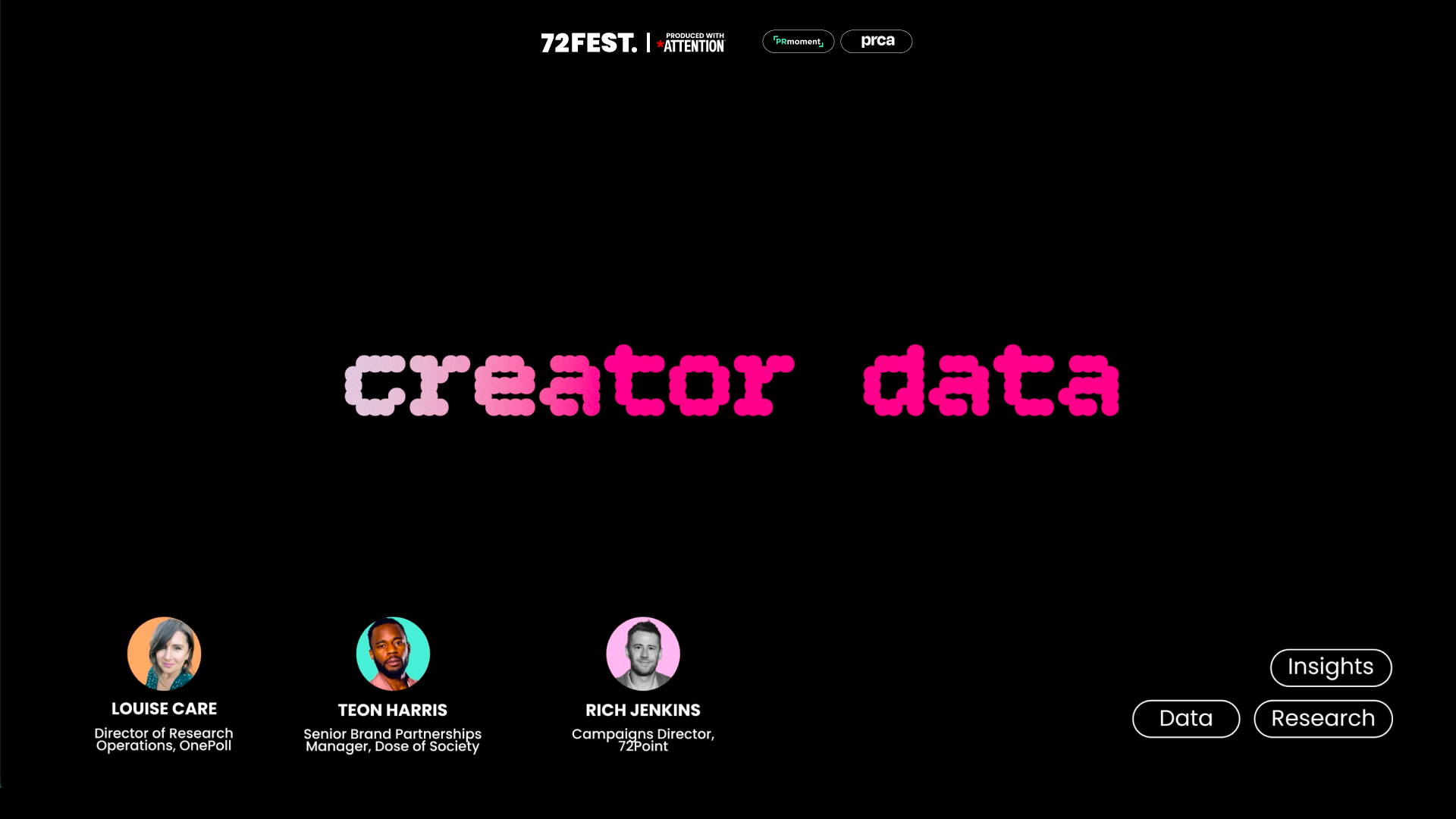
At this year’s 72Fest, Creator Data was unveiled, a new research offering combining large-scale audience data with real human conversations to help brands get closer to the people they want to reach.
Launched by Rich Jenkins, Campaigns Director at 72Point, the product brings together the research capabilities of OnePoll and the cultural insight expertise of Dose of Society. Joining Jenkins on stage were Louise Care, Director of Research Operations at OnePoll, and Teon Harris, Brand Partnerships Manager at Dose of Society, to explore why brands need to look beyond demographics and statistics to understand modern audiences.
Why Creator Data?
As media consumption changes and online communities become increasingly fragmented, understanding audiences has become more complex. Knowing what people are doing is no longer enough; brands also need to understand the motivations, emotions and cultural influences behind their behaviour.
As Jenkins explained during the session, trends matter, but the human insight behind them is where the real value lies. Creator Data was developed to bridge the gap between large-scale research and the individual experiences that bring those findings to life.
Combining scale with human stories
At the heart of Creator Data is the combination of two complementary approaches.
OnePoll provides quantitative research, gathering responses from large audiences across demographics, generations and markets. Dose of Society brings the qualitative perspective through street-level interviews, creator-led conversations and real-world experiences.
Together, these approaches help brands understand both the scale of a behaviour and the reasons behind it.
As Jenkins described it, the approach moves from understanding what 10,000 people think to understanding what one individual feels.
Going beyond the numbers
The panel explored how direct conversations can uncover insights that traditional surveys may not fully capture.
One example involved speaking to sports fans about the brands, athletes and creators influencing them on social media. Responses highlighted everything from Formula One personalities and football stars to sportswear brands, fitness companies and entertainment platforms.
More importantly, these conversations revealed the motivations behind those preferences: why certain athletes connect emotionally with audiences, how younger consumers discover brands, what builds trust in creators and how identity and community shape fandom.
For Harris, the distinction is crucial. Knowing an audience’s demographics does not automatically mean understanding how they think or what influences their decisions.
By identifying recurring themes across hundreds of conversations, Dose of Society can uncover cultural signals that help inform brand strategy, creative development and communications. When combined with OnePoll’s larger datasets, those findings can support more informed recommendations.
Why traditional research is evolving
The session also explored how audience expectations are changing, even as the fundamentals of robust research remain important.
Care highlighted the continuing need for representative samples, reliable recruitment and statistical confidence. However, brands increasingly want context alongside the numbers: the emotions, experiences and motivations that explain why a particular attitude or behaviour exists.
Quantitative research can show how widespread a behaviour is. Qualitative insight can help explain why it happens. Together, they offer a more complete picture.
AI can process insight, but people provide it
While AI can help researchers analyse large volumes of responses, identify patterns and improve efficiency, the panel highlighted the importance of keeping genuine human experiences at the centre of research.
As Care explained, AI can be effective at processing human content, but it cannot replace the value of authentic human perspectives.
For brands navigating rapidly changing audiences and online culture, listening directly to people remains an important part of understanding what matters to them.
The opportunity for brands
The launch of Creator Data comes as consumers spend more time with creators, online communities become more specialised and cultural trends move at increasing speed.
Creators are no longer simply entertainment channels. They can also influence how audiences discover brands, build trust and engage with cultural conversations.
The session also touched on the growing importance of original research in generative engine optimisation (GEO). Proprietary data and distinctive insights can give brands useful evidence to support their expertise and strengthen the information they contribute to online conversations.
By bringing together quantitative research and human perspectives, Creator Data aims to help brands move beyond surface-level audience profiles and build a deeper understanding of the people they want to reach.
The message from 72Fest was clear: data provides the scale, but human insight adds the context. In a world where attention is increasingly difficult to earn, understanding both could make all the difference.