
Generic pitches are out, and audience-first storytelling is in.
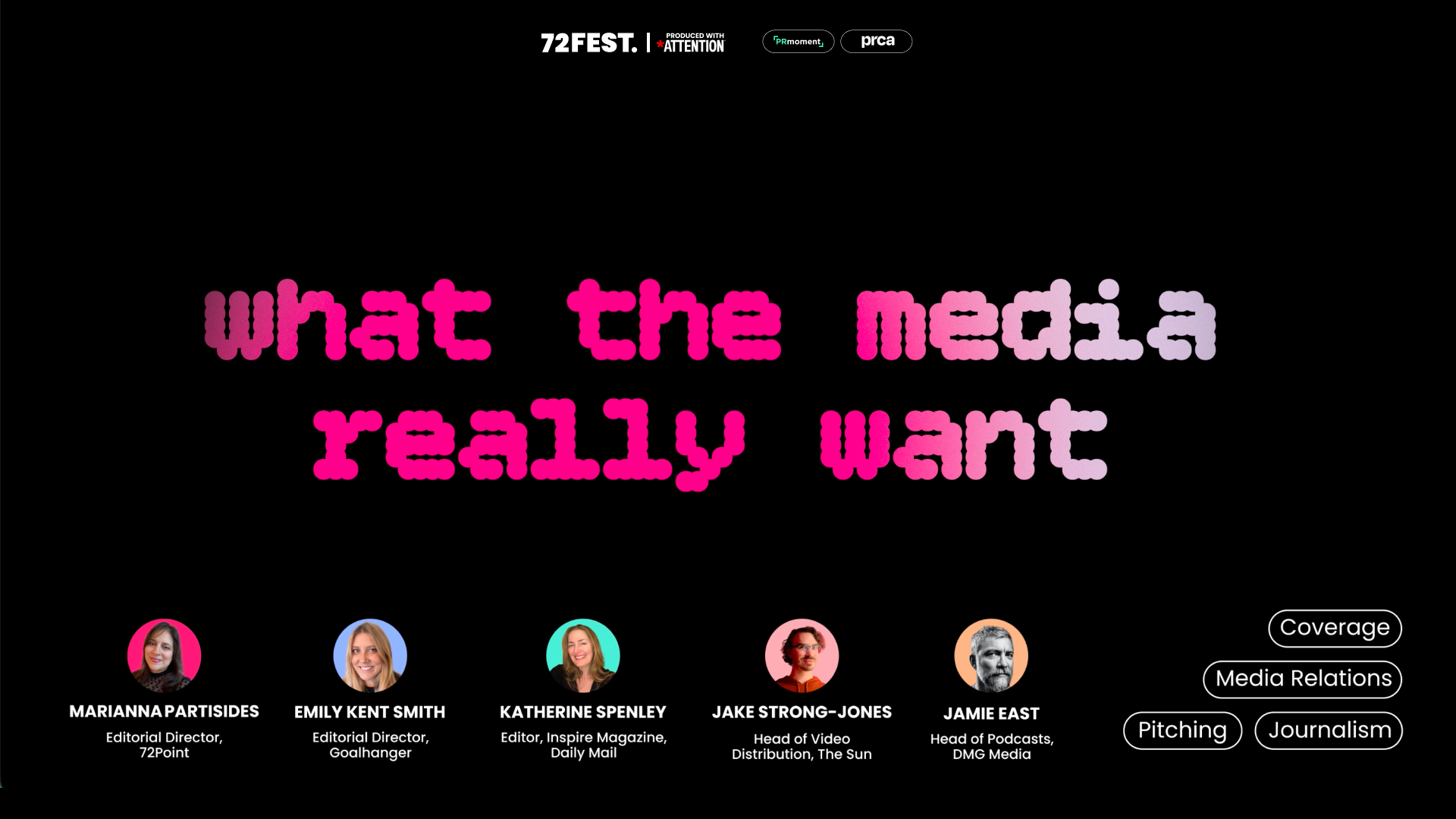
At this year’s 72Fest, media leaders from the Daily Mail, DMG Media, The Sun and Goalhanger shared what they really want from PR professionals and why understanding the audience is essential to securing coverage.
Moderated by Marianna Partasides, the panel featured Katherine Spenley, Jamie East, Jake Strong-Jones and Emily Kent Smith, who explored how changing platforms and audience habits are reshaping the relationship between journalists and PRs.
The end of the generic press release
Emily Kent Smith explained that successful PR is no longer about sending out press releases and hoping a journalist turns them into a story. It requires research, relationships and an understanding of the publication.
A pitch for The Rest Is Politics, for example, should look very different from one targeting Goalhanger’s Book Club audience.
Katherine Spenley reinforced the importance of targeting the right journalist and section. Even a brilliant story can fall flat if it reaches the wrong person.
Audience comes first
The panel agreed that relevance is what drives engagement, regardless of format.
Jamie East highlighted how podcast audiences form highly engaged communities around specific interests, warning against a “generic scattergun approach”.
Jake Strong-Jones echoed this from a video and social perspective: content works when it adds value to the audience it serves.
For PRs, that means looking beyond a publication’s overall reach and considering whether the story genuinely fits its audience.
Great stories still win
Despite changes in technology and media consumption, the fundamentals remain the same: a strong story matters.
Spenley highlighted compelling human-interest stories, strong imagery, expert commentary and exclusive interviews as ways to strengthen a pitch, provided the central idea is genuinely interesting.
The panel also urged PRs to look beyond awareness days and marketing calendars. Stories rooted in current conversations, cultural moments and unexpected perspectives are more likely to resonate.
Think beyond the press release
The panel highlighted how media brands are expanding across podcasts, video, newsletters, social media and written content.
Goalhanger’s partnership with Universal around The Odyssey, which brought together actor Tom Holland and historian Tom Holland, demonstrated how creative collaborations can entertain audiences, generate social conversation and deliver commercial value.
The discussion also challenged the assumption that audiences only want short-form content. Goalhanger’s long-form podcasts demonstrate that people will invest hours in content when they care about the subject.
Practical advice for PRs
Spenley shared several straightforward tips for improving media pitches:
- Do: Use strong imagery, write clear subject lines and prioritise genuinely compelling stories.
- Don’t: Make unnecessary calls during busy news cycles, dictate how journalists should write or try to control exactly how a story is covered.
East added another essential rule: understand the podcast before pitching it. If it is obvious that a PR has not listened to the show, the email is unlikely to get far.
The takeaway: know your audience
The message from 72Fest was clear: successful media relations start with understanding who you are pitching to and the audience they serve.
As platforms and formats continue to evolve, thoughtful pitching, creative ideas and relevant storytelling remain the foundations of effective PR.